How To Diapause Your Ants
Every fall we get the same question, and it's almost always asked the wrong way. Whether your colony needs a diapause at all, and when to start.
The Dividing Line
Diapause usually follows the climate your queen came from, not the name on her label.
Ants that evolved with a harsh winter carry the machinery to shut down for it. Ants from places without one never evolved it, so cooling them can harm them.
So the genus tells you very little. Camponotus floridanus doesn't need a winter. Camponotus chromaiodes wants 8-12 weeks at 38-50F. Same genus, same shelf in your ant room, completely different call. Most of our Southeastern stock lands on the 'no' side, and the second table has a list outlining everything.
The Ants Know What Month It Is
Ants keep their own internal calendar.
Nearly every care sheet says something like 'begin in late October'. On paper that's reasonable. In practice it doesn't work. Formicines, as well as some other ants, carry a biological clock that tells them when to prepare, and a room held at a flat 78F all year does not mesh well with their biological clocks.
So the indicator, for the ant-keeper, is the colony:
What Each Of Our Species Needs
This comes out of our own colony records.
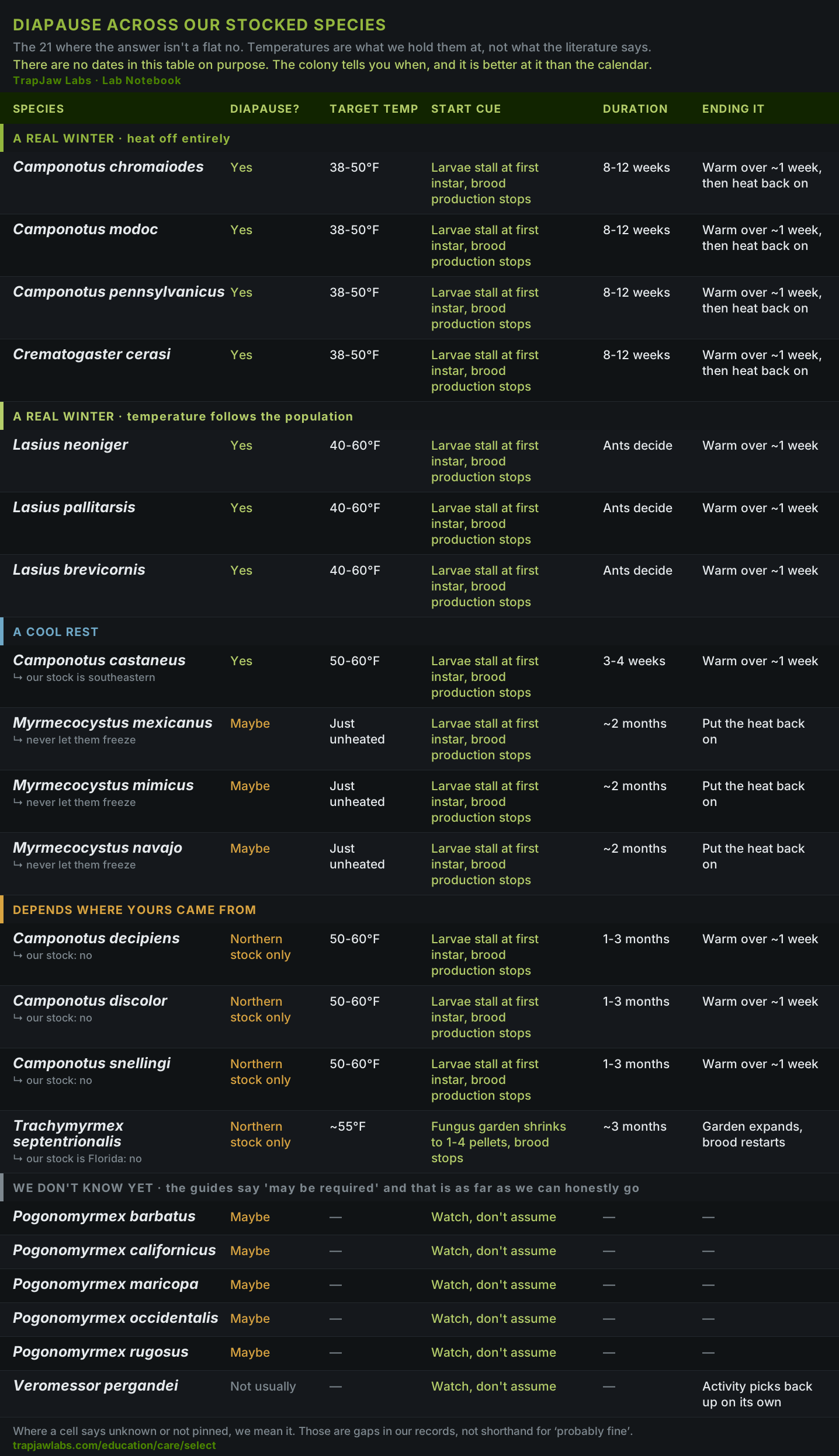
The species changes the ideal temperature and the length, not the trigger. They lose workers steadily, the following spring doesn't happen, and you never find a clear cause.
For example, Myrmecocystus barely need anything, so pull the supplemental heat, don't let them freeze, and give it two months. Pogonomyrmex is genuinely murky, and where yours were collected plays a big role.
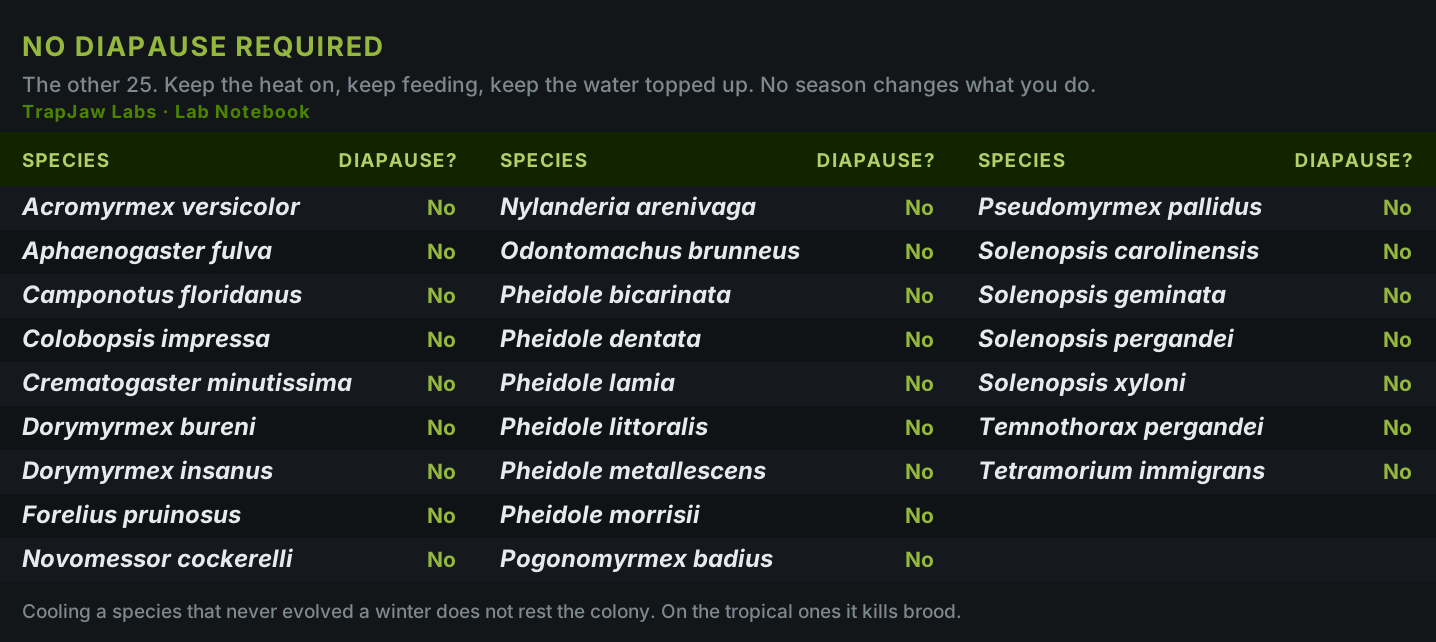
On that second list? You're done. Keep the heat on.
Doing It In A Normal House
The hard part isn't getting the ants cold, it's keeping them chilled at the right temperature consistently.
In rough order:
1. A wine cooler or a mini fridge. The honest best answer. Most bottom out at 40-45F, exactly the band you want, and a kitchen fridge sits at 35F and takes you under it. Around $100.
2. An insulated garage. Good in a lot of the country, but measure it for a week first. One that drops to ~20F could kill your ants.
3. An unheated basement, or a closet against an exterior wall. Often the low 50s, so cool-rest tier only.
For the 38-50F group the cable comes off entirely. Off, not turned down. A lower setpoint still leaves a warm spot in the nest. The colony picks the timing, so have the space ready early.
Keep the water source full the whole way through, because cold air is dry air and a nest drying out over ten weeks is the most common way the ants die. No garage, no basement, no second fridge? There's no great answer.
Coming Out: Slow Versus Dead
A cold colony looks dead. Nothing to be alarmed over.
Bring the temperature back up over about a week: out of the fridge into a cool room, then normal temperature, then the heat back on. Leave it at room temperature for several hours before concluding anything. Ants at 45F barely move, and healthy colonies get written off at the two minute mark. Antennae come back first. Then a leg. Then a worker walks.
Your ants are likely dead when they've been at room-temp for weeks without 'waking up'. Contact us if you are unsure, we're happy to help.
Where This Leaves You
There's no one best-way to do this, and this post is a starting-place rather than a rule book. Whether your colony needs a diapause comes down to where it was caught and what species you have.
Our Care Advisor has a diapause section for each species, and if you're running a cable on a thermostat, our Heating Cable pairs with one for exactly this reason.