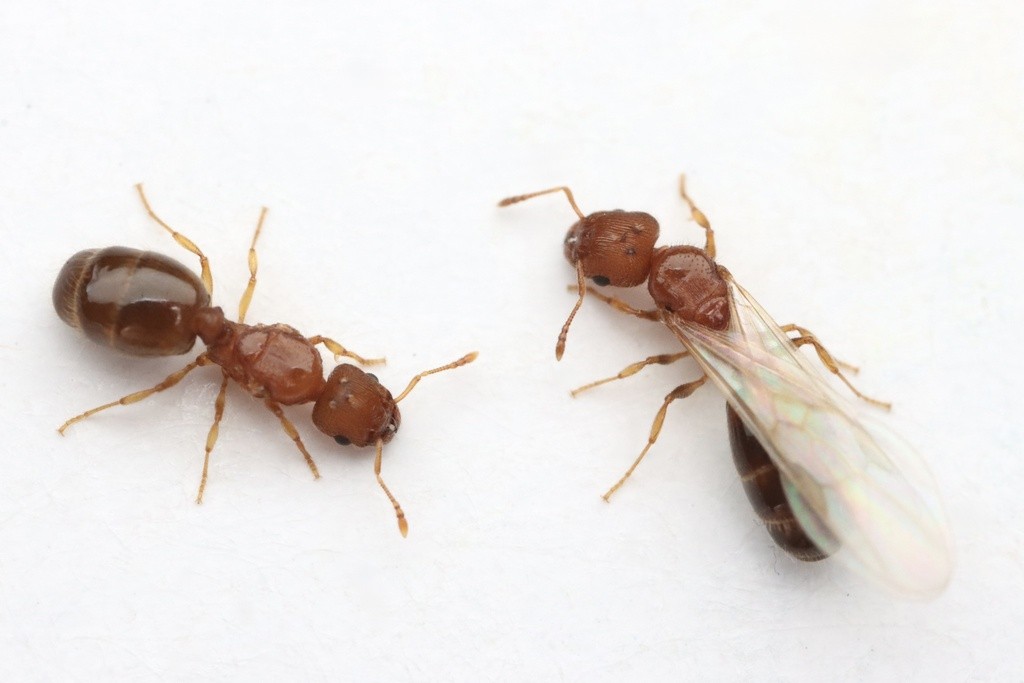
Can I Keep Two Queens Together?
Whether two queens can cooperate depends on the species, and on whether you mean founding together or living together long-term. This guide walks you through the differences across ants.
The Short Answer
It's dependent upon the species you're talking about.
For some species, multiple queens in a single colony is the status quo. For others, put two queens together and they'll fight to the death. There's also a third group in the middle, which will happily cooperate through founding and then violently murder one another until only one queen is left standing once the first workers arrive. So before you put queens together, look your species up in the Care Advisor and find out which of the three you're dealing with.
Founding Together
These are two separate questions, and most keepers ask them as one.
Pleometrosis is when multiple queens start a colony together. Polygyny is when a mature colony contains more than one egg-laying queen. Plenty of species are pleometrotic but not polygynous, which is why "my queens are getting along fine" at week two doesn't mean much long-term.
Why queens engage in pleometrosis all comes down to how tumultuous colony foundation is. A group of queens can get their first batch of workers reared sooner, and rear far more of them. Once the colony is established, the benefit of this arrangement is no longer there, and this is when the queens will turn on each other.
Group One: Polygynous
These species maintain multiple queens permanently.
Crematogaster minutissima is a great example. It's highly polygynous, maintaining dozens of queens in a nest. Tapinoma sessile, Camponotus floridanus, Pheidole megacephala, Myrmecocystus mimicus and the Monomorium we rear all fall into this category as well.
For the species above, polygyny is their default.
Group Two: Pleometrotic
This is the group that catches unsuspecting hobbyists off-guard, because early on it seems like the queens are getting along.
Our guides for Lasius americanus, Lasius neoniger and Tetramorium immigrans all reiterate the same sentiment: queens can found on their own or together, however once workers arrive, the queens will fight until only one queen is left. Solenopsis invicta follows the same pattern. It's typically pleometrotic, so queens cooperate to rear nanitics, then all but one is killed.
If you're keeping a species like this, a dead queen at week eight usually isn't a sign of poor husbandry. It's things going how they should.
Group Three: Monogynous
Not always, but oftentimes species in this group have queens which are openly hostile towards each other, on contact.
Most of the Camponotus spp. we rear are strictly monogynous, C. pennsylvanicus, C. chromaiodes, C. novaeboracensis, C. americanus, C. sansabeanus and C. modoc among them, along with Crematogaster cerasi, Myrmecocystus navajo, Nylanderia flavipes, Pheidole tysoni, Dorymyrmex grandulus and Solenopsis picta.
Crematogaster missouriensis is worth singling out, because it illustrates the point. It was designated as its own species not long ago, originally being taxonomically considered C. minutissima until 2016, and C. minutissima are as polygynous as they come. C. missouriensis is the total opposite, in contrast.
The Ones That Vary
For some species the honest answer is that it depends on where your queen came from.
Formica subsericea colonies may be monogynous or polygynous. Solenopsis molesta is an extremely variable species with both polygynous and monogynous populations. Pogonomyrmex californicus is occasionally polygynous and frequently pleometrotic, and multiple queens that team up may or may not stay together over time. If your species is in this group, the population your queens originate from matters as much or more than the species.
What This Means For You
Check your species first, then decide.
If your ants are polygynous, you can keep several queens in one colony with no issue. If they're monogynous, stick to one queen per setup. If they're in the middle group, pleometrotic/population-dependent, you can found queens together as long as you are okay with potentially losing some down the line.
One thing worth separating out: combining two colonies that already have workers is a different question entirely. Everything above is about queens, not about merging established colonies.
What's Next
If you don't know which group your species belongs to, the Care Advisor covers 104+ species across the US, so your species is very likely included. If they're not on the Care Advisor, or you've got queens together and you're witnessing strange behavior, get in touch. We're happy to help you work out what's going on.
In this article
- Tapinoma sessile · Odorous House Ants
- Camponotus floridanus · Florida Carpenter Ants
- Pheidole megacephala · African Big-headed Ants
- Myrmecocystus mimicus · Common Honeypot Ants
- Lasius americanus · Woodland Fuzzy Ants
- Lasius neoniger · Turfgrass Ants
- Tetramorium immigrans · Immigrant Pavement Ants
- Solenopsis invicta · Red Imported Fire Ants