What To Do About Mites In Your Ants' Setup
Tiny specks moving around your setup are almost always grain mites or springtails. This guide walks you through what they are, why they showed up, and what to do about them.
The Short Answer
Finding things moving around in your setup is understandably concerning. Usually, however, it's nothing to worry about.
What ant-keepers find is almost always grain mites or springtails, and neither of them are detrimental to a healthy ant colony. They're scavengers that live on leftover food, so more than anything they're criticizing your housekeeping, rather than symptomatic of your colony's health. The best solution is to take away what the mites are eating and reduce ambient moisture as much as you can. Before you do anything drastic, in most circumstances you're more likely to harm your ants reacting to this than the mites are to harm them.
What You're Probably Looking At
Two things account for the vast majority of what turns up in a setup.
Grain mites are the pale, slow-moving mites that you often see. They look less like mites and more like a fine dust that has very slowly started moving. They are commonly sighted in setups that have moldy trash piles which haven't been cleaned, leftover food laying around, etc. They eat mold, grain, yeast and anything soft that's breaking down. Warmth and moisture are all they need to take off: a single female lays hundreds of eggs, and the whole life cycle runs in roughly two weeks at room temperature. That's why they seem to appear overnight. They're nothing to be concerned about as long as their populations are kept reasonably low enough. You could even make the case they're beneficial for the ants, in a way. Grain mites become a serious problem, however, when their numbers explode. If there isn't enough food to go around, they will attempt to eat your ants' brood to varying levels of success.
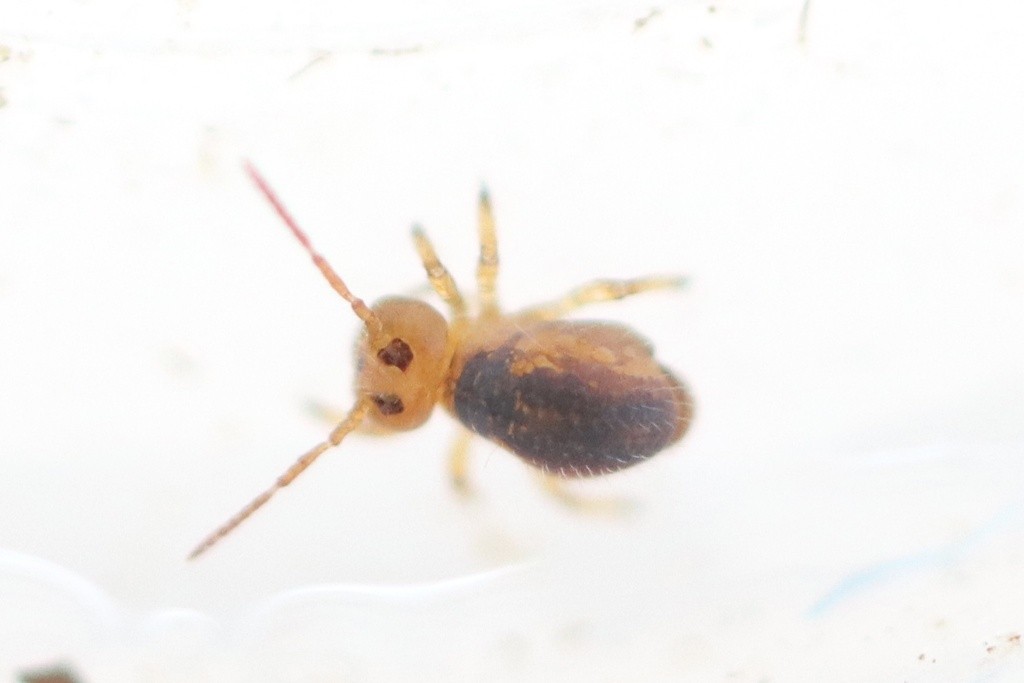
Springtails are the tiny guys that jump when you disturb them. They live in damp substrate and foraging areas, they eat mold and decaying matter, and many ant-keepers add them to their setups on purpose as a "cleanup crew". Seeing springtails in your ants' setup is good, if anything.
Occasionally something else turns up, usually booklice or fungus gnats out of damp substrate. What to do about them is similar to how you would handle springtails and mites.
Mites On Your Ants
Mites riding on your ants looks much worse than it actually is.
Almost always, these mites are there to hitch a ride. Many mite species will climb onto a larger arthropod when food or other resources are scarce and let them bring the mite somewhere with better conditions. Truly parasitic mites do exist that parasitize ants, but they are exceedingly rare for hobbyists to encounter, and usually the mites end up dying not long after the ants are brought into captivity.
Parasitic mites can be distinguished by their propensity to crowd around the gaps in the ants' cuticle. This is where it's easiest for them to penetrate the exterior and suck blood. If you think your ants are dealing with parasitic mites, please reach out to us. We'd be happy to help you determine the best remedy.
Why They Showed Up
Mites and springtails need damp conditions and something to eat. In captivity we often provide both of those things. The water you use to hydrate the nest is deliberately added for your ants' well-being, and how humid your nest should be is a species-specific question the Care Advisor can help you answer. Uneaten food is the biggest aspect you can control. As long as your ants are no longer interested in consuming a particular food item, the sooner you remove it the better.
What To Do About Mites
Take away what the mites are eating, dry out the setup as much as you can without risking your ants' well-being, and let the population fall on its own.
Unfortunately, no known veterinary treatments or otherwise are known to reduce mite populations. It's best to stay away from insecticides as a solution, they'll likely do more harm than the mites are.
What's Next
If your colony is otherwise behaving normally, treat this as a sign you need to spend more time housekeeping.
Pull the food, dry things out, and give it a week or two. In most instances that's the end of it. If the mite population isn't declining, you're witnessing a lot of brood mortality, or if something about the colony itself looks wrong to you, get in touch. We're happy to help you work out what's going on.