5 Critical Care Tips
All ant species that TrapJaw Labs offers have a detailed guide available for them in our Care Advisor. It's best-practice to follow those if they're available for your species. We are continuously working to expand the care advisor to include additional species.
If you have a colony of a species not on our list, and don't know what to do, these tips are for you.
Hydration and Humidity
Like all living things, access to water is extremely important for your ants.
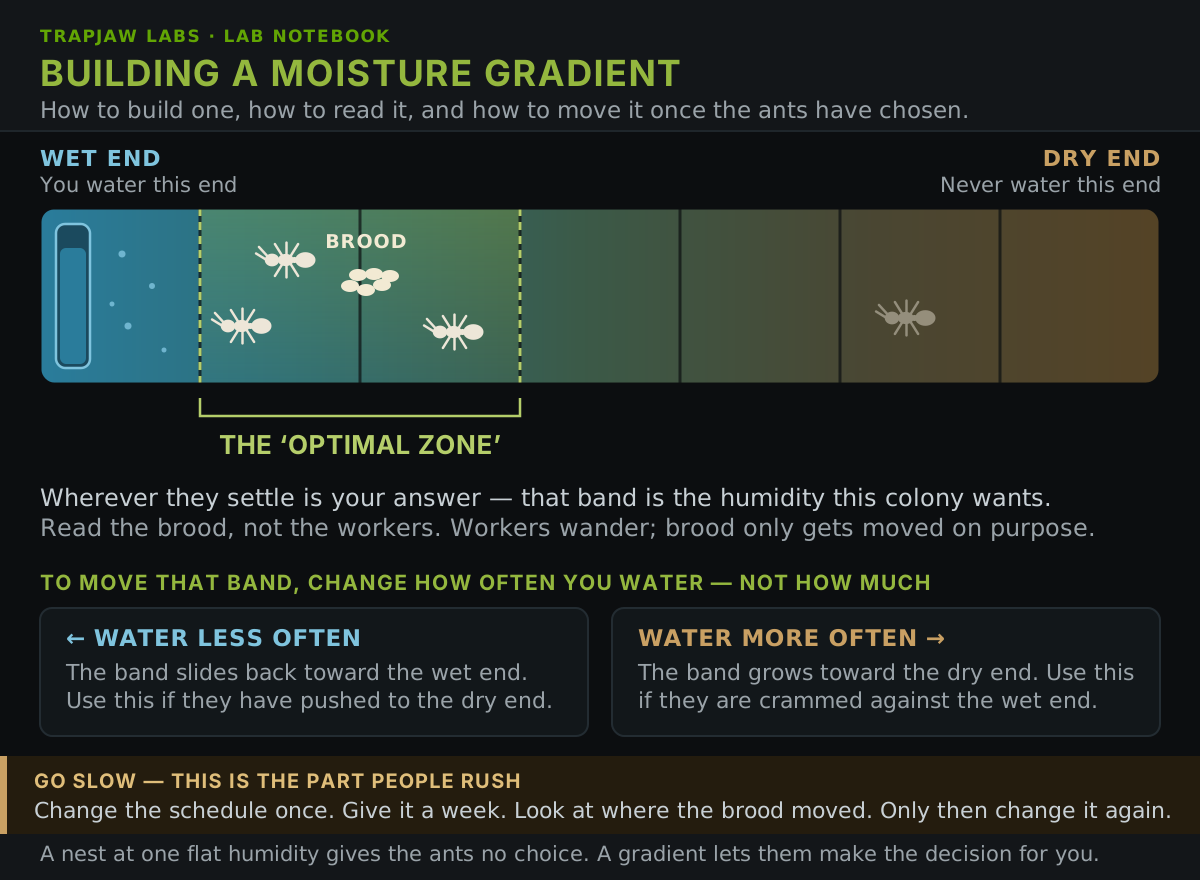
It’s important to tailor the humidity in your ants’ setup to their specific needs. Keep one side of their nest environment very moist whilst the other is very dry. The ants will arrange themselves inside of the nest wherever humidity is optimal for them and their brood. You can then cautiously begin expanding what portion of the nest is in this ‘optimal zone’ by changing the frequency with which you water the nest.
When it comes to access to liquid water, TrapJaw Labs suggests you keep a liquid feeder stocked in your ants’ foraging area with water at all times. For some species, the humidity in the nest or their food can be sufficient, but the water-filled liquid feeder doesn’t spoil and is very easy to maintain. Better to be safe than sorry.
What you hydrate with matters too. We ran a sponge tube and a cotton tube side by side for 53 days. The sponge tube held between 92.6% and 96.7% humidity the entire time. The cotton tube held between 81.6% and 86.0%. Neither one is wrong. They’re aimed at different species, and it’s worth knowing which one you’re holding before you start adjusting anything else. All of the numbers are in our PVA Test Tube Sponges & Cotton Experiment.
Nutrition
The food you provide your ants is the foundation upon which a healthy colony grows.
Almost all ants are omnivores, meaning they need both protein and carbohydrates. The key difference between most species is what portion of their diet comes from protein or carbohydrates respectively. We suggest offering your ants a source of protein, like pre-killed fruit flies, and a source of carbohydrates, like our honeydew honey, then allowing the ants to choose what they want to eat. Make sure to remove uneaten food after ~24hrs. Over time, you will get a sense of what they like to eat and how much of the different food types you should be offering. Remember, you can always remove excess food if you overfeed. So don’t be afraid to, within reason.
Some ants are granivores, which means they collect, store, and consume seeds. All granivorous ants we offer have the “Granivore” tag on their product page, if you’re unsure if your ants are granivores.
Granivores exist on a spectrum. Some granivorous ants get nearly all of their nutrition from seeds, while others are content never eating seeds at all, and will only consume them if the opportunity presents itself.
For Fungus-Farming ants, largely disregard the above information. You aren’t really feeding these ants, you’re feeding their fungus, and the fungus is what feeds the larvae and the queen. The workers do take a little directly, sipping sap off the leaves as they cut them, but the garden is what the colony actually runs on. So the material you provide to cultivate that garden is the main thing they need from you. We offer our TJL Fungus-Farmer-Diet, if you’re unsure what to give your ants.
Temperature Gradients
Thermo-regulation is critical for ant-wellbeing.
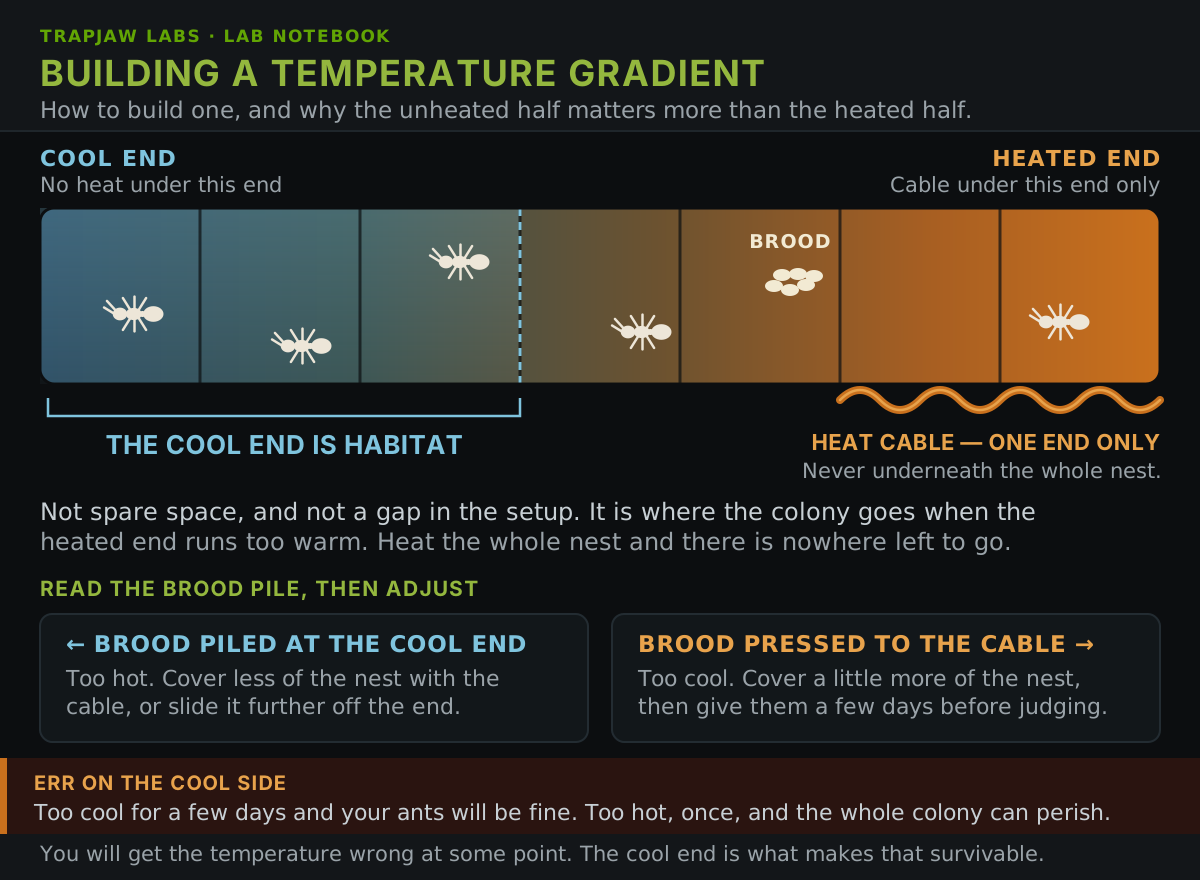
For most ants, the importance of thermo-regulation cannot be overstated. It’s one of the primary reasons ants construct nests. Additionally, different members of the colony require different temperatures. Typically, you want to create a gradient across the nest that allows your ants to choose the conditions best for each member of the colony. We suggest using a heating cable on one side of the nest to achieve this. Similarly to humidity, over time you may get a sense of what temperature conditions your colony needs and can re-arrange the heating to better accommodate. Heating cables can cook your ants if you’re not careful. So take things slow and see how the ants react. Your ants will be fine if they’re too cool for a few days, but if it gets too hot, the entire colony can perish.
Air Exchange
Air-exchange is an important, yet often overlooked, aspect of ant-care. All of the nests we sell are optimized for the appropriate amount of air exchange out-of-the-box. Broadly speaking, you want there to be a slight amount of airflow within the nest to allow for gas exchange as the ants breathe, with much more air exchange in the foraging area. This helps the ants know what is the ‘nest’ and what is the ‘surface’, enables fluon to last longer, and helps prevent microbial growth in your ants’ trash or leftover food.
Substrate
Substrate plays an important role in some ants’ development.
Ants use substrate in many different ways. After all, the majority of ant species nest in the soil.
Larvae in several subfamilies spin a cocoon before they pupate. Ponerines do it, and so do the formicines most people keep, like Camponotus, Lasius and Formica. Loose material helps them get it done, and workers of some species will bank soil up against a mature larva to start her off. How badly it is needed is less settled than the hobby tends to make out. Larvae given nothing to work with will often pupate naked and come out looking perfectly normal. Even so, for soil-nesting species I would offer substrate. It costs you nothing.
There are also some ants that lack a working social stomach, like Aphaenogaster sp. Their crop doesn’t stretch to hold much liquid, and they do very little mouth-to-mouth feeding. So a forager drops a bit of soil or leaf into liquid food, lets it soak, and hauls the soaked piece back to the nest. Messor does it too. Take the substrate away and you have taken away how they move food around.
When formulated correctly, substrate can also be great at absorbing water, aiding to provide a humid environment when necessary.
None of the above is species-specific, and that is the limitation of it. These five are simply the things that go wrong most often when someone is keeping a species nobody has written a guide for yet. Get them right and you have avoided most of the ways a colony dies in captivity. Then watch your ants, and let what they actually do correct the rest.