A New Frontier in Ant-Keeping: Pheidole littoralis
We at Trapjaw Labs are proud to announce that we have the first successful, captive Pheidole littoralis colony! A small, seed specialist with huge majors almost exclusively found within Florida. In this Lab Notebook we will document their unique behaviors, and how we reared this charming species!
After a stormy summer afternoon, a Pheidole littoralis queen was found excavating her founding chamber. Like any good ant-keeper, I jumped at the opportunity to collect such a unique species. With the queen in hand, we were able to appreciate just how beautiful Pheidole littoralis really is.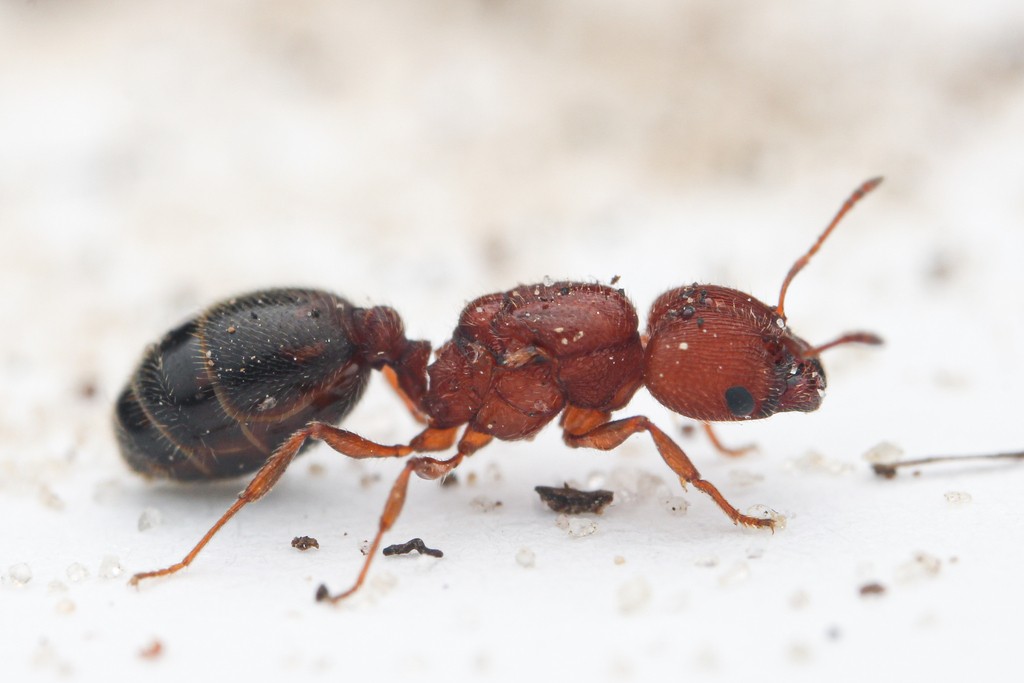
The queen immediately transferred to a test-tube with a TJL sponge. As a claustral species, she soon started rearing her nanitics.
Pheidole littoralis are typically associated with Florida's sandy scrub and sandhill habitats, where they often form "crescent" tumuli out of excavated sand. Workers are often found foraging in loose trails along the hot sand in search of seeds, which they will readily bring to the nest for the "big-headed" majors to process. This species of Pheidole is unique in the absurdity of It's majors-worker's proportions, only rivaled by the trimorphic species; Pheidole tepicana
Back to the queen, around 3-4 weeks after collection, she successfully reared her first nanitics! It was exciting to see her first tiny little workers roaming the test tube in search of their first meal. We then provided them our TJL Seed Mix, and a small pre-killed mealworm. They were surprisingly low maintenance, happily coasting off of just seeds for weeks at a time whilst still steadily growing. It just goes to show, how well-adapted these ants are to a granivorous lifestyle.
After a while, the first majors appeared, that's when we knew they were ready for a new nest. We then provided them with a small, "petri-dish" style nest as a temporary home. 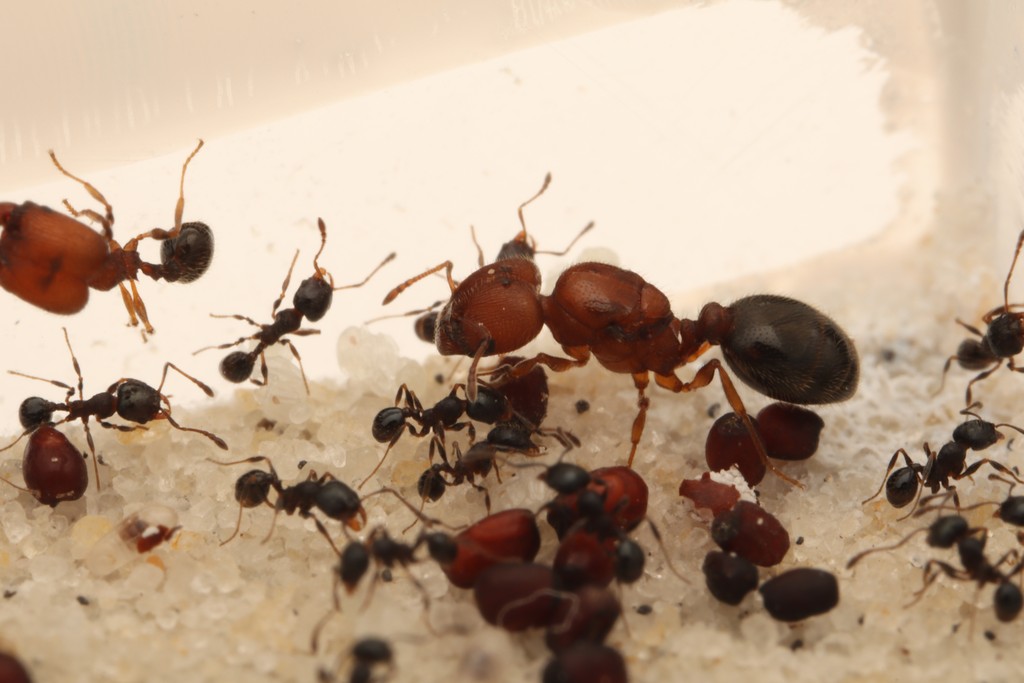
They immediately moved into the nest, where they steadily grew into over the course of a few months. The colony was doing well, It was very interesting seeing the smaller "nanitic" majors slowly getting phased out by the larger "mature" majors. Pheidole littoralis require extremely high humidity as they are commonly found nesting within the well-saturated sandy soils of Florida. The nest was doing a good job of achieving that, but I could tell they wanted more...
While minor workers would often be seen foraging in the outworld, majors workers would almost exclusively reside within the nest, only leaving rarely to help workers process food items in the outworld. They aren't fighters, they are seed-crushing machines, and that they did extremely efficiently. Majors could often be seen within the nest processing seeds, workers hold the seed up to the majors mandibles while she just goes to town.
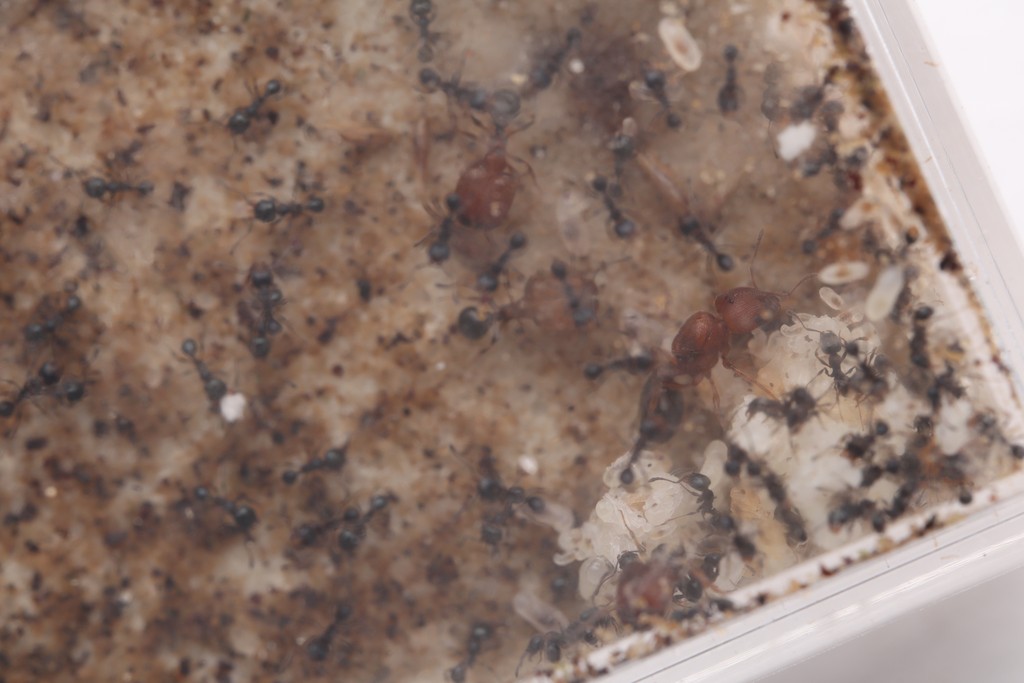
Pheidole littoralis are very sensitive ants, many attempts have been done in the past to rear these ants, all but one has failed. We at Trapjaw Labs have found these ants extremely prone to desiccation, get the humidity wrong? and they will dry out and die within a day. They want their nest almost saturated, how do they stop their seeds from germinating in the wild? We honestly don't know, but in captivity, our Seed Mix is not prone to germination within their ideal conditions.
Our colony soon reached into the hundreds of workers, we knew then they were ready for a new nest... Our Trapjaw Labs Substratum Ant Nest. We disconnected the outworld of their old nest, then placed the entire nest within the outworld of the Substratum. Pheidole littoralis are quite shy for Pheidole, they tentatively explored the outworld, curiously yet cautiously exploring their new environment. We gave them some time to explore their new surroundings, after a day, we had noticed they had barely explored the nest. After some deliberation, we decided the best descension to get them into the nest, was to expose the nest by taking off the lid.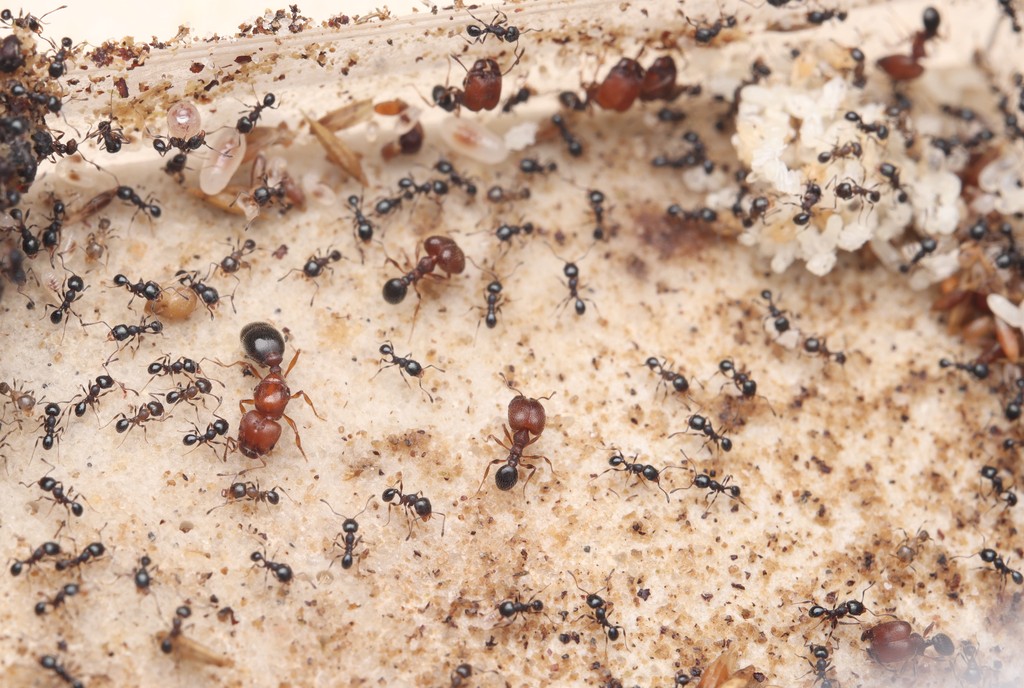
It was a sight to see, workers, majors, and even the queen, on full display running around. It wasn't often you could see them this well. Their old nest's visibility was quite poor. That's a huge part on why we decided to move them into a Substratum, the viewing experience is simply unmatched.
We then shut off the lights for the day to let them settle into their new nest. When returning the following day, the view was immaculate, they had fully excavated and made themselves at home into their Substratum. Workers, majors, brood, and even the queen, all had completely moved into the nest, they seemed right at home, making their indicative "crescent mound" out of excavated sand in the outworld. Seeing that they had moved into the nest, we provided them with their favorite food; the TJL Seed Mix, workers were seen trailing out of the nest to gather the fresh seeds sprinkled throughout the outworld. 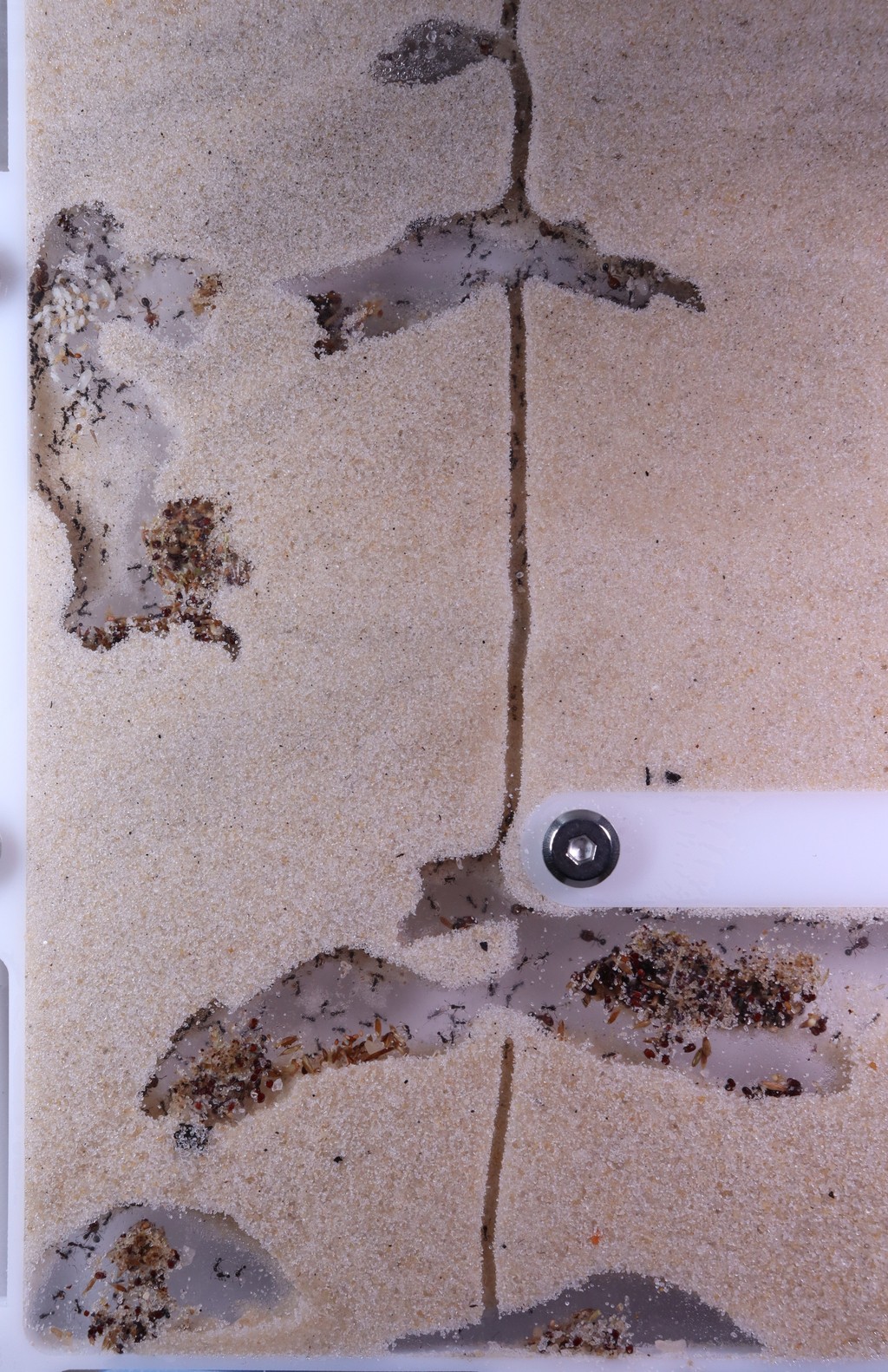
Pheidole littoralis, a species we had previously dreamed to be able to rear successfully, has now been brought into the spotlight as an up-and-coming species for many ant-keepers in the Southeast. Trapjaw Labs is constantly working to progress the ant-keeping hobby as a whole, whether it be developing new nests, creating more educational content, or species breakthroughs like we've had with Pheidole littoralis. We want to provide what is best for the hobby, ease of accessible, good information. We encourage anyone who wants to keep underkept, and or understudied ants, learning more about our ants is how we progress the hobby. Pheidole littoralis is just the start of our journey, we hope to be able to talk about our other species breakthroughs in the future!