Acrylic, Sand, or Plaster? Choosing Your First Nest
The right nest depends far more on your species than on the material it's made from. This guide walks you through acrylic, sand, and plaster, and which ants each one suits.
The Short Answer
The right nest depends on your species, not the material.
Ants that dig their own chambers in soil, like harvester ants, usually do best in sand. Twig ants and other cavity-nesters want a narrow, mostly dry nest instead. Plenty of species in between do fine in either sand or hydrostone. Acrylic gives you the clearest view, and suits species that don't need to dig.
For most ants, a test tube is a perfectly suitable home. This is why every colony we sell ships with a test tube and a small foraging area: a complete setup in its own right. When your ants are ready for a new home, we've written up how to move your colony to a new nest.
Start With Your Species
Two questions to get started:
1. Are you dealing with a soil-nesting species?
2. How humid does your species like its nest?
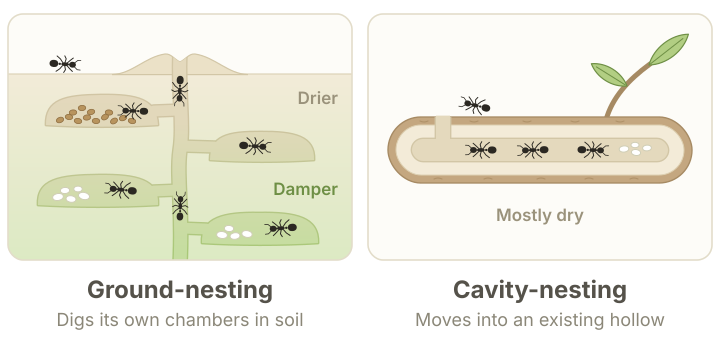
Ground-nesting ants dig an elaborate nest in the soil. Harvester ants, fire ants and most Pheidole spp. are part of this group.
Cavity-nesting ants don't dig at all. They move into spaces that already exist, like hollow twigs, plant stems and old galleries in dead wood. Twig ants (Pseudomyrmex spp.) live in hollow stems not much wider than they are.
Humidity requirements generally follow the same pattern. As an example, our care guide for the Florida harvester ant (Pogonomyrmex badius) calls for extremely high humidity. Its brood can't tolerate even brief periods of dryness. Our Pseudomyrmex guides say the opposite: there should be no source of moisture inside the nest at all.
Our care guides cover over 100 species, and each one tells you what kind of nest suits that species.
Acrylic
Acrylic nests give you the best view of your colony, but depending on their design, they can struggle to maintain adequate humidity.
The chambers are cut into clear plastic. There's nothing to dig, and nothing between you and the brood. That makes acrylic a good fit for cavity-nesters. Our Pheidole care guides recommend a clear nest with thin chambers for a different reason: it shows off the contrast between the big-headed majors and the minors.
Acrylic doesn't hold water on its own. Moisture comes from a sponge or reservoir built into the nest, and the area around it stays wetter than the rest. If that reservoir runs dry, the whole nest dries out with it.
Sand And Soil
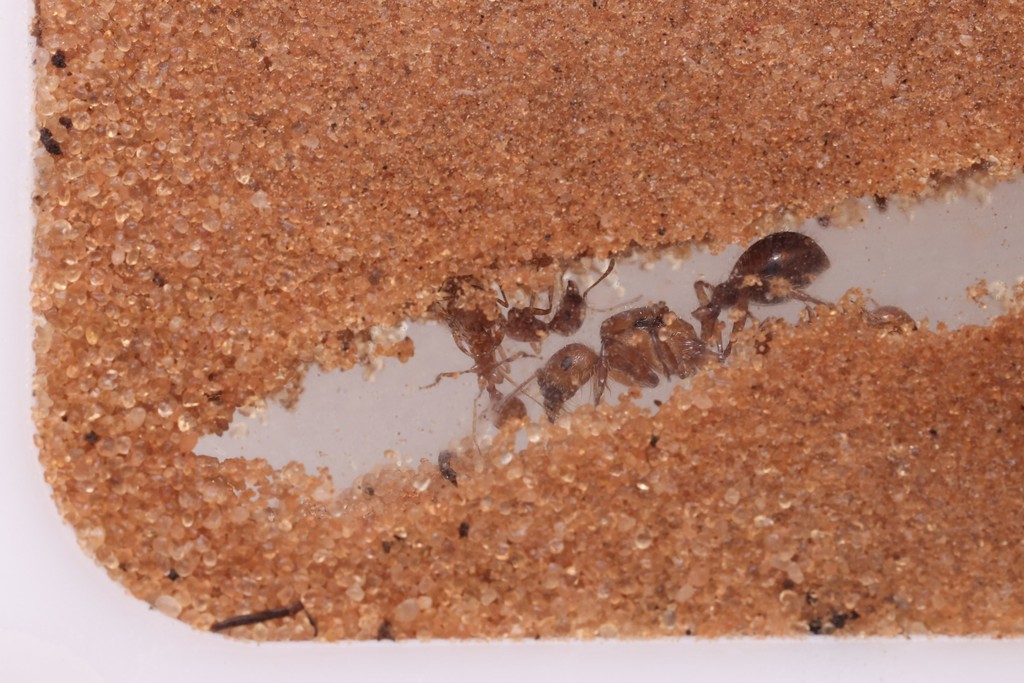
Sand nests let your ants dig their own chambers, the same way most soil-nesting species live in the wild.
You get to watch the colony build its own nest: brood chambers, tunnels and, in harvester ants, granaries packed with seed. Many species will even build their iconic tumuli in the foraging area!
The tradeoff is visibility. Any time you introduce substrate to a setup, it will negatively impact visibility when compared to substrate-less setups.
The Substratum started as a nest for the Florida harvester ant, a species that needs high-humidity chambers and high heat at the same time. Four watering ports let you keep parts of the nest damp and others dry, and the spacer you choose sets how deep the colony can dig. Our substrate mix took nearly two years of testing, and it's made to stay off the viewing panel.
Plaster And Hydrostone
Plaster nests are poured into a mold, where they cure, hardening into a nest for your ants. They're one of the oldest styles of nest in the hobby.
Plaster soaks up water and spreads it through the nest. Plaster of Paris is cheap and easy to cast, but it's soft. Keepers have reported small species like the pavement ant (Tetramorium immigrans) chewing their way out of it. Hydrostone is a much harder gypsum cement, and ants rarely make a dent in a well-mixed hydrostone nest. Our care guides list that same pavement ant, and several other species, as doing fine in either sand or hydrostone.
Damp plaster or hydrostone will grow some mold sooner or later.
Wood And Twig Nests
Twig and wood-nesting ants want a narrow, mostly dry cavity, not a nest full of sand.
This group includes twig ants, acrobat ants (Crematogaster spp.), Temnothorax spp. and some carpenter ants. Our care guides for them call for small, thin chambers and, for the twig specialists, no moisture inside the nest at all. They still need to drink, of course. Their water just goes in the foraging area instead, as a liquid feeder or a hydrated test tube.
The Canopy is our nest for this group. It's designed for species with lower humidity needs, with two spacer depths (4.5mm and 9.5mm), ventilation you can open up or close off, and an optional PVA sponge for species that want a little moisture. It ships with an oak insert you can swap for a white acrylic one. We use oak because it's ant-safe. Some woods aren't, such as cedar.
Where Our Nests Fit
We've evaluated 110 species for The Substratum and 53 for The Canopy, and no species is on both lists.
That's the dig-or-cavity question from the start of this guide. If your species is on one of those lists, the nest's product page will recommend a spacer for it. If it's on neither, check its care guide or get in touch with us. Some species really are better off in hydrostone, acrylic or something else entirely.
Don't Go Too Big
Whatever you choose, size the nest for the colony you have today.
Moving a colony into too big a nest too early is one of the most common mistakes new ant-keepers make. We generally suggest your colony be able to fill at least ~25% of a new nest when it moves in.
Conclusion
There's no one best nest material. Each one works well for some species and poorly for others. Hopefully this gives you a starting-place.
If you're still not sure which way to go, get in touch. We're happy to help you figure out what will suit your colony.