What Protein Should I Feed My Ants?
Protein is what your colony turns into brood. This guide walks you through why fruit flies are the gold standard, what else works, and how much and how often to feed.
The Short Answer
Pre-killed fruit flies, a few times a week, are the best option for almost any ant colony.
Workers mostly run on sugars. Most colonies need protein to rear their larvae and lay new eggs.
Why Protein Matters
Protein goes primarily to the eggs and larvae, not the workers.
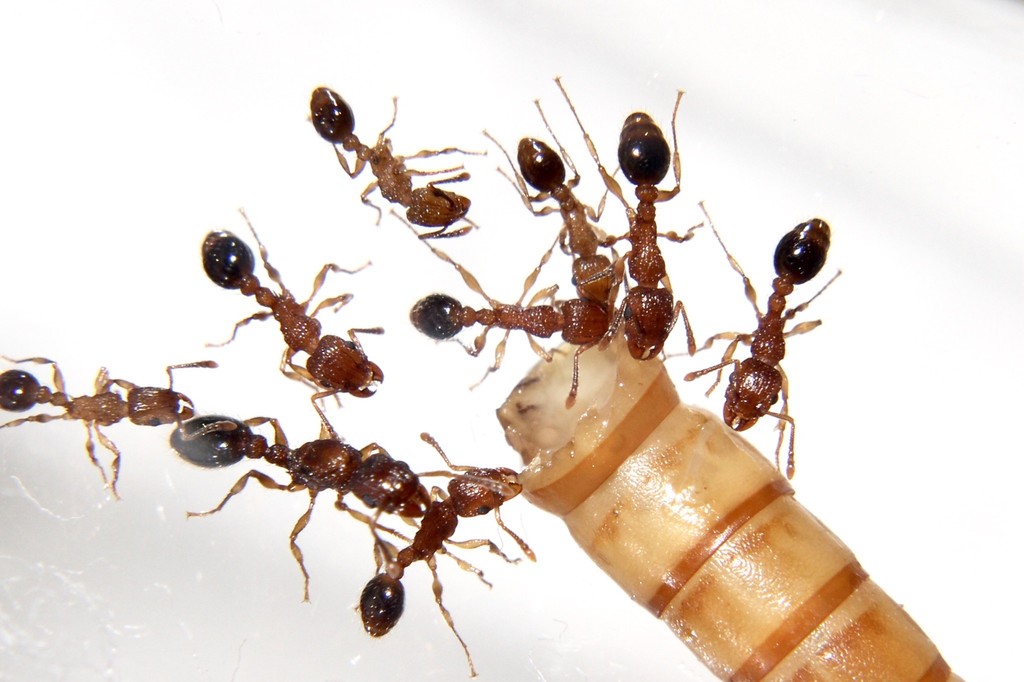
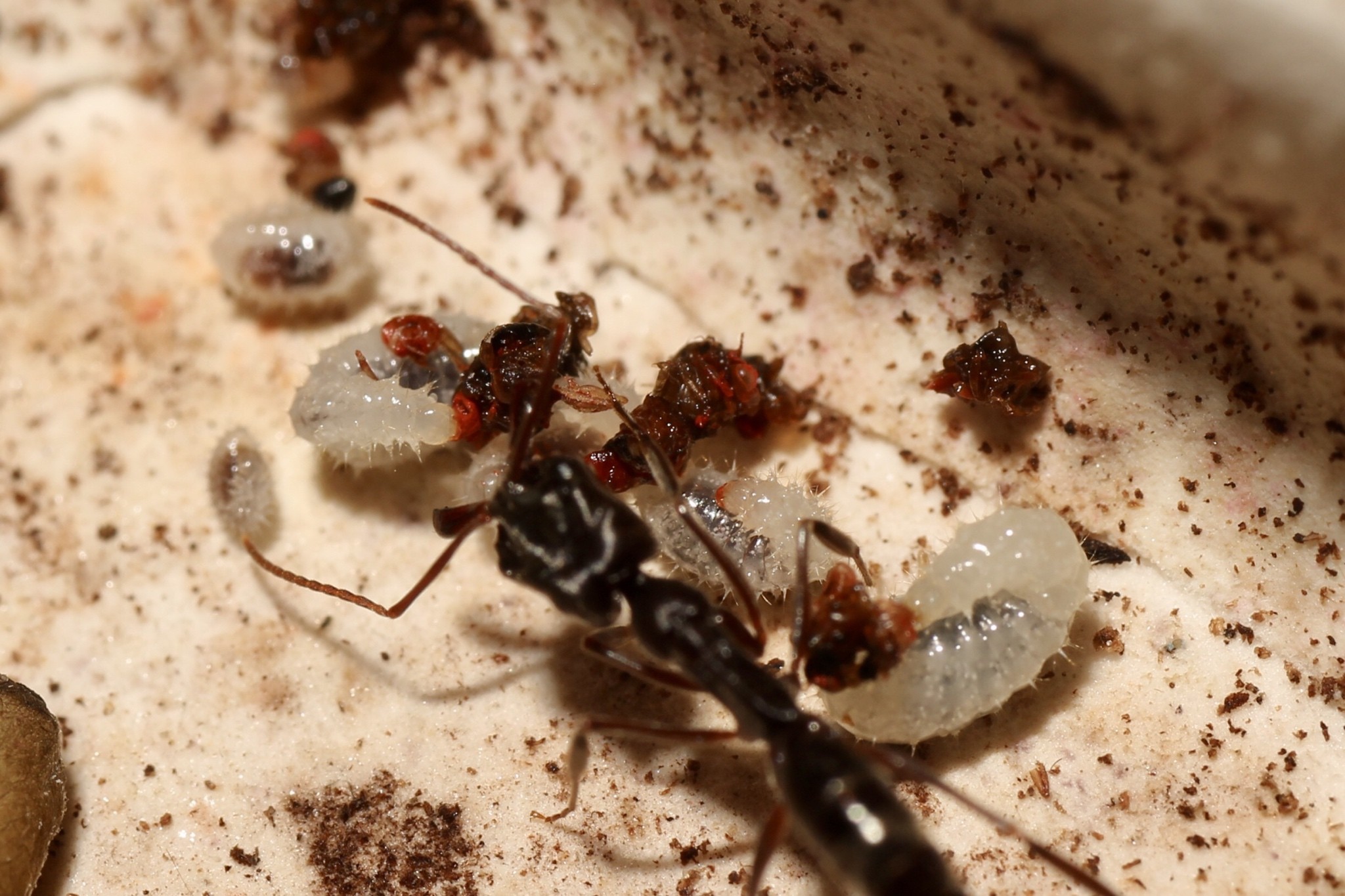
When foragers carry a feeder insect home, most of it isn't for them. It goes to the larvae, which can't develop without it, and to the queen. It's not uncommon to see a large batch of eggs show up shortly after a big protein feeding. In many ants you can also see the larvae munching-down on the protein item after it's been brought back.
As a result, a colony's appetite for protein rises and falls with the amount of brood. A small colony with a big pile of larvae needs a very protein-heavy diet, usually.
When it comes to how much, Camponotus spp., or "Carpenter Ants", are the notable exception. They carry a gut symbiont called Blochmannia that, in layman's terms, supplements their diet and recycles nutrients, so they need far less protein than most ants. Too much protein can actually be harmful for these lineages.
Fruit Flies Are The Gold Standard
If you only ever feed your ants one insect, make it fruit flies.
They're soft-bodied, so even the smallest workers can open them up. One fly is a sensible portion for a young colony, and you scale up by offering more. They're captive-bred, so there's none of the pesticide risk that comes with wild-caught insects. What's left over is also far less likely to mold than a half-eaten cricket.
Additionally, sometimes other types of feeder insects, such as crickets, can eat the ants' brood if the colony does not do a good job of defending it. Fruit flies are simply incapable of this kind of thing.
Two species are commonly sold as feeders, Drosophila melanogaster and D. hydei, and we use them both.
If you only want to culture one, we suggest D. melanogaster.
Buying And Culturing Them
Fruit flies are cheap to buy and simple to culture yourself.
Reptile and amphibian suppliers sell flightless cultures, since dart frog keepers use the same flies. You can often get them at your local PetSmart or Petco now, as well.
Other Feeder Insects
Once your colony is larger, it'll take most feeder insects.
Cockroach nymphs, mealworms and crickets all work well for bigger colonies and larger workers. Termites are a favorite of many species too.
Mealworms and crickets have tough exoskeletons, however. Whole hard-shelled insects get ignored more often than not, so slice them open or cut them into pieces first. The smaller your ants, the smaller the pieces should be. A 2mm worker can't do much with a whole mealworm.
Pre-Kill Everything
Feed insects dead, not alive.
Live feeders can fight back, and easily injure or kill workers in a young colony. Freezing is the easiest way to pre-kill them, and it also knocks down any mites that came along for the ride. We suggest leaving your feeder insects in the freezer overnight before feeding.
How Much And How Often
Offer roughly what your colony can finish in a day and then remove the leftovers.
How often varies by species. Harvester ants get part of what they need from seed, which What Do Harvester Ants Eat? covers in detail, and your species' care guide in the Care Advisor has its specific schedule.
If an offering is gone within a few hours, offer a bit more next time. If it's still sitting there the next day, offer less. You cannot over-feed most ants.
Feed atop something you can easily remove, like the Feeding Dish that ships with every colony, and remove anything uneaten after about 24 hours.
When They Won't Take It
A colony can ignore offered protein for many, many reasons.
Most often, there's no need to eat more protein, they have enough. A colony between batches of larvae, or winding down toward diapause, can ignore protein for days and then take it eagerly the following week.
Some species are also shy, or forage mostly at night. If an item keeps going untouched, try placing it closer to the nest entrance, stepping away rather than watching, and leaving it overnight before you pull it.
Founding Queens
Whether a founding queen needs protein depends on how her species founds.
Claustral queens raise their first workers on their own reserves and don't need feeding until those workers arrive. Semi-claustral queens have to be fed, usually small pre-killed insects, semi-regularly until nanitics arrive. How Long Until My Queen Has Workers? lists which is which.
What's Next
Start with fruit flies, offer them a few times a week, and scale it to your brood.
Your species' care guide in the Care Advisor covers its exact schedule and the feeders we use for it. If your colony won't touch protein and you're not sure why, get in touch. We're happy to help you work out what's going on.