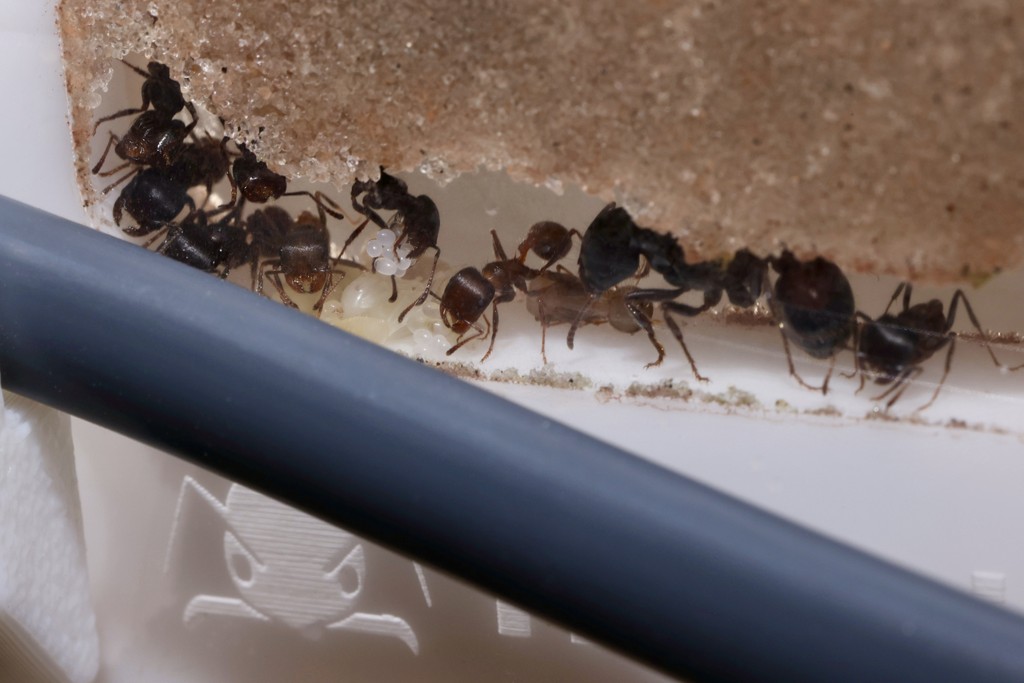
How To Heat An Ant Colony With A Heat Cable
Heat can be massively beneficial for your ants, but it can also kill them. This guide walks you through building a temperature gradient, reading how your ants respond, and knowing when not to heat at all.
The Short Answer
Heat one side of the nest, never the whole thing, and allow your ants to choose where they want to be.
Room temperature is below the ideal temperature for the vast majority of ant species, so most ants do better with some supplemental heat. The goal isn't to bring the whole nest up to one temperature, however. It's to give the colony a range, from warm to cool, and let them sort themselves out within it.
Before you change anything, look your species up in the Care Advisor. Every guide lists the temperatures we suggest for that species.
Why A Gradient
Different members of the colony do best at different temperatures.
Thermoregulation is one of the primary reasons ants build nests in the first place. In the wild, workers regularly move brood up and down through the soil as it warms and cools throughout the day. A nest held at one flat temperature takes that choice away from them.
A heating gradient enables the ants to naturally thermoregulate every member of the colony. The brood gets the warmth it needs to develop quickly, and the workers and queen can sit wherever they're most comfortable.
Setting It Up
Run the heating cable along one side of the nest and leave the other side at room temperature.
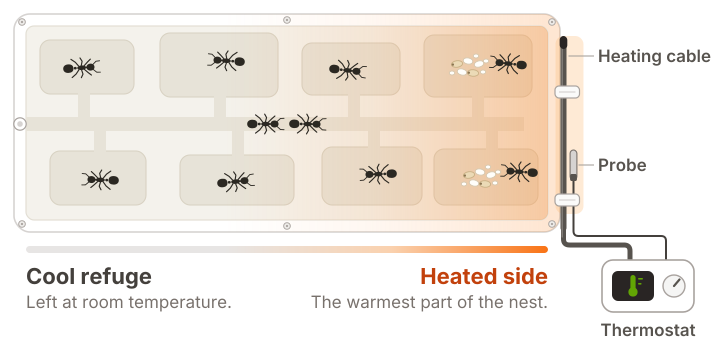
Our Heating Cable is made for exactly this, and the Heating Cable Clips that ship with our nests hold it in place. Keep only a part of the nest heated, not the entire thing. It's absolutely critical your ants have a cool refuge to retreat to if things get too warm, and if you heat the whole nest, there's nowhere left for them to go.
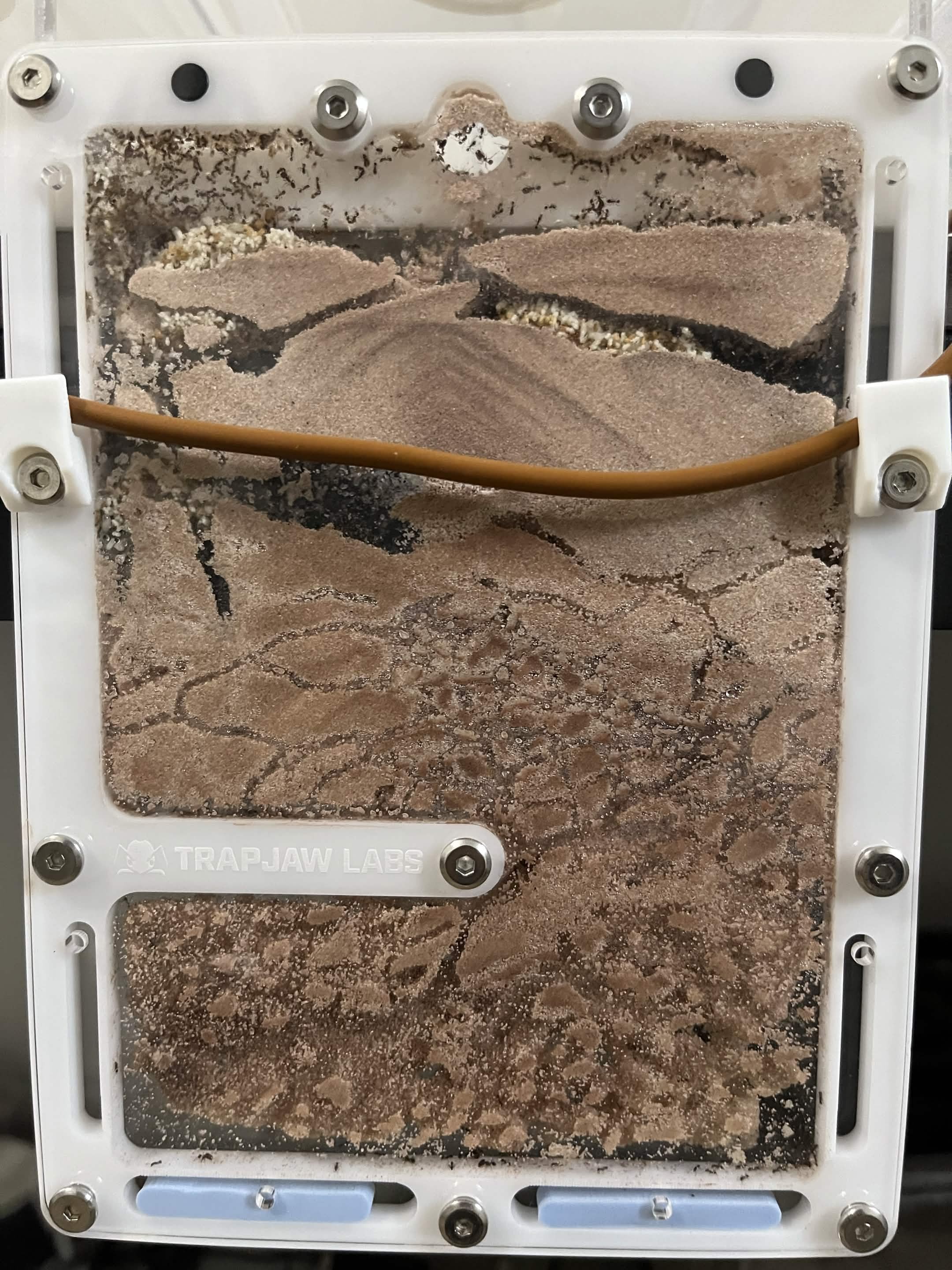
Heating a Substratum. Our Substratum Sand Ant Nest stands upright, so the gradient runs from top to bottom instead of side to side. Run the cable straight across the front of the nest, about a third of the way down, and hold it in place with the two Heating Cable Clips that come with the nest, one on each side of the frame. That warms the upper chambers, while the bottom of the nest stays cool and humid down by the sponges. It's a lot like soil in the wild, where the top few inches warm up in the sun and it usually gets cooler and damper the deeper you go. Your ants will likely move their brood up toward the warmth, like the colony below.
Heating the foraging area is optional. It'll usually make your ants more active, but it's not required for their well-being.
Use A Thermostat
A thermostat keeps the warmest part of the nest at a pre-determined temperature.
Without one, a heating cable puts out the same amount of heat whether your room is 65°F or 80°F. We recommend pairing the heating cable with a thermostat, with its probe at the warmest part of the nest, and never setting it higher than your species can handle. For most of the species in our Care Advisor, that's somewhere between 85°F and 95°F.
Heat also dries a nest out faster. Once the heat is on, check the water more often than you're used to.
Take Things Slow
Set it up, then watch how your ants react over the coming days.
Things can sometimes get a little too hot a little too quick. Your ants will be fine if they're kept cooler than optimal for a while, but if it gets too hot, the entire colony can perish. So take it slow. You should adjust the heating over the course of days, if not longer.
If the colony moves out of the nest entirely, or brood starts disappearing, turn the heat off and let the nest come back down to room temperature before trying again.
Who Shouldn't Be Heated
Not every species should be heated.
When it comes to Fungus-Farming ants, like Atta, Acromyrmex and Trachymyrmex, we encourage ant-keepers to let the colony sit at whatever the ambient temperature is. They benefit from being kept around 80°F, but they're fine at room temperature in most homes, and heating cables can cause condensation in the nest that's dangerous to both the ants and their fungus.
Heat And The Seasons
Species that diapause need their heat taken away for the winter.
Many temperate ants, like Lasius, Formica, northern Camponotus, etc., have an "internal calendar" that tells them when winter is coming, whether or not it's actually cold. Keeping them heated throughout the winter won't stop them from thinking it's winter. They'll simply wait for a winter that never comes, eventually causing the entire colony to perish.
Watch your ants rather than the calendar. When larvae stop developing, the queen stops laying and foraging drops off, remove the heat and keep their water and sugar stocked. Our write-up on how to diapause your ants covers the rest. When they come out of it, bring the heat back gradually, the same way you set it up the first time.
What's Next
Look up your species, heat one side of the nest, start low, and let the ants tell you what to do.
If you're not sure what your colony is telling you, get in touch. We're happy to help you work out what's going on.