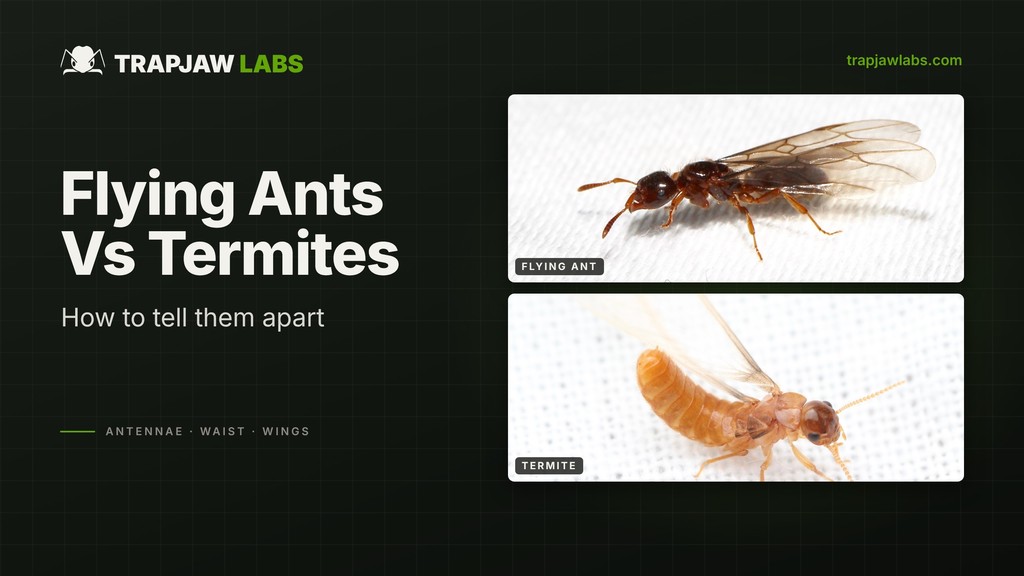
Flying Ants Vs Termites: How To Tell Them Apart
Flying ants and termite alates show up in the same kind of weather, and both leave piles of shed wings behind, so they're easy to mix up. Up close, though, they're easy to tell apart. Here's what to look for and when they have their nuptial flights.
The Three Differences
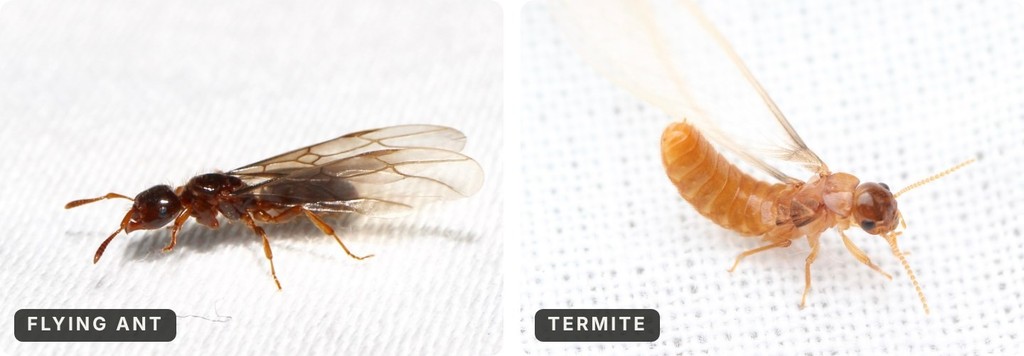
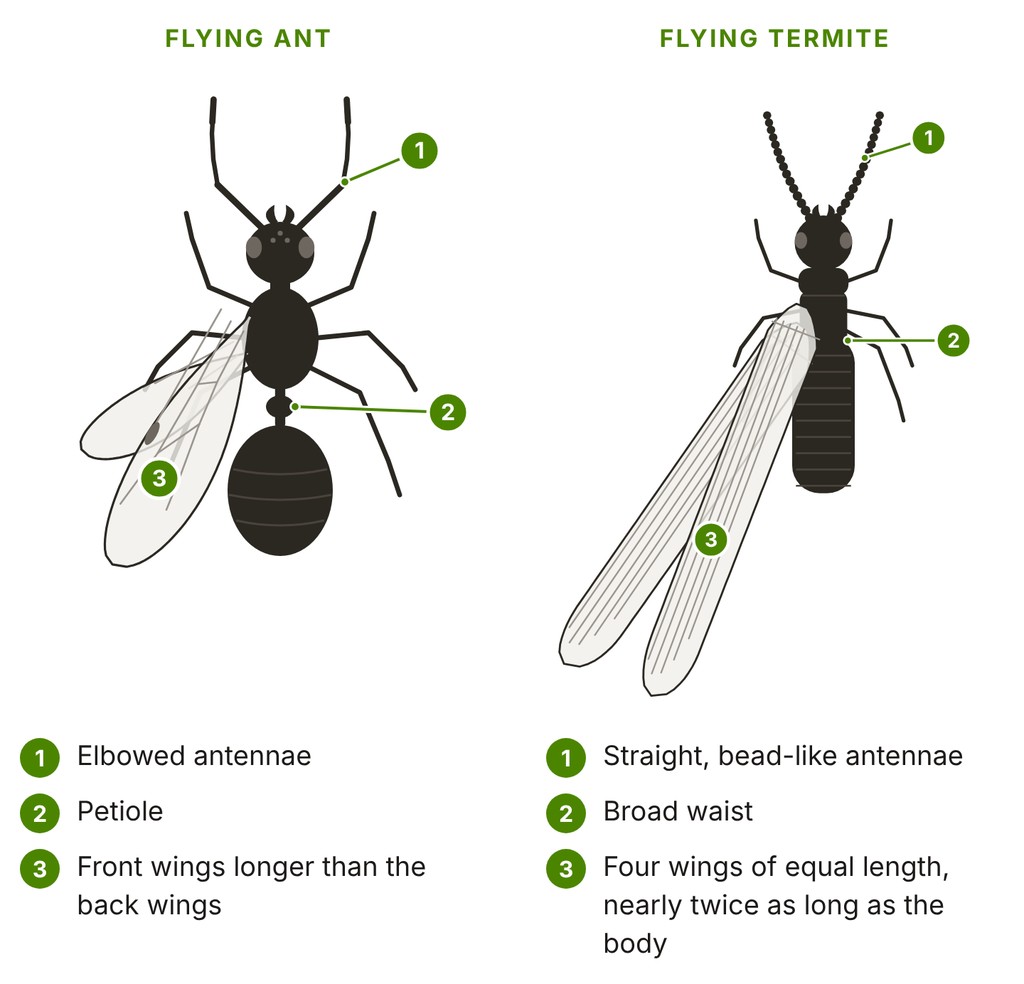
Check three things: the antennae, the petiole and the wings.
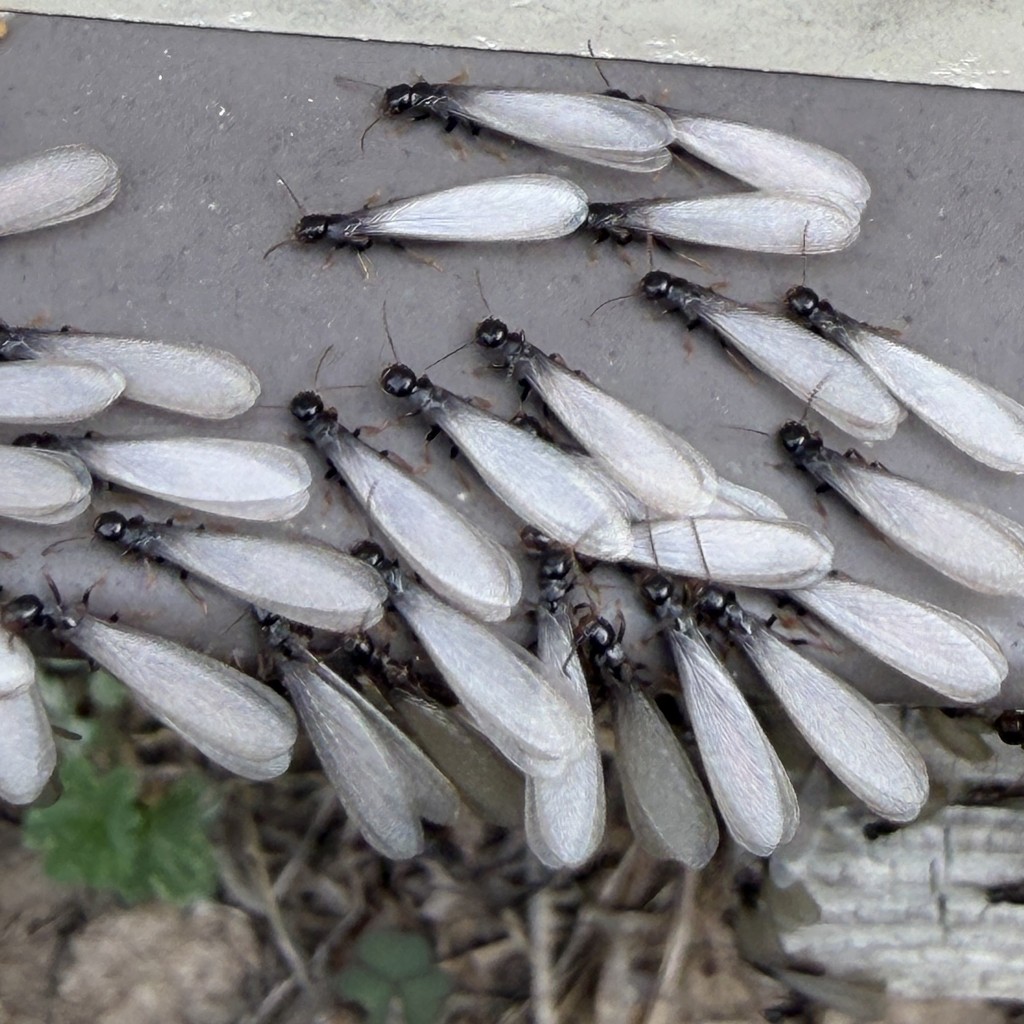
An ant's antennae are elbowed, with a long first segment and then a sharp bend. A termite's antennae are straight and look like a string of tiny beads.
An ant has a pinched, narrow waist between its thorax and its gaster. This is known as the petiole. A termite lacks this trait.
Both have four wings, but an ant's front wings are longer than its back wings. A termite's four wings are all the same length.
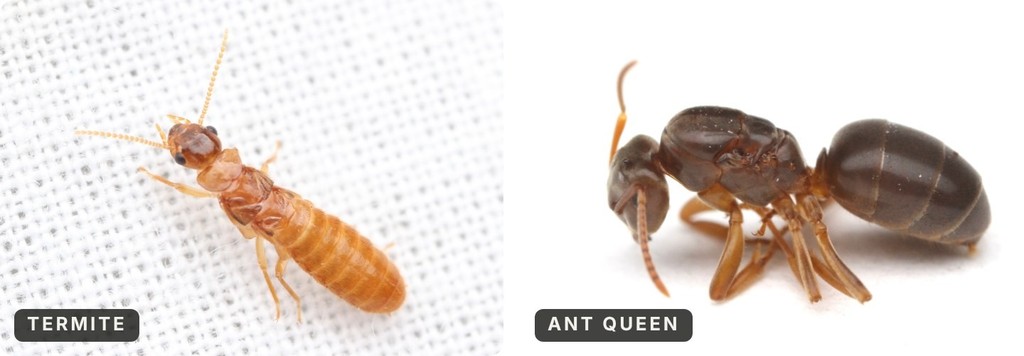
If you're trying to identify an individual which has de-alated, you can still tell them apart by the other characteristics.
Why Both Have Wings
Only the reproductives, or alates, have wings, and they use them to leave home and find a mate.
Most ants and termites never have wings. Once a colony is mature, it raises a batch of alates (future queens and males in ants, future queens and kings in termites). They leave the nest together in a mass flight to find mates from other colonies. Ant-Keepers call this a nuptial flight. Termites have nuptial flights too.
Male ants die soon after mating, and the mated queens shed their wings and look for a place to start a colony on their own. Termites pair off, instead. After a short flight, a male and a female drop their wings and run off in tandem, one right behind the other, to start a colony together as its king and queen.
If you're hoping to catch a queen ant of your own, How To Find And Catch A Queen Ant After A Nuptial Flight guides you through that.
When Ants and Termites Fly
Subterranean termites mostly fly in spring, while ants fly from spring through fall.
Both like to fly on warm days after a rain.
Eastern subterranean termites live across most of the US and fly during the day, mostly from March to May. In Florida, they can start as early as January.
The invasive Formosan and Asian subterranean termites fly at dusk and are attracted to lights. Across the Southeast, Formosan termites fly from April to June, peaking in May. Asian subterranean termites live mostly in South Florida and fly from February to April.
Drywood termites don't follow that spring pattern. The southeastern drywood termite flies at night from May to November, while California's western drywood termite flies during the day in the fall.
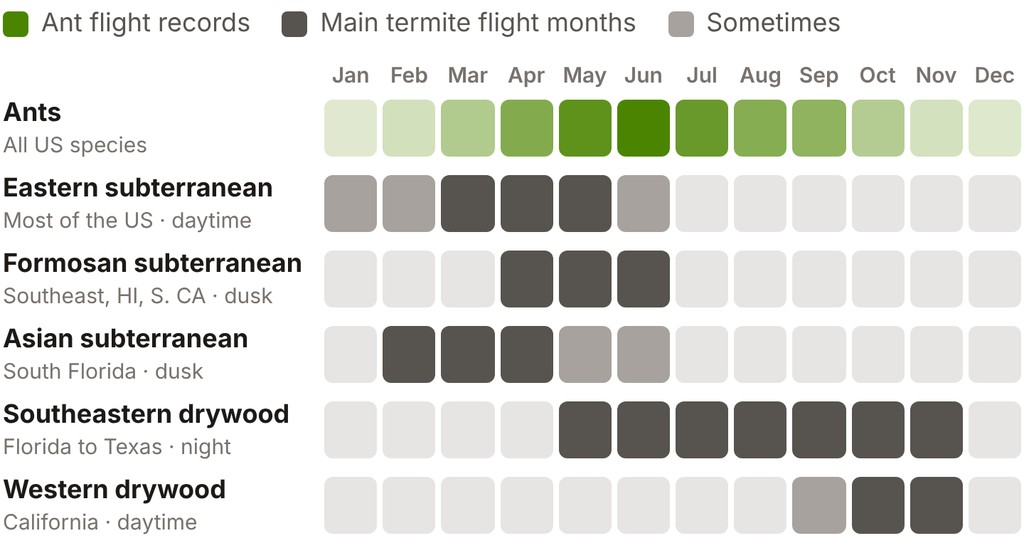
Somewhere in the US, ants are flying in every month of the year, but most flights happen in late spring and summer, peaking in June. Some species fly after dark, too. Florida carpenter ants fly in the evening or at night from May through November.
If you'd like a closer look at which ants fly when, check out The 2025 US Nuptial Flight Season In Review and Southeastern US Ant Nuptial Flights.
Found Them Inside?
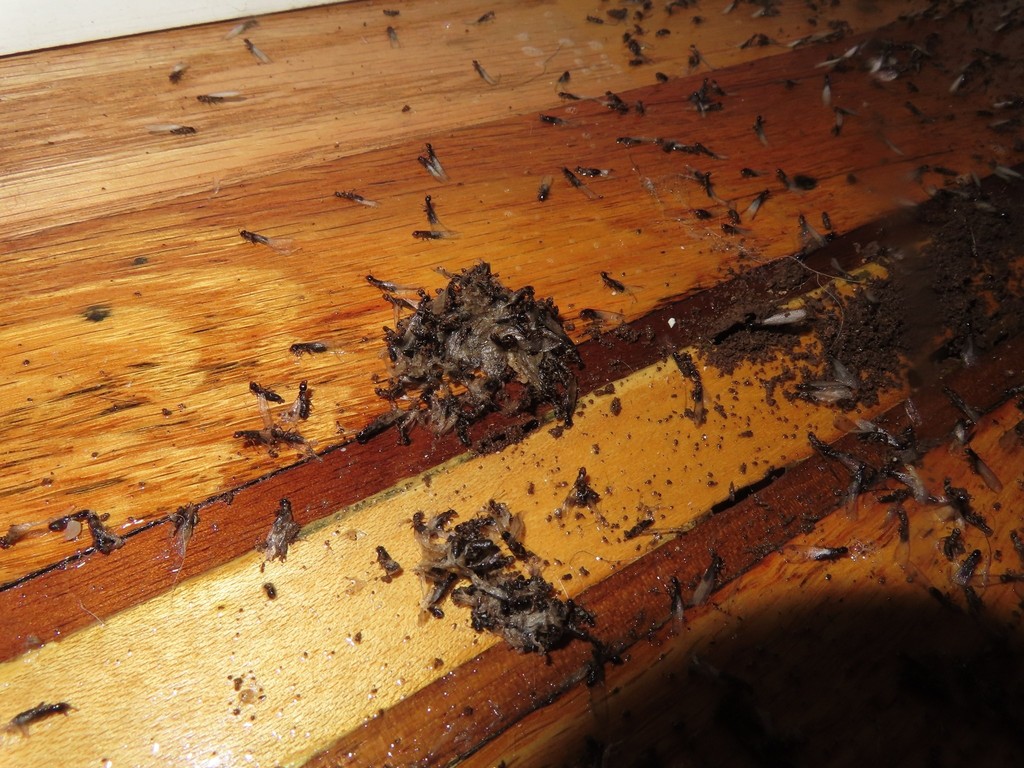
Winged termites indoors almost always mean an infestation, but the alates themselves can't hurt anything.
Termite alates that emerge inside can't damage wood, and they only live for about a day. Most end up dead near windows or in sinks and bathtubs. A flight in your yard, on the other hand, doesn't necessarily mean your house has termites.
A colony doesn't fly until it's mature, and for eastern subterranean termites that can take 5 to 10 years. So witnessing a nuptial flight suggests the colony has been there a while. However, termites damage wood slowly, so there's no need to panic. If you find alates inside:
With ants, it depends on how many you find. A few winged ants may have flown in from outside, but large numbers usually mean there's a nest somewhere in the house. Citronella ants, like the queen at the top of this post, are often mistaken for termites. They sometimes fly into living areas, but they won't nest in your home or damage it.
Both can show up in winter. Termites sometimes fly indoors in buildings with heated basements, and pavement ants can fly near heated slabs.
Carpenter Ants Vs Termites
Both tunnel through wood, but only termites eat it.
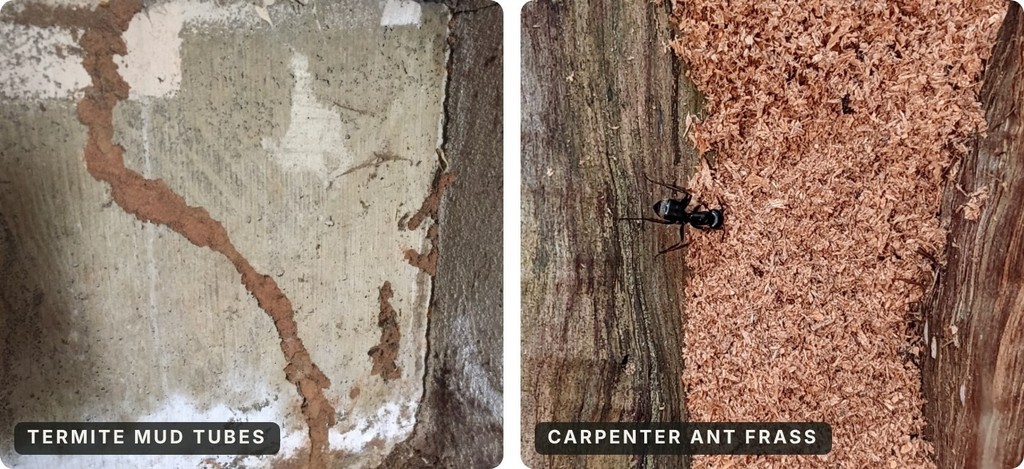
Carpenter ants dig their nests in wood without eating it. They push the shavings out of the nest into small piles that look like coarse sawdust mixed with bits of dead insects.
Termites eat the wood, hollowing it out along the grain and leaving bits of dried mud or soil in their galleries. Subterranean termites also build pencil-wide mud tubes between the soil and the wood. Drywood termites leave small piles of hard, six-sided pellets instead.
Do Flying Ants Bite Or Sting?
Some can, but male ants can't sting at all.
In ants, bees and wasps, the stinger is a modified ovipositor (egg-laying tube). Only females have one, so male ants can't sting. Queens do have a stinger in species that sting, like fire ants. Other ants, like carpenter ants, don't have a stinger at all, but they can bite. Termites don't have a stinger, either.
How Long Do Flying Ants Live?
Flying ants don't live long once they leave the nest. Males die soon after mating, and most of the new queens die within hours. The ones that make it can live a long time, though. Fire ant queens can live seven years or more, and the current record for longest-lived queen is a Lasius niger queen that lived almost 29 years in captivity.
If you're still not sure what you've found, get in touch and send us a photo. We're happy to help you figure it out.