The TrapJaw Labs Shop
High-quality Ant Nests, Colonies, and Ant-Accessories for every level of ant-keeper.
Not sure where to start?
Let us guide you to the perfect setup, whether it's a gift, a hobby, or a classroom project.
Colonies
46 productsLive ant colonies, from beginner-friendly species, to rare for advanced keepers. We have a wide selection of queen ants, in their colonies, for sale.

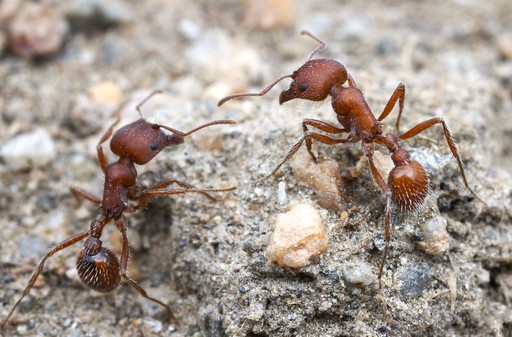
Pogonomyrmex occidentalis
Western Harvester Ants Pogonomyrmex occidentalis is an iconic mound-building harvester of the Great Plains and Intermountain West, ranging from the western Dakotas and Nebraska south through Wyoming, Colorado, and New Mexico and west into Utah, Nevada, and east-central California, holding to higher-elevation grassland, sagebrush, and pinyon-juniper clearings rather than true desert. Colonies raise a conical mound up to 135 cm across and shingle it with gravel carried in from the surrounding surface, substituting freely where gravel is scarce: gypsum, selenite, lignite, petrified wood, snail shells, and, in North Dakota, the teeth of small extinct mammals (Wheeler and Wheeler 1963).

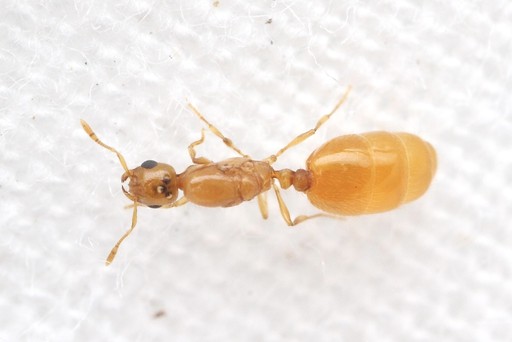
Pheidole bicarinata
Variable Big-headed Ants Pheidole bicarinata is a small, strongly dimorphic ant distributed across much of the United States, from New Jersey south to northern Florida and westward through Nebraska, Colorado, and Texas to Utah and Nevada, with a preference for open sandy sites at the moister end of the xeric spectrum, grasslands, arid valley bottoms, and ruderal habitats including lawns and road shoulders. Colonies are small, often just a few hundred to few thousand workers, nesting under ground-covering objects, in rotten downed wood, or in open soil beneath a small crater that is typically incomplete and crescent- or wedge-shaped.

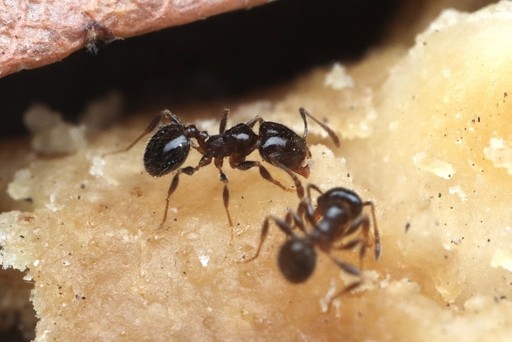
Camponotus castaneus
Chestnut Carpenter Ants Camponotus castaneus is a warm-climate forest dweller of the eastern United States that departs from the typical carpenter-ant nesting pattern: it commonly nests in soil or under stones, or in rotten stumps, logs, and fallen branches in contact with the ground, forming moderately populous colonies that are notably timid and apparently primarily nocturnal. It has been recorded from a wide range of habitats, deciduous and mixed forest, oak and longleaf pine sand barrens, pine flatwoods, hardwood hammock, sand pine scrub, recently burned stands, and urban sites, with increased abundance in disturbed areas.

Pheidole morrisii
Morris' Big-headed Ants Pheidole morrisii is a strongly dimorphic sand specialist ranging from Long Island south through peninsular Florida and west to Illinois, Missouri, Oklahoma, and Texas, the most abundant ant of the longleaf pine flatwoods of north Florida, where it builds crater mounds in open sand or nests at the base of grass clumps. Colonies are large, censused as high as 49,000 workers (Murdock & Tschinkel 2015), and vary in social structure across the range: northeastern populations found pleometrotically and retain multiple queens, one of the very few documented cases of primary polygyny in ants, while southeastern colonies are monogyne and frequently polydomous.
Ant Nests
3 productsYour one-stop-shop for ant nests/formicaria/ant farms.

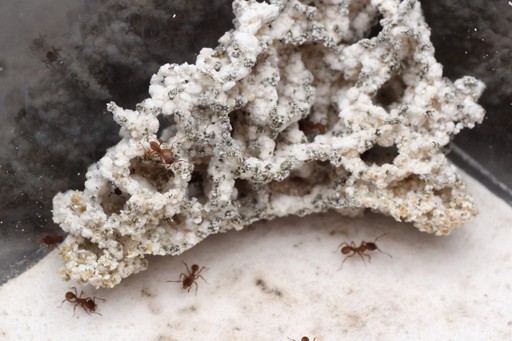
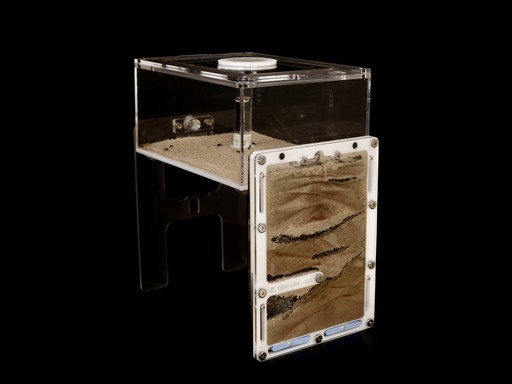
Substratum Sand Ant Nest
Foraging Area Included Engineered Sandy Substrate Regional Watering Ports Four Spacer Choices Standing or Shelf Configuration TrapJaw's Substratum™ Nest Natural excavation. Engineered control. Most formicaria offer either a natural digging environment or a clear, manageable view of the colony. Substratum was designed to provide both. Your ants excavate their own tunnels and chambers inside a professionally developed substrate-based system, built around the way ants live in the wild. Spacers Choose from four widths or follow the recommendation for your selected species. The spacer sets how much depth the ants have to dig. A thinner spacer improves visibility, but that means that they are more restricted in nest construction and overall capacity. Ultimately, the choice is yours! Engineered Substrate After nearly two years of testing, we’ve settled on the perfect mix. Our substrate has improved structural properties, retains moisture, and stays off the panel so you have an unrivaled view into the ants’ underground world. Regional Watering & Humidity Control Four regional watering ports let you create moist and dry areas throughout the nest, allowing the colony to choose the conditions they need for different types of chambers. For example, you can watch as your harvester ants store their seeds in a dry granary, while lower chambers are reserved for moisture-loving eggs and larvae. PVA sponges provide humidity into the lower chambers, where the queen is likely to settle in. Versatility Substratum may be configured to stand upright on the included legs, or mounted to a shelf with the included 3M velcro dots for an immersive viewing experience. Additionally, a separate nest module can be purchased for a double-nest configuration on a single foraging area. The nest ships with 3/8" and 1/2" AntDock ports and a 16mm TubeDock, so the setup can grow with the colony. Run vinyl tubing out to another foraging area, place a standard 16x150mm test tube straight into the foraging area, or close a port off entirely with the included AntDock blocker. Approximate Dimensions Nest: 5.75" long, 7.75" tall, variable width Included Medium Foraging Area: 8" long, 6" wide, ~4.5" tall Assembled (standing): 9.5" long, 6" wide, 11" tall What’s in the box 1× Nest w/ Insert 1× Medium Foraging Area 1× Legs (Standing Configuration) 2× 3M Velcro Dots (Shelf Configuration) 1× Bag of Substrate 1× Plastic Funnel 2× Heating Cable Clips • Hex Wrench & Foraging Area Attachment Screws • 3/8" & 1/2" AntDock Ports 1× AntDock Blocker 1× 16mm TubeDock 1× Syringe with Blunt-Tip Needle 1× Instruction Card Recommended accessories Liquid Feeder or Test Tube Required Your ants need fresh drinking water in the foraging area. Fluon Escape Barrier Optional Extra insurance against escapes while you work in the foraging area. Heating Cable Optional Some species grow faster with supplemental heat. Clips are in the box. This item is made to order. Depending on demand, orders may take longer to ship.

Arboreal Ant Nest
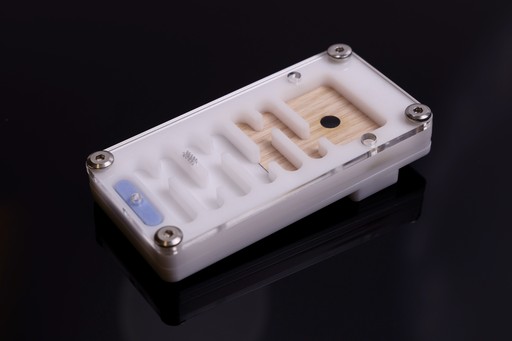
Wood and Acrylic Inserts Optional Humidity Supply Adjustable Ventilation System Upright or Hanging Configuration Pre-Assembled TrapJaw’s Arboreal Nest Provides a unique opportunity to display cavity-nesting and arboreal ants. Designed for species that have lower humidity requirements and benefit from verticality, these nests provide modular setup options: Spacers Small (4.5mm) and large (9.5mm) spacer sizes allow you to choose the right option for your ant species. Size and pairing We generally recommend pairing a nest with its same-sized foraging area. Small (2"x4") & Medium (4"x6") Nests Compatible with all TJL Foraging Areas Large (8"x8") Nests Compatible with Medium and Large Foraging Areas Real Wood Each nest comes assembled with an oak wood insert that can be switched out with an included white acrylic insert before moving ants inside. More insert styles are coming soon. Humidity & Hydration Specialty PVA sponges supply optional humidity into the chambers. Arboreal Nests must be used in combination with fresh drinking water supplied in the foraging area. Please see the Compatible Species list above for the ant species we have evaluated for compatibility in our Arboreal Nests. Contact us for help ensuring proper formicarium selection for your ants. Adjustable Ventilation Thoughtfully-placed ventilation holes allow the keeper to increase or reduce airflow into the nest. During setup, simply flip the viewing plate over to exclude the ventilation holes and ensure higher humidity and improved security to prevent even the tiniest ants from escaping. Nests with large spacers come with ventilation holes exposed, and nests with small spacers are assembled with the holes excluded. Versatility Arboreal nests may be configured to stand upright with the foraging area or allowed to hang off the side of a shelf for an immersive viewing experience. What’s in the box 1× Assembled Arboreal Nest 1× Wood Insert 1× Acrylic Insert 1× Hex Wrench • Foraging Area Attachment Screws • Heating Cable Clips 1× Syringe with Blunt-Tip Needle 1× Instruction Card Recommended Accessories Foraging Area The nest attaches to it, and that’s where your ants forage. Required Liquid Feeder or Test Tube Your ants need fresh drinking water in the foraging area. Required Heating Cable Some species grow faster with supplemental heat. Optional This item is made to order. Depending on demand, orders may take longer to ship.

Foraging Areas
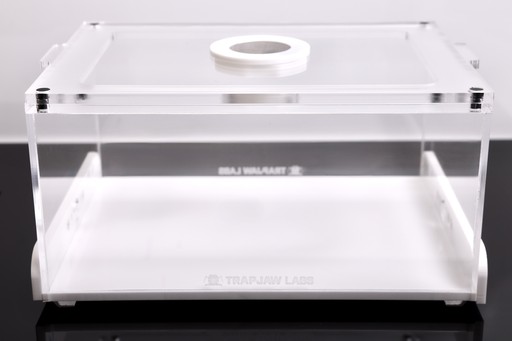
Scratch-Resistant Acrylic Frosted Barrier Rim Ventilated Magnetic Lid AntDock Port Connections Four Size Choices TrapJaw’s Foraging Areas Everything your colony does outside the nest happens here. Made in-house from premium acrylic, each foraging area attaches to a TJL nest or works as an outworld for a test tube setup. Available in four sizes (or contact us for a custom order): Durable Cast Acrylic Every panel is cut from premium cast acrylic, so the view stays clear through years of feeding, cleaning and rearranging. Unlike extruded or injection-molded models available elsewhere, our foraging areas are designed to maintain their aesthetic and functional value for years to come. They are scratch-resistant and clearer than glass! Sizes and ports Every size shares the same rim, lid and port hardware. Small (6"L x 4"W x 4"H) 1 AntDock Port Medium (8"L x 6"W x 4"H) 2 AntDock Ports Large (10"L x 8"W x 5"H) 4 AntDock Ports Extra Tall (10"L x 8"W x 10"H) 4 AntDock Ports Frosted Barrier Rim An acrylic rim runs around the top of the foraging area, giving a Fluon or oil barrier an upside-down, super smooth surface for superior escape prevention. Taking lessons learned from our work as museum exhibit designers, we’ve implemented frosted acrylic to obscure the barrier to improve display aesthetics without affecting use. Ventilated Magnetic Lid A rigid lid attaches with magnets and provides ventilation through our flexible stainless steel mesh vents. These vents can be removed to increase airflow, as long as an effective escape barrier has been applied. Ports & Connections Each foraging area comes equipped with one to four ports depending on size, with 3/8" and 1/2" AntDock connectors included for use with vinyl tubing. Run tubing out to a nest or a second foraging area, place a standard 16x150mm test tube straight into the foraging area, or close a port off entirely with an AntDock blocker. Nest pairing We generally recommend pairing a nest with its same-sized foraging area. Substratum Sand Ant Nest Ships with a Medium Foraging Area Small (2"x4") & Medium (4"x6") Arboreal Nests Compatible with all TJL Foraging Areas Large (8"x8") Arboreal Nests Compatible with Medium and Large Foraging Areas What’s in the box 1× Foraging Area 1× Ventilated Magnetic Lid 1× Hex Wrench • 3/8" & 1/2" AntDock Ports • AntDock Blockers Recommended accessories Fluon Escape Barrier Optional The frosted rim is made for it! Liquid Feeder or Test Tube Optional Your ants need fresh drinking water in the foraging area. Vinyl Tubing Optional Connects the foraging area to a nest or to another foraging area.
Accessories
13 productsAll of the accessories your ants need to do their best.

Test Tube Sponges
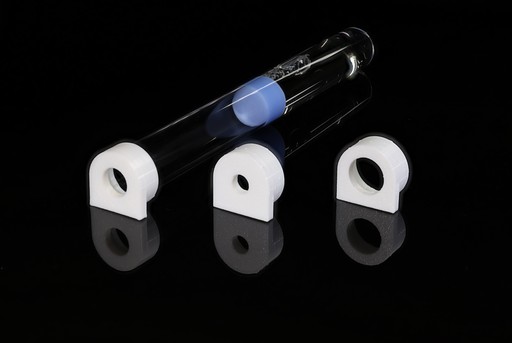
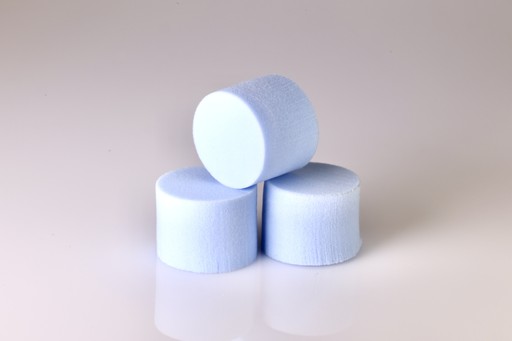
Higher Humidity Slower Moisture Loss Mold-Resistant Fits 16mm Test Tubes TrapJaw’s Test Tube Sponges Intended to replace the wet cotton in a traditional test tube setup. A PVA sponge maintains interior humidity closer to the conditions most soil-nesting species prefer. We logged PVA and cotton tubes for 53 days, and here are our results: Higher Humidity We treat 90–100% relative humidity (RH) as the target for most soil-nesting species. The TJL sponge tube sat between 90-100% RH for all 53 days. The cotton tube never reached higher than 86% RH during the trial. 53 Days Inside The Tube A probe sat inside each tube and logged a reading every minute, May 29 to July 21. TJL Sponge Tube Humidity 92.6–96.7% RH Drying-Pull (VPD) 0.188 kPa average Ideal 90–100% Band Within range all 53 days Cotton Tube Humidity 81.6–86.0% RH Drying-Pull (VPD) 0.618 kPa average Ideal 90–100% Band Below it the entire time The lower the "drying-pull" value, the better. The cotton tube simply runs drier. Read the full 53-day experiment → Fit and Setup Sized for standard 16x150mm glass test tubes, the same ones we sell and the same ones every TJL colony ships in. The TrapJaw Labs Difference Our sponges are produced at our facilities in the United States, and we use this control to make them better from start to finish. • Produced with precision to ensure a snug fit and reduce flood risk • Triple-washed and UV-sterilized for your ants’ health • Heat-treated and packaged

Premium Seed Mix
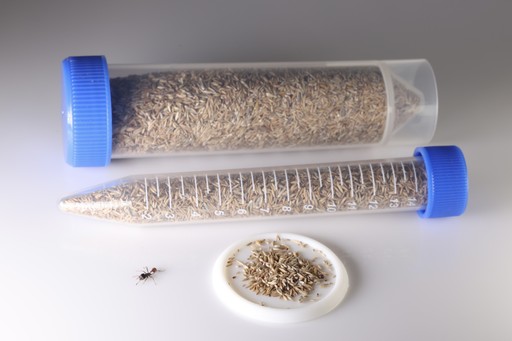
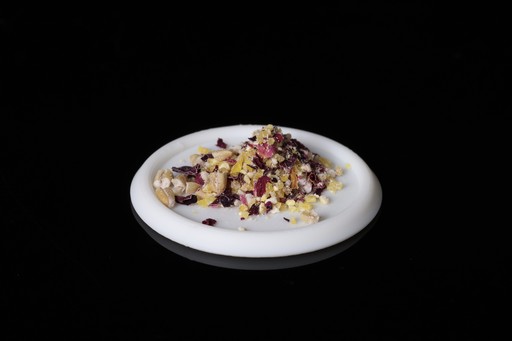
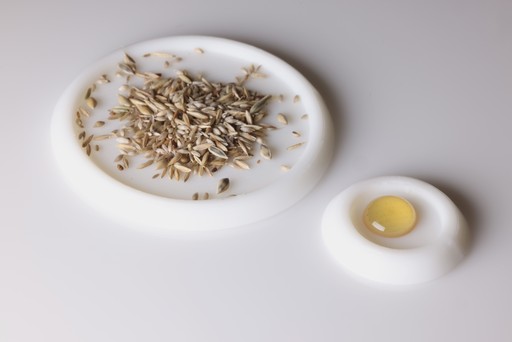
Harvester Ant Blend Heat-Treated Seeds Pesticide-Free Sealable Vial and Mini-Spoon TrapJaw's Premium Seed Mix Harvester ants don't consume seeds when they find them. Instead, they strip the husk, chew the endosperm into a paste and pack the rest away in dry storage chambers called granaries. What you put in the foraging area ends up in the nest as stored food! This is our own rigorously-tested blend for granivorous ant species and packed in a sealable vial with a serving spoon: Seed Selection We have formulated this mix for harvester ants specifically. While we can't guarantee all harvester ants will take all of the various types of seeds in our mix, we are confident this is the best mix on the market. Heat Treatment Every batch is carefully heat-treated before the vial is sealed. That significantly reduces germination without damaging nutritional value. A humid granary chamber won't have tons of seeds sprouting -- but you might get some here and there. Ants are well-equipped to handle a few sprouts. Storage Keep the vial sealed and in the freezer, or at least somewhere cool and dry. Feeding Put a small amount out in the foraging area as needed. Harvester ants store what they don't use straight away, so once a week is usually enough (depending on colony size) for the genera below. Ants That Take Seed Pogonomyrmex 6 species The classic harvester. We keep P. badius , P. barbatus , P. californicus , P. maricopa , P. occidentalis and P. rugosus . Veromessor 2 species We keep V. andrei and V. pergandei . Both found semi-claustrally, so the queen has to be fed while she is founding. Novomessor 2 species We keep N. albisetosus and N. cockerelli . They will occasionally take seeds. Pheidole 17 species Seventeen of the Pheidole on our Care Advisor collect seeds, and ten of those are true granivores. Solenopsis 2 species We keep S. geminata , which builds expansive seed stores, and S. xyloni , which takes seed occasionally. Tetramorium 1 species We keep T. immigrans . It takes small seed when offered, though the colony does fine without it. Read the full harvester feeding guide → Seed, insects and sugar water for each genus, plus how much and how often. Not for human consumption or planting.

Honeydew Honey
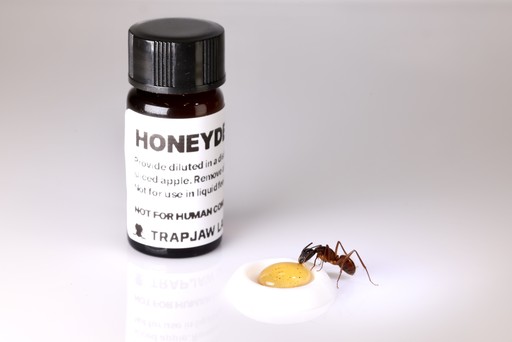
Honeydew, Not Nectar More Than Simple Sugars Mixing Vial and Spoon Included Honeydew Honey Imported from a specialty producer, where honeybees produce the honey from hemipteran honeydew rather than flower nectar. This honey contains many of the nutrients found in the diet of wild ants. Honeydew, Not Nectar Honeydew is the sugary fluid excreted by sap-feeding hemipterans: aphids, scale insects, mealybugs and treehoppers. Ants tend those insects in the wild, and it carries sugars and other nutrients that nectar and "sugar-water" do not, including oligosaccharides such as melezitose. Sugars and Symbionts Beyond sugar, honeydew carries other micronutrients. Early stage research indicates some of these may be important for the health of some ants' symbiotic gut microbes. How to prepare it Honeydew honey is thick out of the vial. Dilute it before offering it to your colony. Dilute Stir a small amount into equal parts warm water in the mixing vial until it runs freely off the spoon and is evenly mixed. Offer A drop on a feeding dish. Never put honey or honey-water in a liquid feeder. Refresh Remove whatever is not eaten within 6 hours. Store Cap the honey vial and keep it at room temperature or store it in the freezer for greater longevity. Be sure not to use hot water or a microwave to thaw honey. Honey-water mixture may be stored in the fridge for no more than 48 hours. Ships as 5ml of honeydew honey in a glass vial, with a mixing vial and stir spoon. Species Notes We advise that you don't feed honey to honeypot ants (Myrmecocystus spp.) due to the potential for fermentation within the repletes. Sugar water and organic apples are preferable.

Liquid Feeder
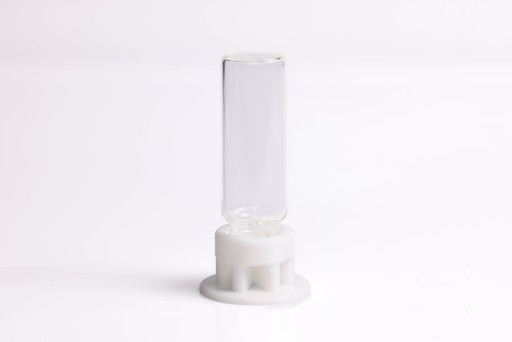
Two Capacity Options Refillable Glass Vial TrapJaw's Liquid Feeder Ants need a steady supply of liquids, but just a small drop can drown some ants. The TJL Liquid Feeder holds liquids in a glass vial, with small openings for the ants to drink from, to eliminate this problem. The Screen A protective stainless-steel screen sits embedded at the mouth of the vial. Workers drink through the mesh, between the openings on the base. For particularly small ants, this prevents them from getting trapped in the vial before its empty. Choosing a Version Bases are interchangeable between vial sizes. 2.3ml Vial Best For Founding and small colonies 4ml Vial Best For Developing and large colonies The 10 Feeder Bundle ships five of each, so you can keep both sizes on-hand. Refilling & Washing The glass vial screws into the base for refilling or washing. Placement The TJL Liquid Feeder is designed to sit on any flat surface. What's in the 10 Feeder Bundle 10× Feeder Base 10× Stainless Steel Screen 5× 2.3ml Glass Vial 5× 4ml Glass Vial

Fluon Escape Barrier
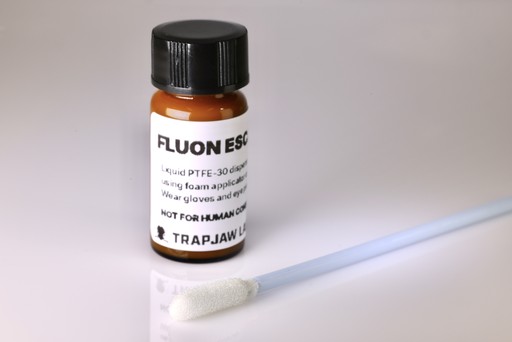
PTFE-30 Dispersion Smooth Surfaces Only Foam Applicator Included Longer Life with Ventilation Fluon Escape Barrier A 5ml vial of liquid PTFE-30 dispersion, sold elsewhere as Fluon® or Insect-A-Slip. When used properly it dries as a smooth surface that ants cannot grip, so they harmlessly fall to the ground and remain contained. PTFE Dispersion Fluon is a solution of PTFE suspended in water. Many vendors additionally dilute their PTFE, we do not. This means our fluon remains useful for longer; all fluon mixtures degrade over time as the PTFE falls out of suspension. Full-strength fluon retains functionality on comparatively rough surfaces and lasts longer after applied. Smooth Surfaces Fluon needs a non-porous surface for application, which is why surfaces made of acrylic, glass and most plastics pair well. Porous or textured material soaks up the water and or deposits the PTFE too sparsely, providing microscopic footholds for the ants. Surface Compatibility Fluon dries into a layer on a material's surface. Compatible Surfaces Foraging Area's security rim Acrylic and glass Smooth surfaces Incompatible Surfaces Wood, cork, or anything porous Anything wet or oily Textured plastics Application Work on a clean, dry surface and smoothly spread a band around the top inside edge with the included foam applicator. Stand the container upside down on paper towel while it dries so the wet dispersion cannot run down the wall and pool at the bottom. If using a TJL Foraging Area, only apply the fluon to the underside of the security rim. How To Apply 1 Clean and dry Using a microfiber cloth, clean the application area and let it dry. Dust, finger oils, and other contaminants reduce the effectiveness of fluon. 2 Apply the fluon Along the TJL Foraging Area's security rim, using the included foam applicator. 3 Dry upside down Invert the container while it dries so the liquid cannot run down the wall, ruining the visibility and pooling at the bottom. 4 Let dry before adding the ants Let dry until fully opaque. Ventilation and Lifespan A well-ventilated foraging area keeps fluon working longer. High humidity (>70%RH) rapidly accelerates degradation and can allow ants to escape. Handling and Storage Gloves and eye protection Always wear gloves and eye protection while using fluon. Rotate every two weeks PTFE settles out of suspension over time. Slowly rotating the vial every two weeks reduces how quickly this happens. Do not shake Shaking whips air into the dispersion and clumps the particles. Store sealed and refrigerated A sealed vial reduces evaporation and prolongs shelf-life. For additional longevity, fluon should be refrigerated. Wear gloves and eye protection. Not for human consumption. Store sealed, refrigerated and rotate every two weeks. DO NOT SHAKE. PTFE is known to the State of California to cause Cancer - WARNING: Cancer and Reproductive Harm - www.P65Warnings.ca.gov MSDS for PTFE-30.

Test Tubes
Standard 16x150mm Five Per Pack Water and Humidity in One TrapJaw's 16x150mm Test Tubes Five standard, glass test tubes in the most commonly used size in the ant-keeping hobby. Great for founding queens of most species. Water and Humidity Ants need drinking water and humidity, and a test tube can provide both. A water reservoir is held behind a sponge or cotton ball the colony drinks from, and that same reservoir keeps the air inside the tube humid. The Standard Size 16x150mm is the standard tube size for all TrapJaw gear, so these tubes are cross-compatible with all of our products, especially the TubeDock system (coming soon). Recommended Accessories Test Tube Sponges Enables you to create a water reservoir and will not mold on its own, unlike cotton. Required Foraging Areas Somewhere to feed and forage outside the tube. Every size can be used with a test tube. Optional

Featherweight Forceps (Soft Close)
Soft-Close Action Narrow or Wide Tip Stainless Steel Featherweight Forceps Soft-close forceps in two tip widths, for carefully moving live ants, feeder insects and food items. Soft Close When used correctly, soft-close (featherweight) forceps pick an insect up without damaging it, which is what makes them usable around live ants and soft-bodied feeders. Normal tweezers and forceps grip ants too tightly, often damaging their bodies. Narrow or Wide Tip The narrow tip version is for carefully picking up small insects, and the wide tip handles medium-large insects or accessories. Narrow or Wide Narrow Tip A fine tip, for carefully picking up small insects. Wide Tip A wide tip, for medium-large insects or accessories. We offer both sizes in stainless steel and 6" in length. Everyday Maintenance It's best to avoid handling ants at all, but when you do, use featherweight forceps and soft brushes to manipulate them: What You'll Use Featherweight Forceps For Uneaten Food Pull leftovers out of the test tube or foraging area before they spoil. Corpses and Debris Take dead workers and refuse out. Positioning Food Place a pre-killed insect or piece of apple where the foragers will find it. Nest Transfers Move ants and accessories between nests and foraging areas. What to do about moldy test tubes → How to move your colony to a new nest → Specifications Material Stainless steel Action Soft close Length 6 inches Tip widths Narrow or Wide Feature Hole for keychain or lanyard Recommended Accessories Liquid Feeder Optional Glass vial and base, with a stainless steel screen to prevent drowning. Feeding Dish Optional Reusable white dish in two sizes, compatible with all food types. Foraging Areas Optional Primary area for food provisioning and removal.

Heating Cable (25W)
Temperature Gradients Not For Every Species Heating Cable (25W) A 25W cable, approximately 16 feet long, for creating a temperature-gradient across the nest. Temperature Gradients Thermo-regulation is one of the primary reasons ants construct nests, and different members of a colony do best at different temperatures. Running the cable along specific parts of the nest creates a temperature gradient, so the ants can choose the best conditions for each colony member. Thermostat Control We recommend pairing the cable with a thermostat to keep the heated area at a set temperature. Setting Up A Gradient Four steps, in order, from our own care tips. 1 Run it along one side. Keep on only one part of the nest. This creates a temperature-gradient between the cool and heated sides. 2 Take things slow. Set it up and watch how the ants react over the coming days. 3 Re-arrange as you learn. Over time you will get a sense of what temperature conditions your colony prefers, and you can move the heating to better accommodate them. 4 Room-temp is survivable. 120°F+ is not. Your ants will be fine if they are kept cooler than optimal. If it gets too hot, the entire colony can perish. Read the full care tips →