Do You Need a Queen Ant for an Ant Farm?
Whether an ant farm needs a queen, whether you can add one to a kit you already own, and what to get instead.
Technically, no. You can fill an ant farm with workers and they'll dig tunnels for you.
That's almost never what people are asking, though. They want to know whether the thing they're about to buy will still be alive in six months. For that, yes. You need a queen.
What The Queen Actually Does
The queen is the only ant in the colony that can produce more workers.
Everything else a colony does, the workers handle. Digging, foraging, brood care, defense. Reproduction they can't. Workers in most species have no spermatheca at all, so they can't store sperm and can't produce a fertilized egg. Some will still lay. Those eggs are haploid, and haploid eggs become males, who do no work and don't live long.
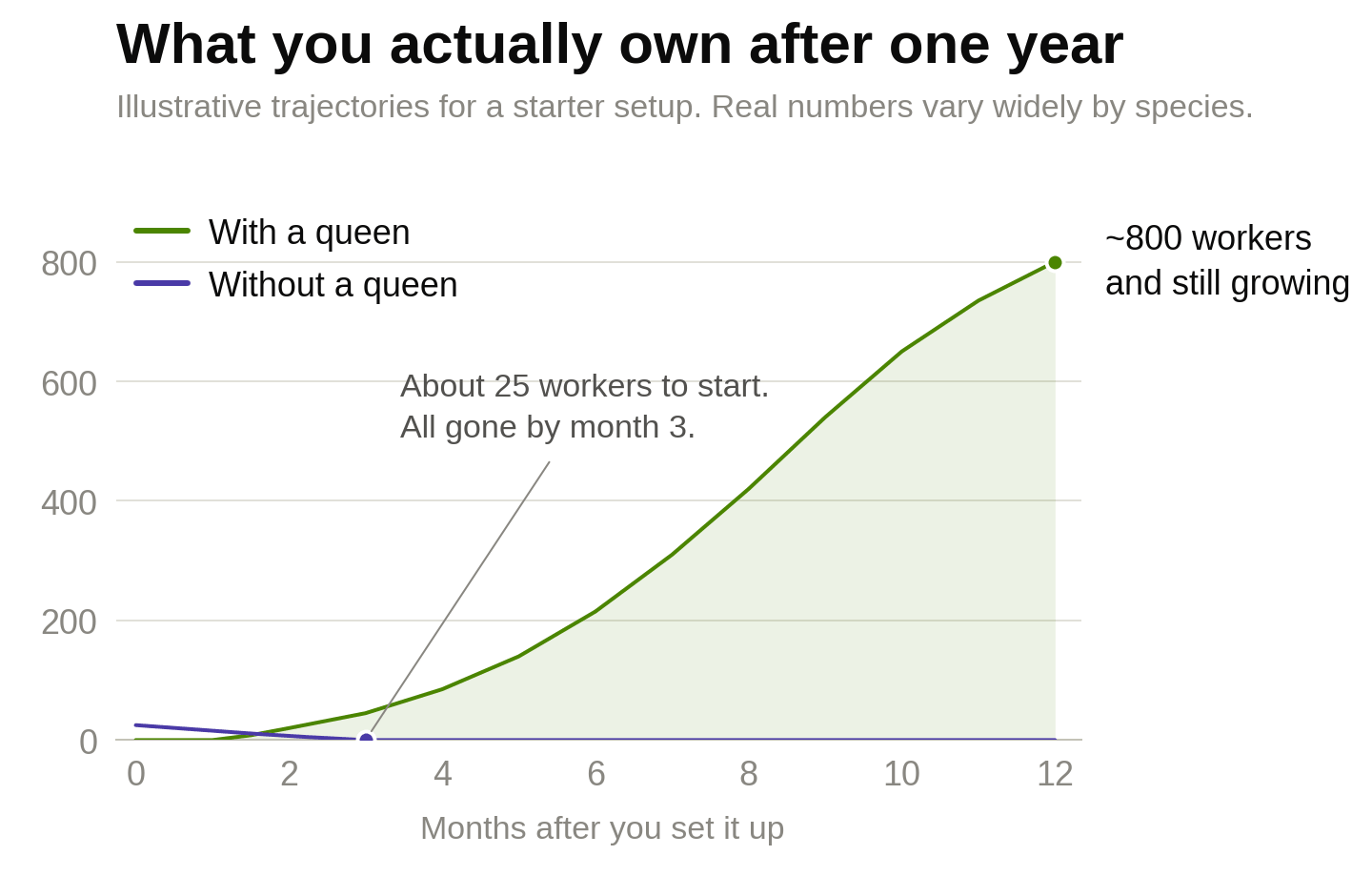
So a queenless ant farm has a ceiling built in on the day it ships. Those workers are the last generation.
How Long A Queenless Farm Lasts
Weeks to a few months, usually.
Most mail-order kits in the US ship western or California harvester ants (Pogonomyrmex occidentalis, P. californicus). In the wild those workers live a year or more. Shipped in a vial and dropped into a gel farm, plan on 3 weeks to 3 months.
Why The Kits Ship Without Queens
It isn't an oversight, and it isn't the company being cheap. It's federal law.
USDA APHIS regulates the interstate movement of every ant species, not only the invasive ones, because ants can act as plant pests. Selling ants across state lines requires a PPQ 526 permit for that species and that destination state, and the USDA's average processing time runs around 127 days. No toy company selling into all fifty states makes that math work. So they ship queenless workers.
Can You Just Add A Queen To The Farm You Already Own?
Almost certainly not, and it's the question most people arrive here with.
If the queen is a different species from the workers in your kit, it isn't a gamble, it's a guarantee. A Camponotus queen dropped in with harvester workers is dead within the hour. There's no version of that which works.
Same species is only a little better. Workers recognize nestmates by colony scent, and a foreign queen reads as an intruder. Introductions do succeed sometimes, mostly with very young callow workers who haven't set their colony odor, and mostly through slow methods like a mesh barrier. Old, fully-sclerotized kit workers from a supplier are the worst case there is.
We encourage you to avoid it if at all possible. Start the queen separately and let the kit run its course.
What To Get Instead
Option 1: Catch Your Own
Free, and it's the route we'd rather see someone take than anything else on this list.
Queens fly, mate, and land in enormous numbers. Warm evenings after summer rain are the classic window, sidewalks and porch lights the classic place. Look for a large ant walking alone, wingless or shedding its wings. Shed wings mean the queen has already mated.
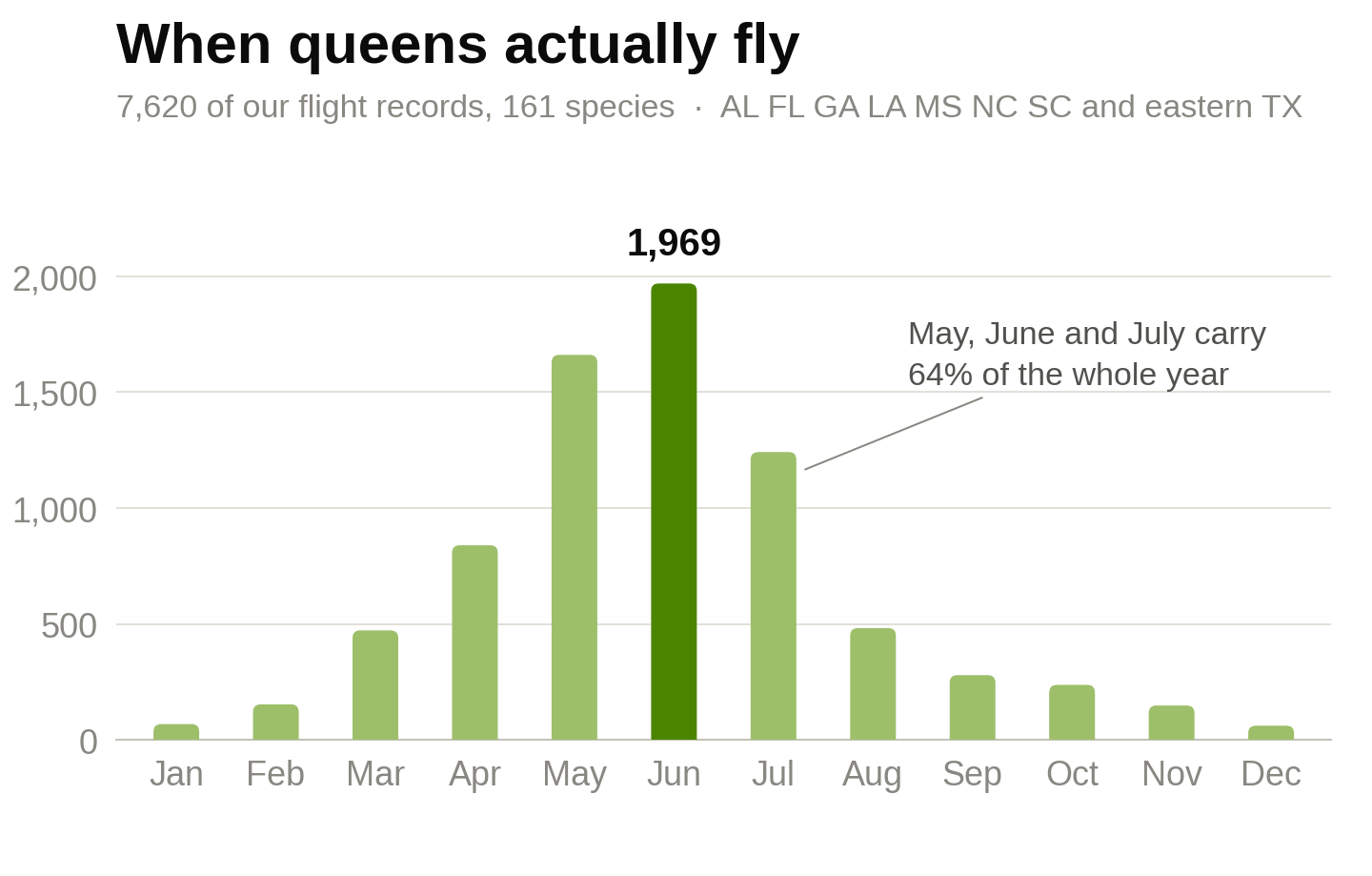
Flights are seasonal, so you may wait months for the right night. You also won't always know what you caught.
Option 2: A Founding Queen
The cheapest way to buy into a colony that'll actually grow, and you watch the whole thing from the beginning.
A newly-mated queen goes into a test tube setup, not the ant farm. Claustral species like Camponotus, Lasius, and Formica seal themselves in and need nothing but darkness and a stable temperature, metabolizing their wing muscles and fat reserves to raise the first brood. Semi-claustral queens, Pogonomyrmex and Myrmecocystus for instance, have to be fed through founding.
Expect first workers, called nanitics, in roughly 4 to 8 weeks depending on species and temperature.
Founding is slow and mostly invisible, though, and most people who leave the hobby leave during it. There's also the risk of an unmated queen. The eggs still come, but nothing hatches from them, and you won't know for a couple of months.
Option 3: An Established Colony
A queen with a workforce already behind, past the fragile part.
This is what we suggest for most people who want an ant farm rather than a science project. The colony goes into an appropriately-sized nest quickly, forages from day one, and you get the behavior people actually buy ants to see. Trail-laying, brood-sorting, group retrieval.
What About Just Buying More Workers?
It works for a classroom unit that runs six weeks, if you know what you're getting.
But it's a display, not a colony. No eggs, no brood, no second act once the tunneling is done. We suggest skipping it unless you have a short-term reason.
The Farm Itself Has To Change Too
A queen changes what kind of setup you need.
Gel farms and thin sand sandwiches are built around a fixed number of workers who are going to die, not for hydration control, air-exchange, or a colony that doubles. Once there's a queen you need a proper nest, an outworld, and a plan for when the colony outgrows it.
Don't move a founding queen straight into a large nest. The queen needs the test tube first. Check out our Care Advisor if you want species-specific guidance on what nest your colony will do best in.
So, Do You Need One?
If you want ants, no. If you want an ant colony, yes.
A queen isn't an upgrade or an accessory. It's the difference between a terrarium on a two-month timer and something that's still on your desk in ten years. The longest-lived insect ever documented was a Lasius niger queen kept by Hermann Appel for 28¾ years.
That's the reason we ship queen-right colonies.