Why We Only Sell Queens With Workers
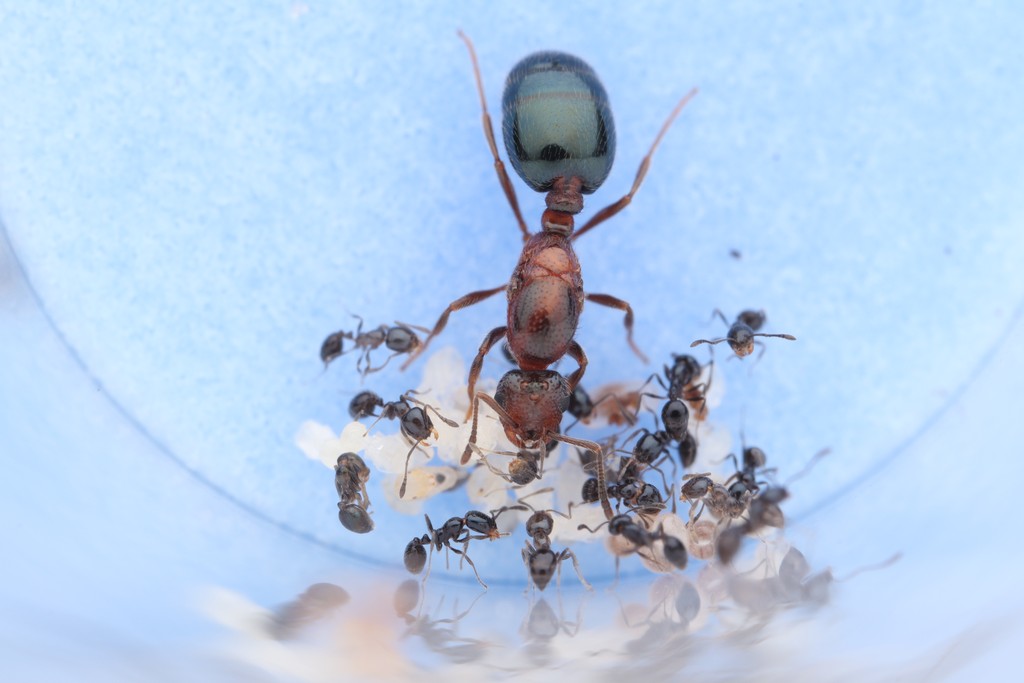
Every colony that leaves our lab has a queen and workers in it. We don't sell solo founding queens, we never have, and we aren't going to start. A queen faces much difficulty trying to rear her first workers, and we'd rather help her through that in our rearing facility, than just ship them to you.
She's already proven herself
A queen with workers has answered the only question that actually matters.
You cannot look at a queen and tell whether she mated. There's no field mark for it. A virgin that never found a male looks exactly like a fertile queen, same size, same color, same (sometimes) dropped wings.
Eggs aren't proof either, and that's the part that catches people. An unmated queen will lay, and those eggs will hatch. Ants are haplodiploid, so unfertilized eggs develop into males. Her brood grows, pupates, and hands you a few winged males and not one worker.
In our own stock, Crematogaster missouriensis takes 5 to 8 weeks from founding to first workers and Camponotus ocreatus takes 8 to 10. If we sell you an un-mated solo queen in spring, you won't learn about that until much later.
So, we wait. No queens get listed on the site until they have their nanitics.
Founding is where many queens die
Estimates put mortality for wild founding queens north of 95%. Most of that is predation, desiccation, etc. Neither applies inside a test tube on your shelf.
The tube doesn't remove all queen mortality, though. A fully 'claustral' queen seals herself in and raises her first batch on her stored reserves. When it goes badly she eats her own brood, which can effectively guarantee her failure to found a colony.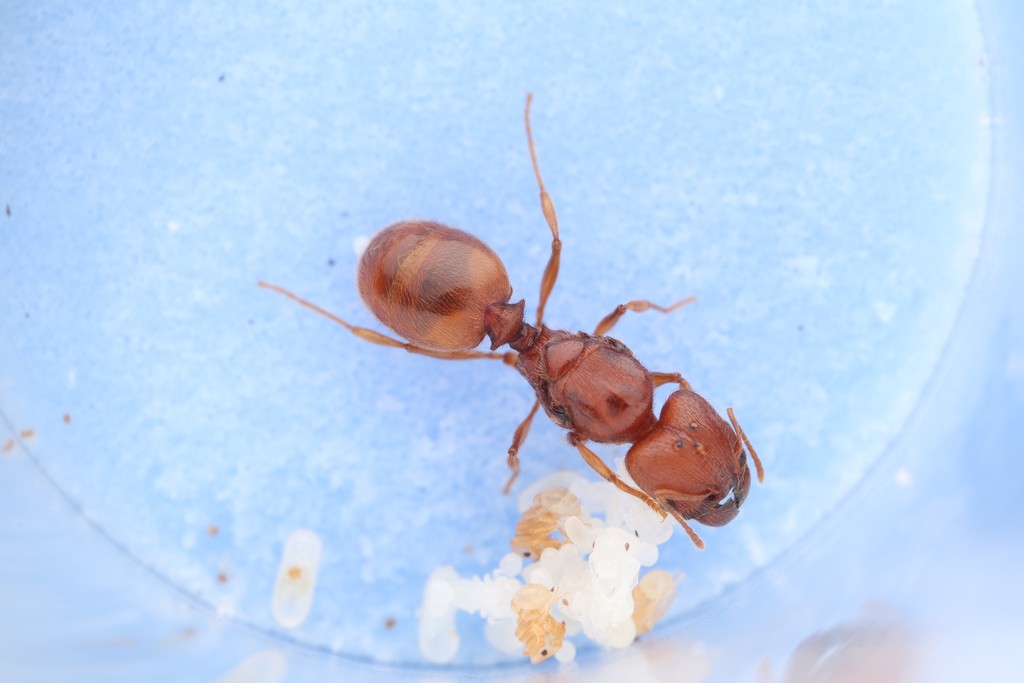
The ant-keeper is a variable too. Tubes flood, tubes run dry, they get moved, etc. These things only minorly impact established colonies, but for queens, that can be detrimental.
We'd rather run that gauntlet in-house, in our tightly-controlled conditions.
Shipping
Shipping is the hardest day of a captive colony's life, and workers really help get them through it.
The box gets cold, then hot, then cold again. It gets dropped. It sits in a truck over a weekend. A queen, alone, has a hard time dealing with that. She can't move her brood off the warm end, she struggles to get back to water if the trip knocked her off it, and if things get too bad she'll eat her brood.
A colony handles the same trip differently. Workers move brood back to the moist end, tend to the queen, and help ensure everyone is where they need to be.
Workers don't make shipping safe. Nothing does. But a colony has a buffer, and a lone queen has none, and that's a good part of why we can put a Live Arrival Guarantee behind what we send out.
No Exceptions
This isn't a policy we bend.
Most requests for solo queens come from experienced ant-keepers who want to watch a colony start from one ant. That's fair, and the fun of that never gets old. But we can't stand behind a queen we haven't verified, and there's no way to truly verify her that doesn't involve waiting for workers.
Catch Your Own
We refuse to sell founding queens not because we don't want you to have any. We encourage ant-keepers to catch their own queens. Watching a queen you found yourself raise her first nanitics is one of the best parts of this hobby.
We've done a lot to help new ant-keepers learn how to catch their own queens. Whether that's our Guide for Beginner Ant Keepers that covers the tube setups, How Long Until Your Queen Has Workers? which gives you real timelines, so you know if your queen/colony is on-track. Moldy Test Tubes covers the thing that scares new keepers most, mold. Our videos walks you through aspirators, housing queens in vials, and caring for a queen through founding.
What it costs you
Colonies cost more than founding queens do, and you wait on us to rear the queens. What you get is a colony with the risky parts mostly behind it. The queen is mated. She's fed her first brood out of her own reserves and came out the other side.
Our Care Advisor will point you at something that fits your setup. Whatever you land on, it's showing up with workers.