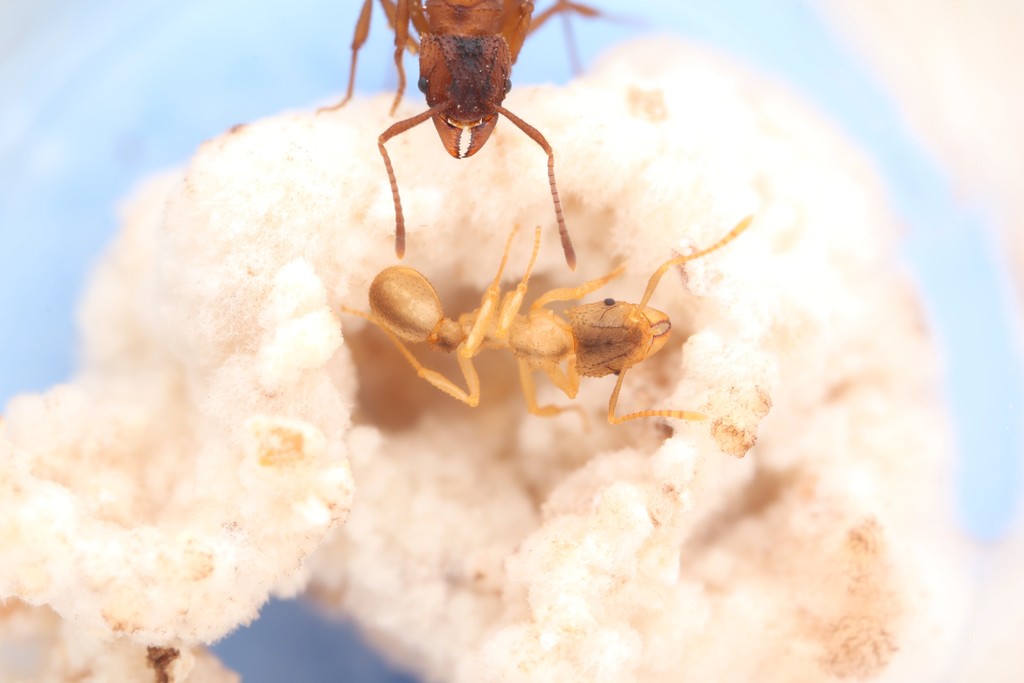
New Discovery: Fungus-Farmers Can Be Reared In TJL Sponges
Trachymyrmex septentrionalis is one of the easiest ants to keep once you get a queen/colony started. One of the big challenges is adequate humidity, especially when the whole colony is a queen and a tiny fungus garden in a test tube.
This year we founded roughly 50 T. septentrionalis queens in test tubes with TJL sponges. It went phenomenally. We now know that founding them with our sponges gives better success rates, and lower mortality, than any other founding method. Here's why we tried it, and what it means if you're founding your own.
A Garden In A Test Tube
T. septentrionalis are fungus farmers. They grow a garden, feed it plant scraps, and eat what the garden produces.
Founding is semi-claustral. The queen digs a chamber, regurgitates a small pellet of fungus carried from the parental colony, then forages for plant detritus and caterpillar frass to grow that pellet into a proper garden. Simultaneously, she must rear her nanitics. Those typically show up somewhere around weeks 4 to 8.
The ants themselves are relatively tolerant of dry conditions. The fungus, on the other hand, cannot tolerate dry conditions whatsoever. When humidity drops, the garden dies fast, and the colony loses its only way of producing food with it.
In a test tube, nearly all of that humidity comes from one place: the water reservoir. Whatever is holding that water back determines how humid the chamber stays.
What We Expected
Our theoretical understanding of the TJL sponge suggested that it keeps a tube far more humid than cotton, or any of the competing sponges out there. That's exactly why we tried it with this species. If founding succeeds or fails primarily because of humidity, then how the queens fare should tell us how much humidity the TJL sponges are really providing.
Our 53-day, side-by-side trial against cotton puts numbers on the difference.
The sponge tube held between 92.6% and 96.7% relative humidity the entire time, inside the 90–100% range we target for most soil-nesting species. The cotton tube never got above 86%.
Humidity alone undersells the gap. We also tracked VPD, a measure of how hard the air pulls moisture out of everything in it, the ants and the garden included. On average, the air in the cotton tube was about three times as eager to take on water as the air in the sponge tube.
For a fungus farmer, how steady that humidity stays matters just as much as how high it is. Moisture left the sponge tube about 70% more slowly than the cotton tube. Warm air can hold more water, so every warm afternoon pulls a little harder on whatever is in the tube. As the room warmed through the day, the sponge tube also cancelled about 99% of the extra drying-pull a sealed tube would have felt. The conditions inside barely moved.
None of that makes the cotton bad, necessarily. It suits drier-loving species, but the fungus simply needs it more humid than that.
What Happened
So this year we put the theory to the test, with every queen founding in a TJL sponge tube.
The young gardens settled in right against the face of the sponge, the part of the tube that stays the most humid, and grew from there.
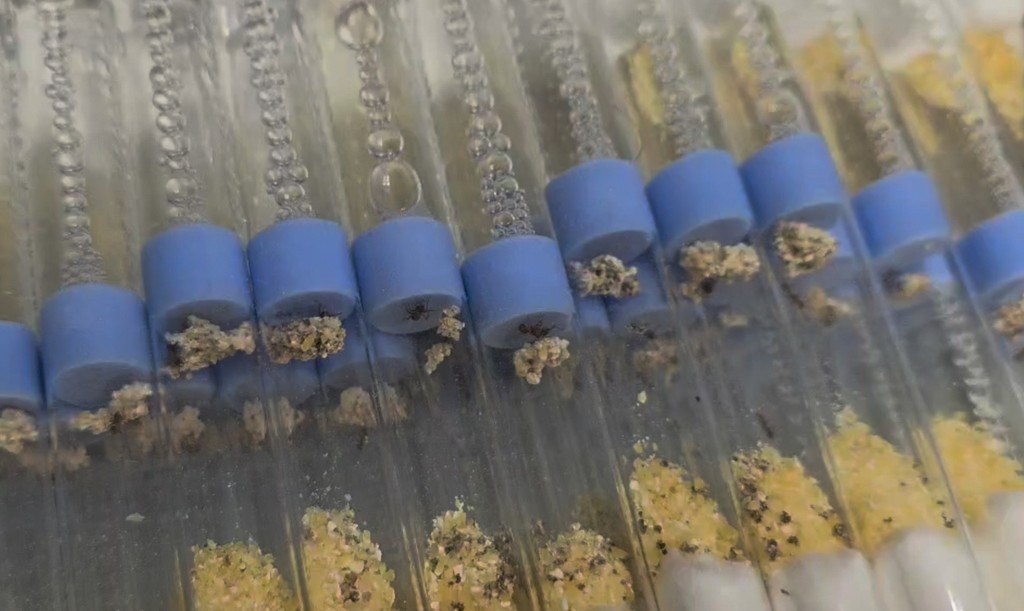
Across the batch, founding on TJL sponges gave us better success rates and lower mortality than any other founding method. That's why the sponges are what we use for this species now, and why we recommend against founding T. septentrionalis on cotton or other PVA sponges.
Founding Your Own
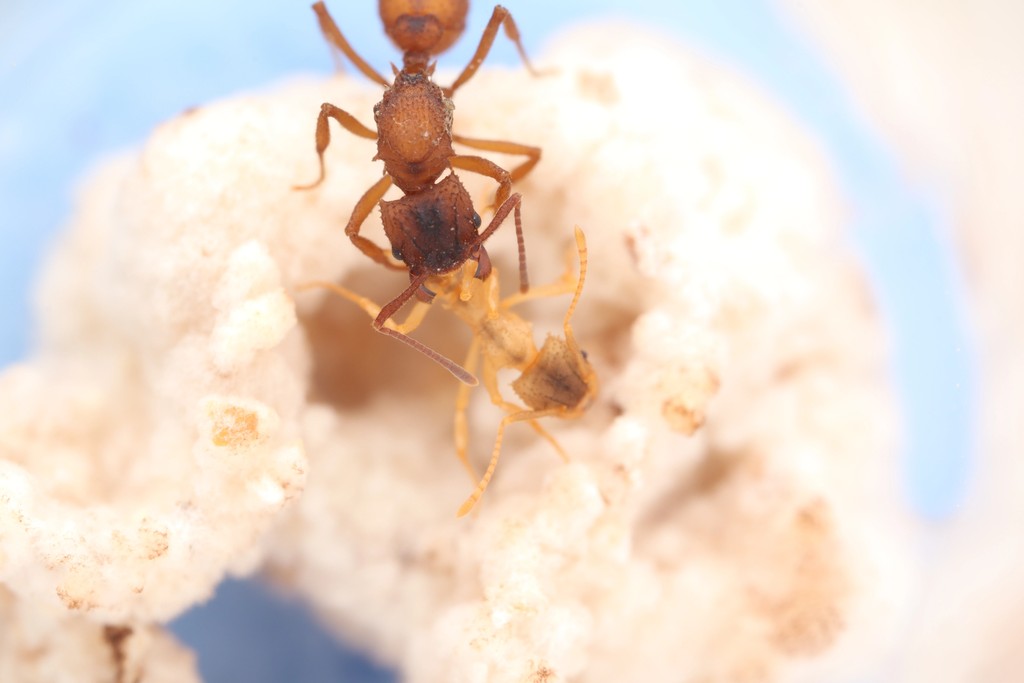
If you want to found your own, here's how we'd go about it.
Finding queens. They're common wherever there's sandy soil within their range, which runs from East Texas to Florida and north to Long Island. Little is known about their flights, but ant-keeper consensus is summer, on warm, humid days, often after rain.
Sponge, not cotton. A TJL Test Tube Sponge in place of the wet cotton gives the garden the steady, high humidity it needs from day one.
Something to farm. Founding is semi-claustral, so the queen needs material to grow the garden. Small amounts of plant detritus or dried leaves work well, and young colonies especially prefer material they don't have to cut.
No heat. Room temperature is fine for this species. Heating cables and heat mats cause condensation inside the tube, and that's dangerous to both the ants and the fungus.
Know where they came from. Florida populations don't diapause. Colonies from elsewhere do, and they'll let you know when by shrinking the garden down to a few small pellets and stopping brood production.
After founding. Once the colony outgrows the tube, a substrate or petri-dish style nest works well, with a water-only liquid feeder in the outworld.
Everything else is in our Trachymyrmex septentrionalis care guide. If you run into trouble founding your own, get in touch. We're happy to help you work out what's going on.