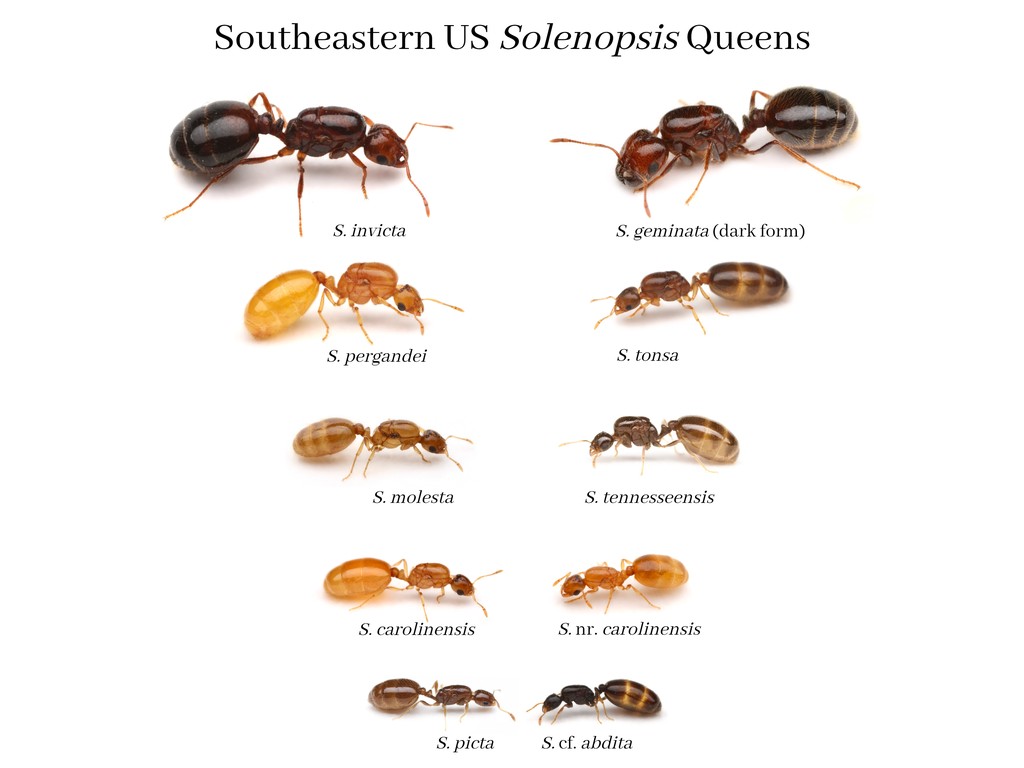
How to Identify Solenopsis Queens in the Southeastern US
Solenopsis covers two very different identification problems. The "Fire Ants" are large, familiar, and sometimes hard to pin down from a queen alone. The "Thief Ants" are tiny, cryptic, and easier to identify from a queen than from a worker.
This guide focuses on the Southeastern United States and includes the ten species ant-keeping hobbyists are most likely to encounter there.
Before You Start
For "Thief Ants", the queen is often the preferred caste. Pacheco and Mackay say it outright in their 2013 revision: workers are very difficult to identify without females. They list S. carolinensis, S. picta, S. texana and six others whose workers are nearly impossible to separate. If you're not certain that what you're holding is a queen at all, start here.
For "Fire Ants", the queens are often difficult to separate on their own. We usually suggest rearing a colony to 50-100 workers, a point at which they'd certainly have produced majors, to 100% confirm the identification.
No published key to Solenopsis spp. queens exists for either half. Everything below is assembled from original species descriptions. A fair amount of it rests on one or two measured specimens.
Start With Size
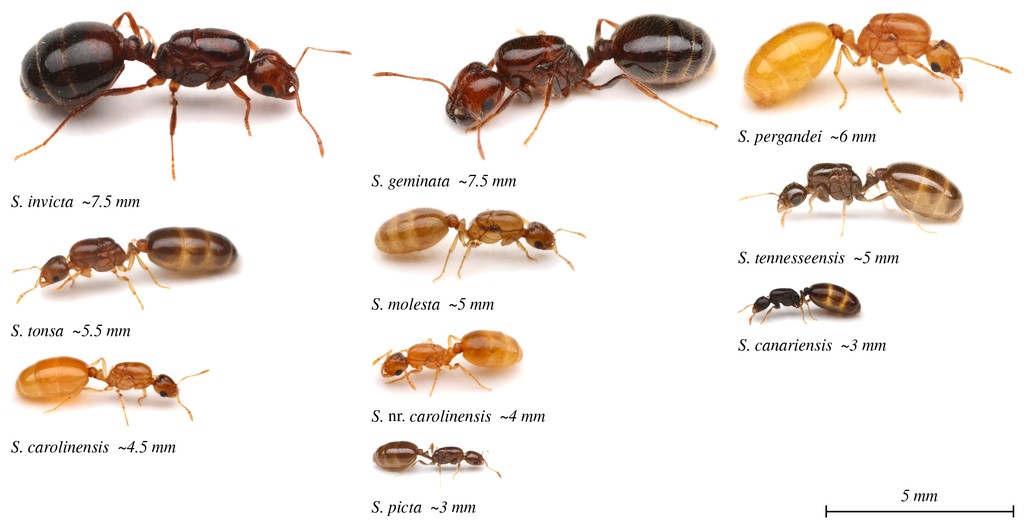
Size is the first thing to check.
A Quick Cheat-Sheet
7 mm and up, dark, heavy-bodied. A "Fire Ant". Read the accounts below before committing to a name.
Around 6 mm, concolorous pale yellow, black eyes. S. pergandei. Nothing else here looks like them.
Around 5.5 mm, dark reddish brown with pale legs and antennae. S. tonsa.
4–5 mm, concolorous yellow to pale brown. S. molesta at the top of that band, S. carolinensis below it, and an undetermined Solenopsis nr. carolinensis smaller again.
4–5 mm and dark. S. tennesseensis, probably. There's no description to check it against.
Around 3 mm. S. picta if she's golden brown with small eyes. S. canariensis if she's darker with a smaller eye still.
Color
Color isn't as useful as it is for most other ant identification, but it's still worth paying attention to. Trager studied single colonies ranging the whole way from orange-red to brownish black. The color of a "Fire Ant" queen is close to worthless.
The usual rules still apply to the rest. Go by the mesosoma. Warm indoor light pushes browns toward orange. Use daylight, or a neutral LED, if using color as one of the metrics for identification.
Fire Ants · around 7-8mm
Solenopsis invicta — Buren, 1972
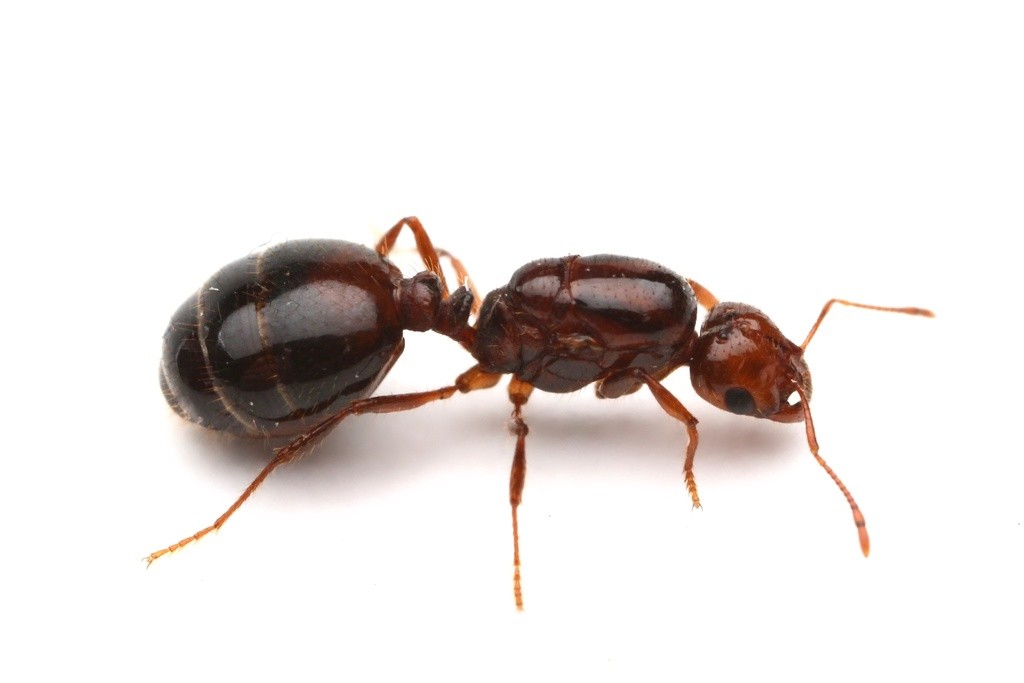
~7.5-9 mm · Introduced
Reddish brown head and mesosoma, brownish black gaster, head about as wide as long.
Introduced at Mobile or Pensacola sometime between 1933 and 1945. Lawns, roadsides, pastures, moist disturbed ground. Flights run late morning to mid-afternoon on the day after rain. Founding is fully claustral, with first workers in two weeks to a month.
Small, skinny invicta queens turn up in late winter. That's the polygyne-track morph, not a different species.
Solenopsis geminata — Fabricius, 1804
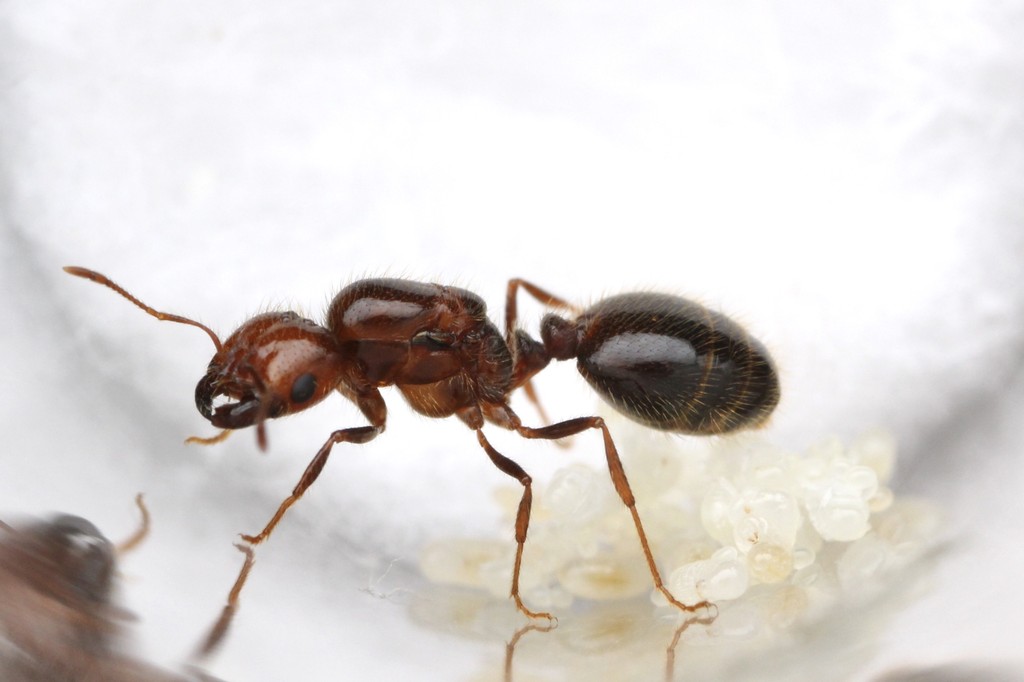
~7.5 mm · Native, probably
Color is useless here. Trager studied single colonies spanning nearly the whole range from orange-red to brownish black.
Their head runs about a sixth broader than long. That proportion is the one thing separating her from S. invicta on paper.
Habitats they're found are usually sandy, open, fire-maintained ground. Longleaf pine savanna rather than suburban lawn. Flights come at dusk on the evening of a rain. That timing contrast with S. invicta is the most useful thing you have in the field.
If you have a queen you believe is Solenopsis geminata, you're welcome to reach out to us. Nolan spent ~2.5 years at the USDA ARS Fire Ant Lab and learned about the subtle characteristics that separate the Southeastern "Fire Ant" Solenopsis spp. queens and is happy to help identify them. It can be really tricky to determine which "Fire Ant" species you have with just a queen, many people often mistake S. invicta for S. geminata.
Alternatively, you could rear the colony out and see if they produce majors. S. geminata majors (pictured below) exhibit a width and proportion seen in no other "Fire Ant" Solenopsis spp.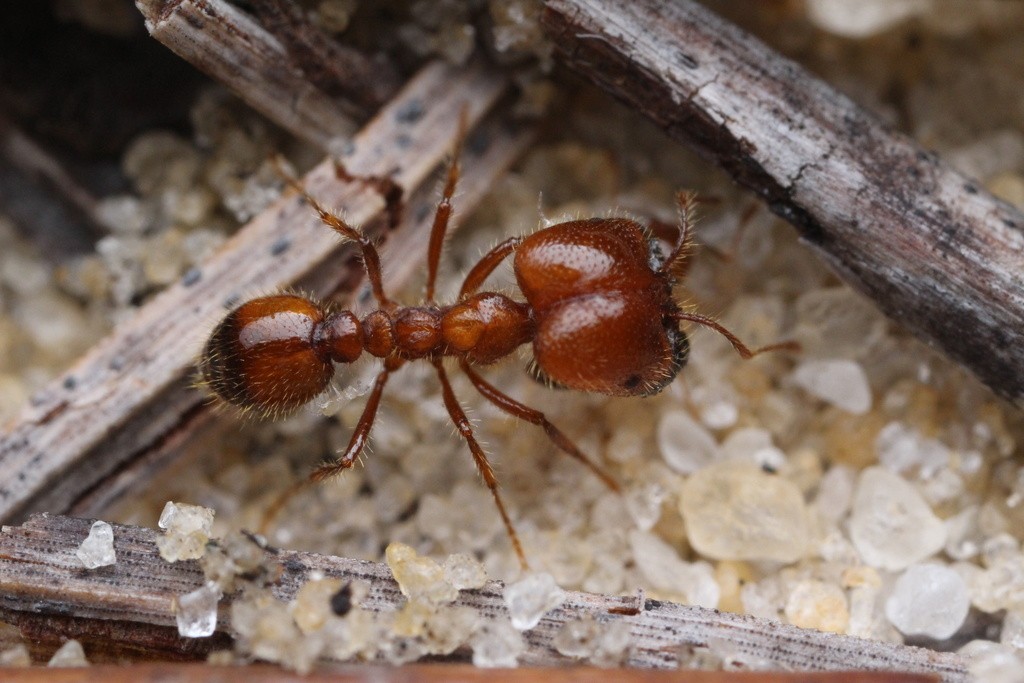
TrapJaw Labs stocks this species as a live colony — see it in the shop.
Thief ants · 3–6 mm
Solenopsis pergandei — Forel, 1901
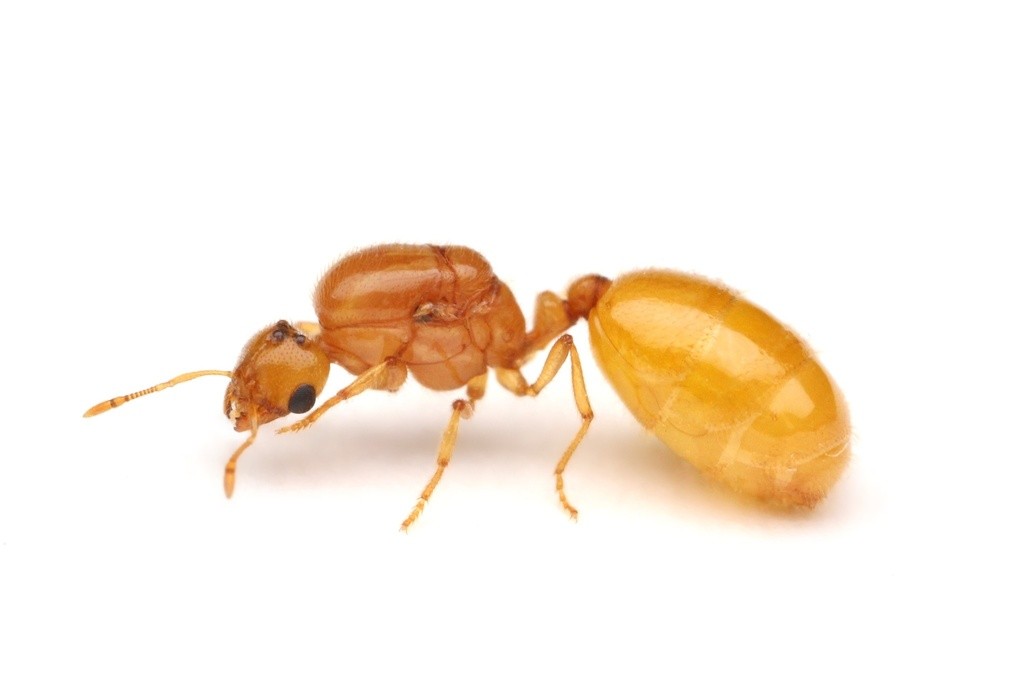
~6 mm · Native
Concolorous pale yellow, no dark gaster, black eyes taking up about half the side of the head. Nothing else here looks like her. Workers stay under 2 mm.
Deep sand in sandhill and scrub, entirely subterranean. The only Florida Thief Ant" you can identify from the nest. During flight season the colony constructs a distinctive 'Launch Pad' for their alates, seen below.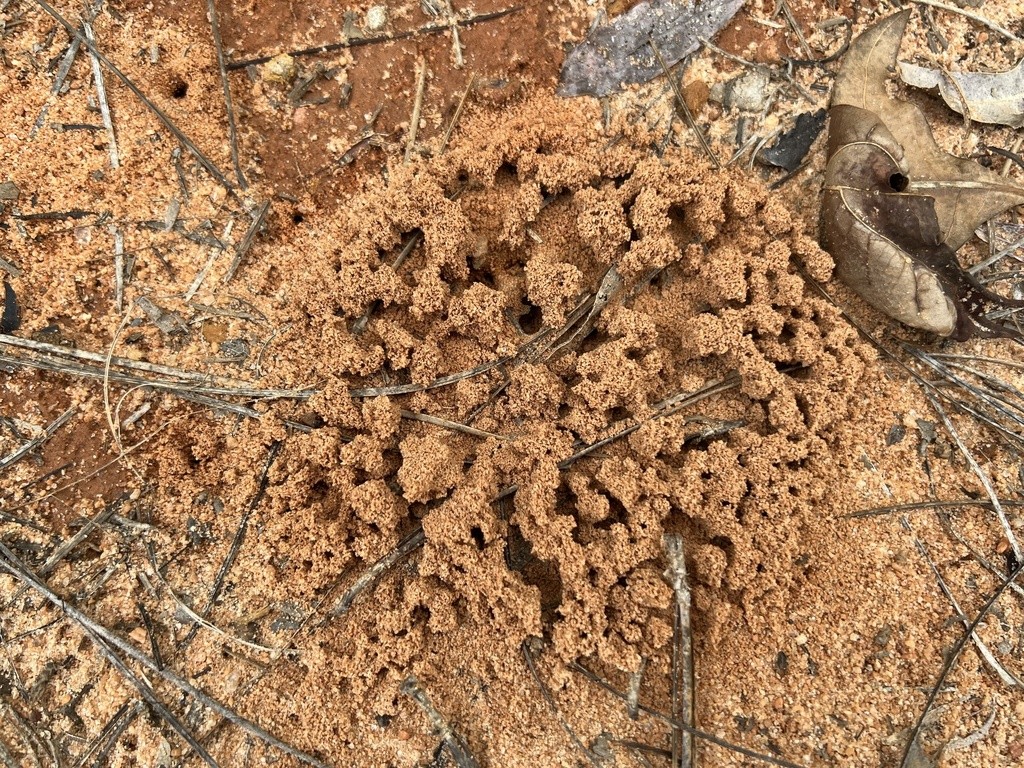
Flights come 30 to 60 minutes before sunrise after a night of heavy rain, and the queens come to blacklight in numbers. One of the hardest fully claustral species to establish.
TrapJaw Labs stocks this species as a live colony — see it in the shop.
Solenopsis tonsa — Thompson, 1989
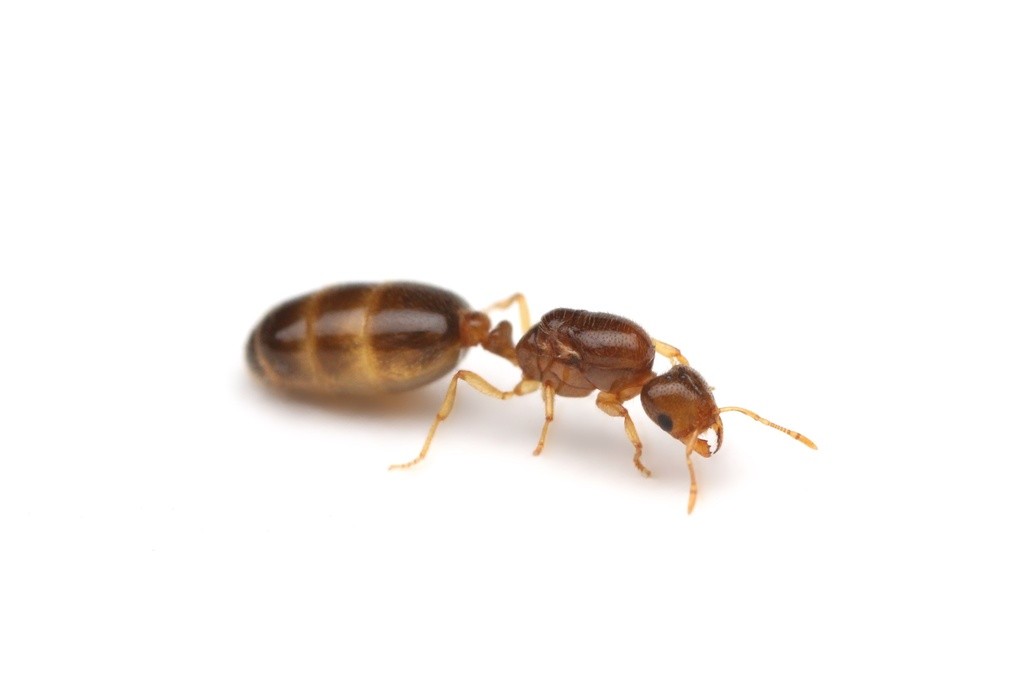
~5.5 mm · Native
Dark reddish brown throughout, with light brownish yellow legs and antennae. That pale-appendage contrast is the field mark.
Thompson describes her head as distinctly trapezoidal rather than rectangular, and the wings as hyaline where S. tennesseensis has them darkened.
Alabama, Florida and Mississippi, in sandhill under turkey oak and wiregrass. Thompson put flights in late summer and suspected day-flying, on the grounds that he never took one at a light trap. Rarely encountered.
Thief ants · 4–5 mm
Solenopsis molesta — Say, 1836
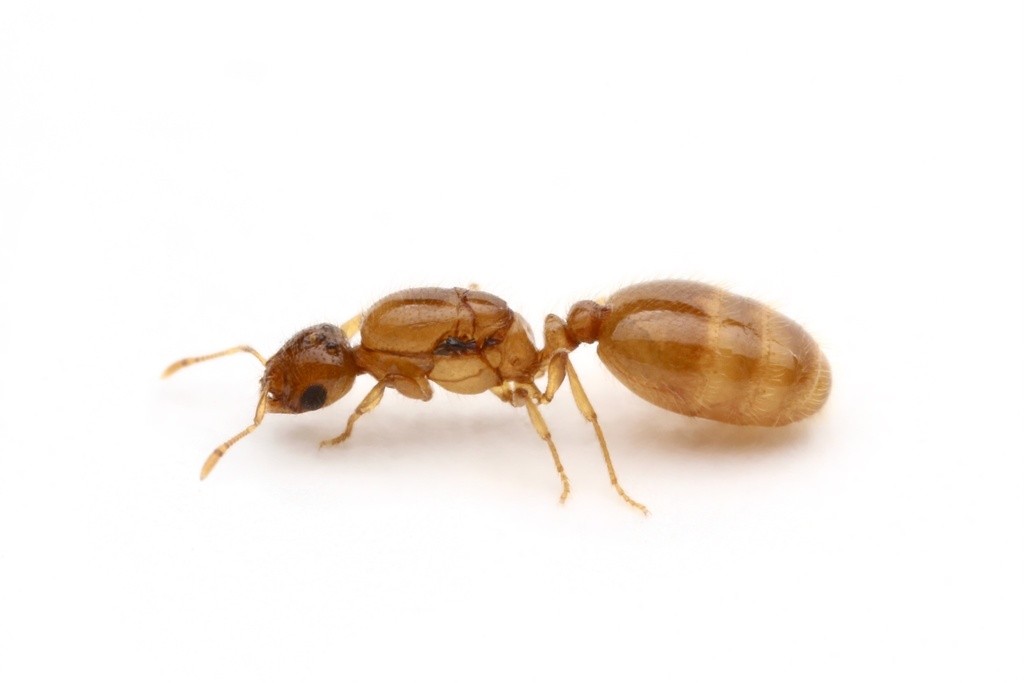
~5 mm · Native
Concolorous yellow to pale brown, semi-coarse punctation, small ventral flange on the petiolar peduncle. Published lengths run 4.68–5.64 mm.
Alabama and Arkansas across to the Carolinas and Tennessee, in soil under stones and usually right up against another ant's nest.
Solenopsis tennesseensis — M. R. Smith, 1951
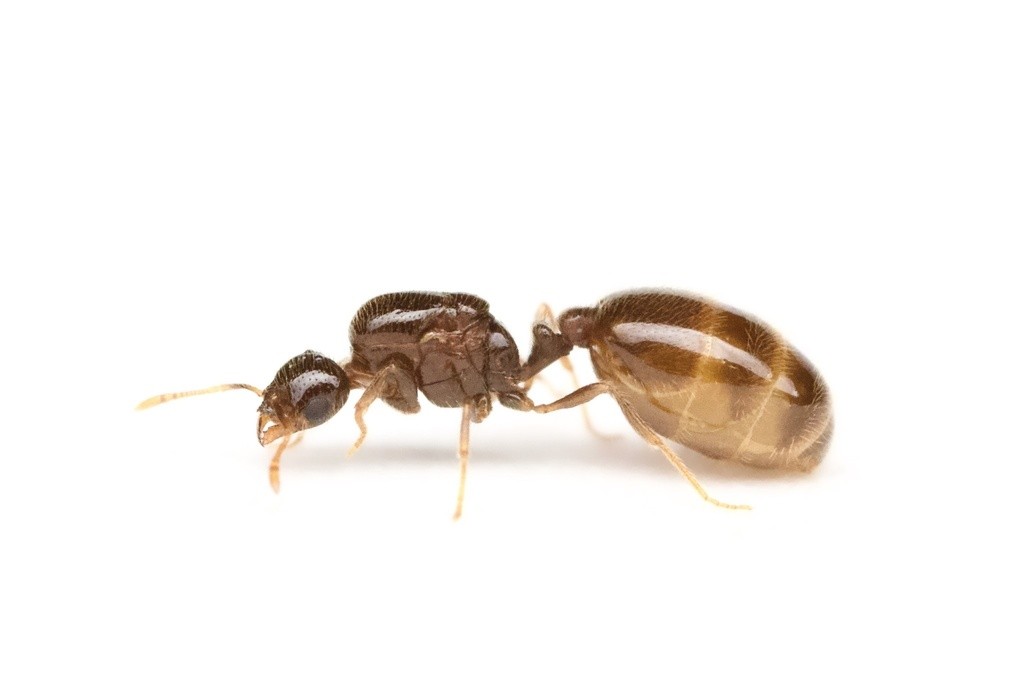
~5 mm · Native
A queen hasn't been formally described.
Alabama, Florida, Georgia, Louisiana, Mississippi and Tennessee. Completely subterranean, around five nests per square meter. Flights happen in October. That makes them the odd one out, since nearly everything else here flies in summer.
A dark "Thief Ant" queen taken in October in the Gulf states is likely S. tennesseensis.
Solenopsis carolinensis — Forel, 1901
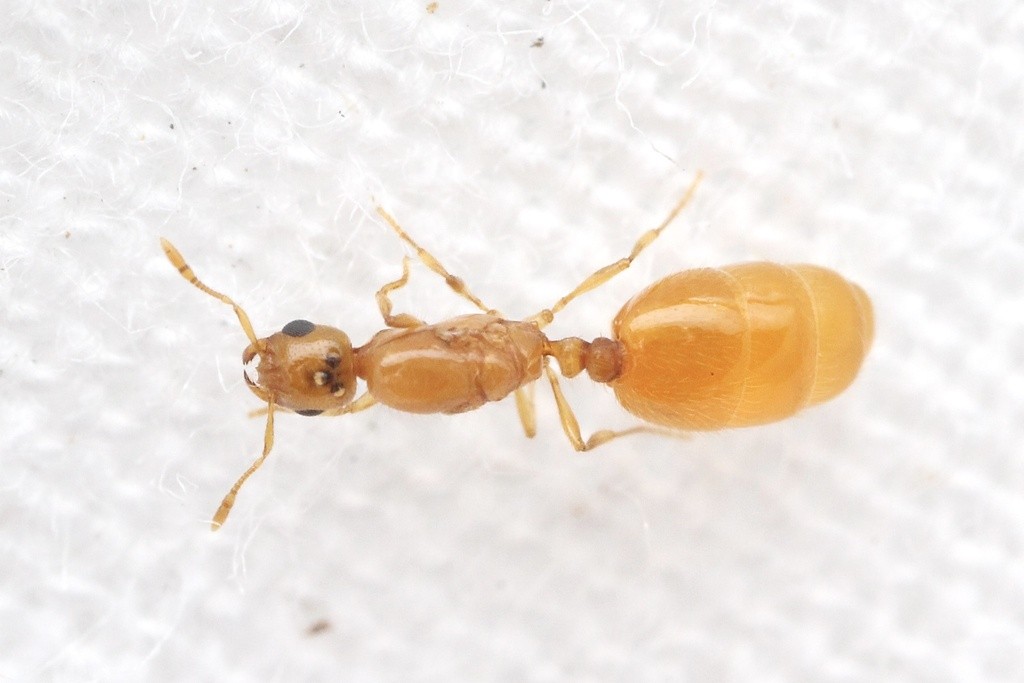
~4.5 mm · Native
Concolorous yellow with a large black eye and darkly pigmented ocelli. Head subquadrate, coarsely punctate, longer than wide.
Her ventral flange is well developed. Against S. molesta's small one, that's the practical split. Published length is 4.08–4.20 mm off two specimens, and our material runs a little larger than the type series.
Widespread across the Southeast, Florida included. Soil, rotten wood, leaf litter, termite nests. Polygynous. Many Southeastern records labeled 'S. molesta' are actually this species.
TrapJaw Labs stocks this species as a live colony — see it in the shop.
Solenopsis nr. carolinensis
~4 mm · Native
They run consistently smaller than the S. carolinensis queens we've collected by a considerable margin, and we haven't been able to place them. Better to leave them here than force them into a name.
Thief ants · around 3 mm
Solenopsis picta — Emery, 1895
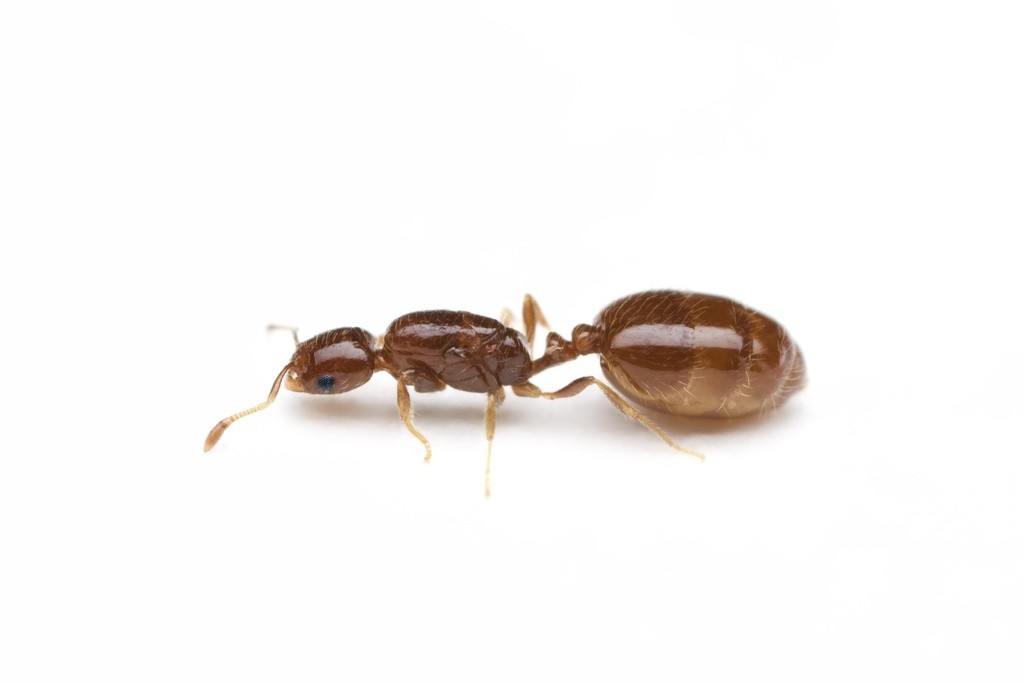
~3 mm · Native
Concolorous golden brown, eyes black and small, median ocellus small. Neither the petiole nor the postpetiole carries any ventral tooth or flange. That absence is the cleanest separator in the group.
Arboreal. Hollow twigs and dead wood in oaks rather than soil. That makes them the outlier of the group. Apparently monogyne.
Solenopsis canariensis — Forel, 1893
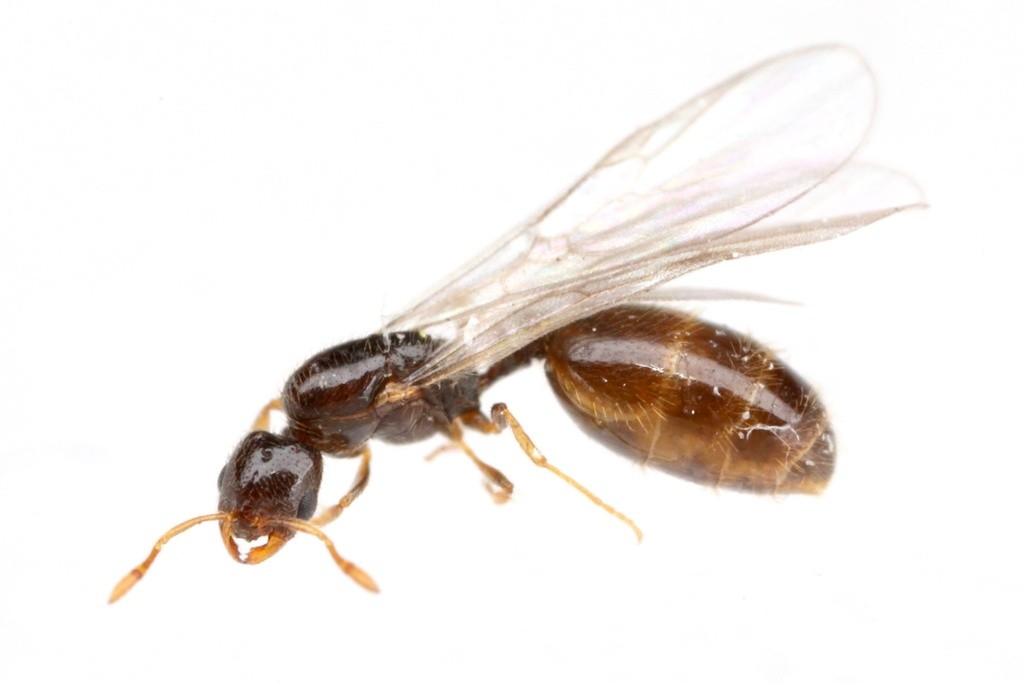
~3 mm · Long-established
Everything about this one is unsettled, starting with the name. Southeastern material has gone under 'S. cf. abdita' for years. Seifert moved S. abdita into S. canariensis in 2026. The paper says plainly that the synonymy couldn't be confirmed, because no type specimen could be located in any published depository.
The color descriptions contradict each other outright. Thompson gives medium reddish brown to almost black, Pacheco and Mackay concolorous golden brown. What holds up is the eye, smaller than S. carolinensis's on a darker body.
Florida, Georgia and Mississippi. Rotten wood in pine-oak forest, leaf litter, sand pine scrub. Strongly polygynous.
Confirming An Identification
What to do next depends on which group your queen is apart of.
For "Fire Ants", wait for workers. If they're S. geminata, they will rear true majors, which are a distinct caste from the minors rather than the large end of a continuous range. S. invicta workers grade smoothly from small to large and never produce that separate caste, so a true major settles it.
For "Thief Ants" there's no equivalent fallback. The workers are less diagnostic than the queen, not more. What helps instead is a clean lateral shot of the petiole and postpetiole at 40× or better, plus the nest context: arboreal twig, soil under a stone, 'Launch Pad'. For anything in the S. canariensis orbit the morphology is unresolved.
Record the locality either way. County, habitat, soil, date. That narrows the list faster than any single morphological character, and it makes your record useful to somebody else later.