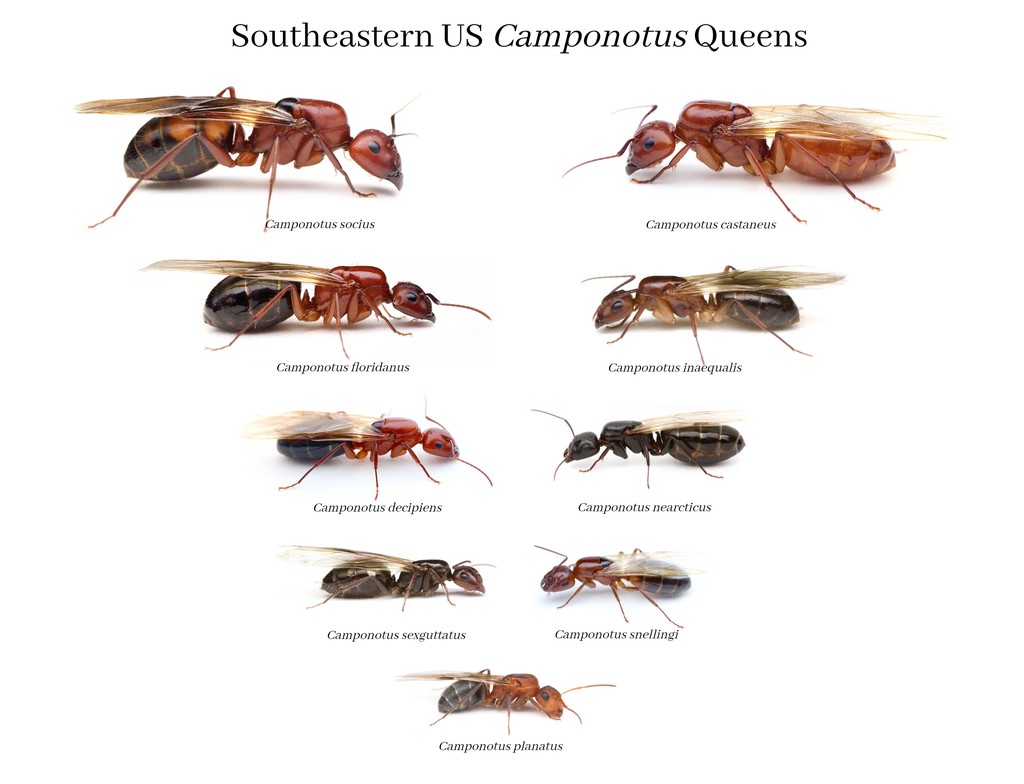
How to Identify Camponotus Queens in the Southeastern US
Camponotus queens are the ones everybody meets. Big, blocky, at the porch light in the first warm months of the year. Getting a queen to genus is the easy half of the job. The large "Carpenter Ants" at the top of the size range separate cleanly on color. The small ones at the bottom mostly don't.
This guide focuses on the Southeastern United States and includes the nine species ant-keeping hobbyists are most likely to encounter there.
Before You Start
First, make sure you're holding a queen at all. If you're not certain, start here.
Second, make sure it's a Camponotus. The usual false positive is a Formica queen. Under magnification, check where the antennae attach. Camponotus insert them a noticeable distance behind the top edge of the clypeus. Formica insert them right at it, they also tend to be stockier for their size than Camponotus.
No published key covers Camponotus spp. queens for our region. Everything below is assembled from the worker-based literature, flight records, and the queens we've collected ourselves. Away from the coastal plain the genus picks up C. pennsylvanicus, C. chromaiodes and C. americanus. Those are more Piedmont and mountain ants in the Southeast, and they deserve a writeup of their own.
All nine species here are fully claustral. Seal the queen in a tube, put it somewhere dark and warm, and wait.
Start With Size
Size is the first thing to check.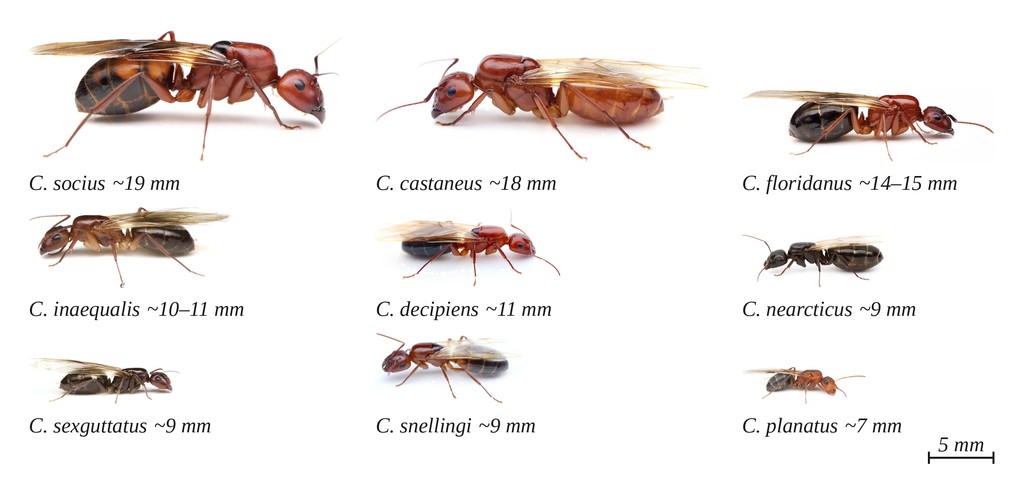
A Quick Cheat-Sheet
19 mm or so, red with pale blotches on a dark gaster. C. socius. Nothing else this size has the blotched gaster.
18 mm or so, the same chestnut red from head to gaster tip. C. castaneus.
Around 16 mm, red with a solid black gaster. C. floridanus.
14 mm, gracile, red-brown with a darker head, peninsular Florida. C. inaequalis.
Around 11 mm, bright red-orange with a jet black shining gaster. C. decipiens.
Around 10 mm, uniformly dark brown to black. C. nearcticus.
Around 9 mm, dark to bicolored with pale splotches down the sides of the gaster, South Florida. C. sexguttatus.
Around 9 mm, orange-red with the front of the gaster orange and the rest blackish. C. snellingi.
Around 7 mm, matte and hairy, dark red with a gray-black gaster, South Florida. C. planatus.
Then check locality, because three of the nine barely leave Florida. C. inaequalis doesn't leave the peninsula, and C. sexguttatus and C. planatus hold the far south of it. A catch well outside those areas is probably something else.
Color
Color does more work in Camponotus than in most genera. Several of the nine can be identified on it almost alone. Two caveats before you lean on it.
One thing that does help is that queens and their workers run broadly similar in color. Where no queen description exists, the worker descriptions are a reasonable stand-in.
The big four · 14 mm and up
Camponotus socius — Roger, 1863
[Photo slot: C. socius queen, lateral]
~19 mm · Native · Sandhill Carpenter Ant
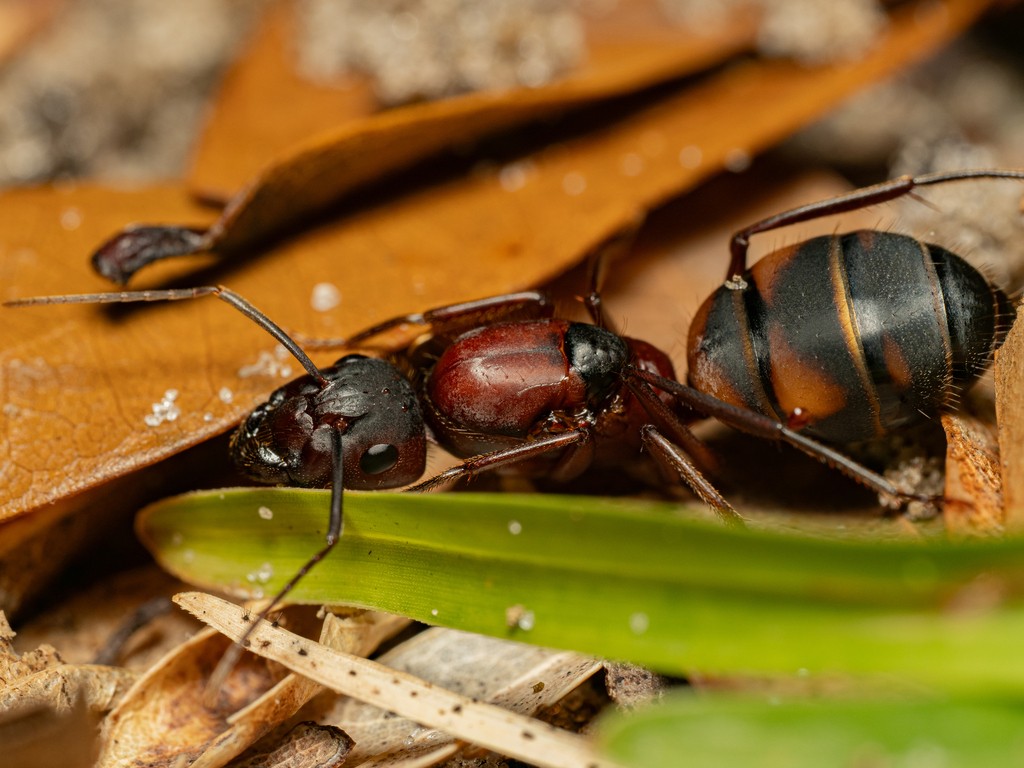
Ferruginous red, with a dark gaster carrying pale yellow-orange blotches toward the base. The blotches are the mark. Nothing else in this size class has them.
A ground-nesting sand specialist. Longleaf pine and turkey oak sandhills, open frequently-burned ground, nests deep in the sand. Tschinkel cast and mapped their nests in north Florida. Recruiting workers run in tandem pairs, and majors reach 15 mm.
Our flight records for this species are thin. If you've caught one, we'd like to hear about it.
Camponotus castaneus — Latreille, 1802
[Photo slot: C. castaneus queen, lateral]
~18 mm · Native · Chestnut Carpenter Ant
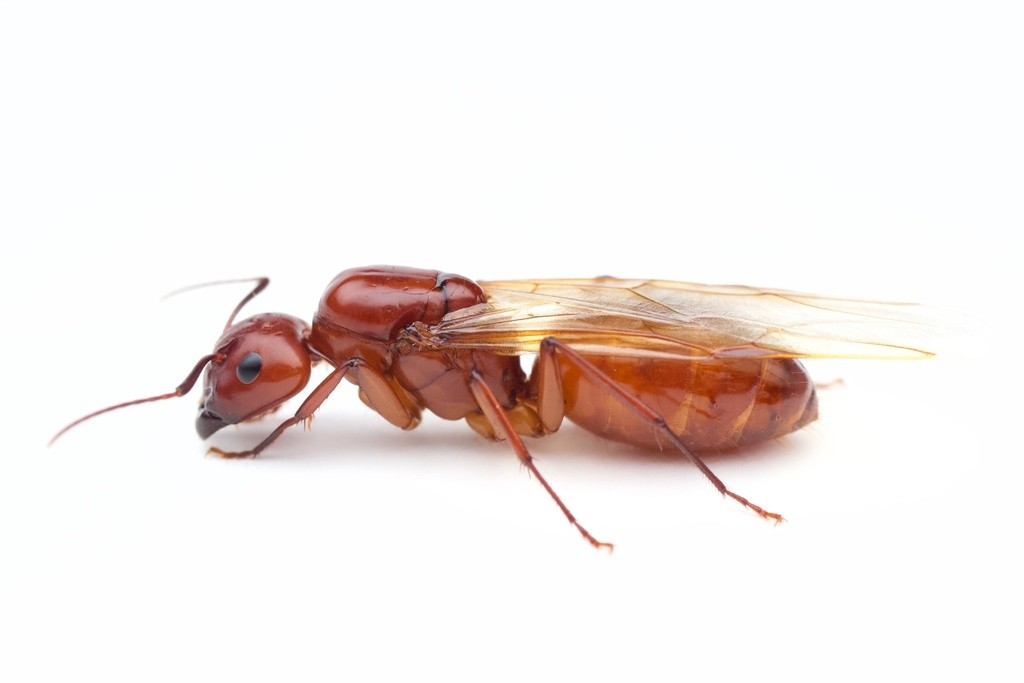
Deep chestnut red end to end, glossy, with noticeably large eyes. The one everybody meets. Sexuals are active April through September, they fly at night, and the queens come to porch lights across the whole Southeast.
Pennsylvania down through Georgia into Florida, in open woodland. Nests run into the soil, under stones, or into rotten stumps. The big eyes go with the habit: these ants are largely nocturnal.
TrapJaw Labs stocks this species as a live colony — see it in the shop.
Camponotus floridanus — Buckley, 1866
[Photo slot: C. floridanus queen, lateral]
~14–15 mm · Native · Florida Carpenter Ant
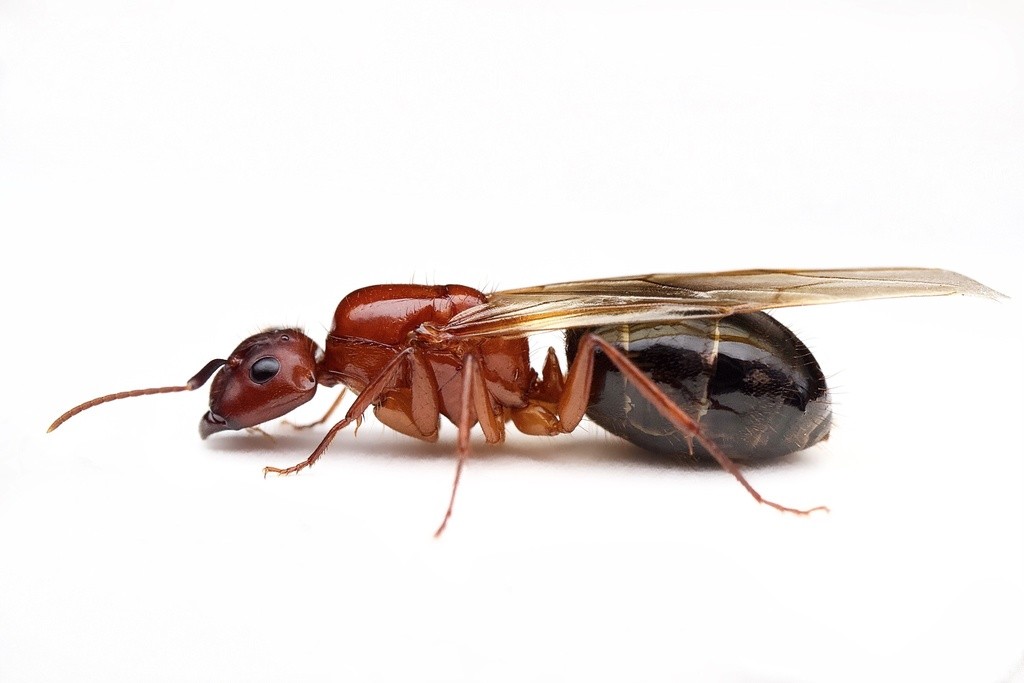
Ferruginous head and mesosoma against a black gaster, each gaster segment narrowly edged in yellow. Against C. castaneus, the black gaster settles it. Against C. socius, no blotches.
The default big Camponotus of Florida, panhandle to the Keys, in nearly every habitat the state has. Old stumps, logs, fence posts, wall voids, and sandy soils. Colonies get large and defend themselves with enthusiasm. Flights run through spring into early summer, in the evening and after dark.
TrapJaw Labs stocks this species as a live colony — see it in the shop.
Camponotus inaequalis — Roger, 1863
[Photo slot: C. inaequalis queen, lateral]
~10–11 mm · Uncertain
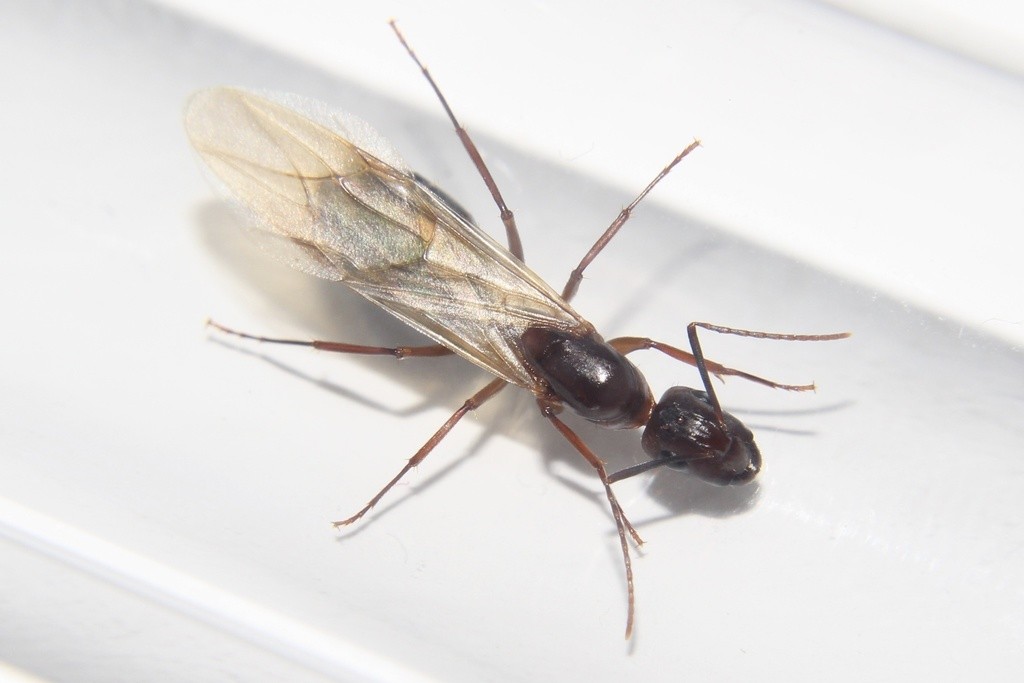
Peninsular Florida, roughly the latitude of Orlando south through the Keys. Ferruginous brown with a darker head, dark gaster and yellow legs, and a build distinctly more gracile than the three above.
The name is doing heavy lifting. Florida material has bounced between C. inaequalis and C. tortuganus, and the Florida Keys survey suggested tortuganus may be a color form of the same widespread Neotropical species. The type locality is Cuba. Whether the Florida population arrived on its own or with people has not been settled, and we treat the name as provisional.
Colonies are monogynous. The one published flight record we can point to falls in March.
The middle band · around 10 mm
Camponotus decipiens — Emery, 1893
[Photo slot: C. decipiens queen, lateral]
~11 mm · Native · Deceptive Carpenter Ant
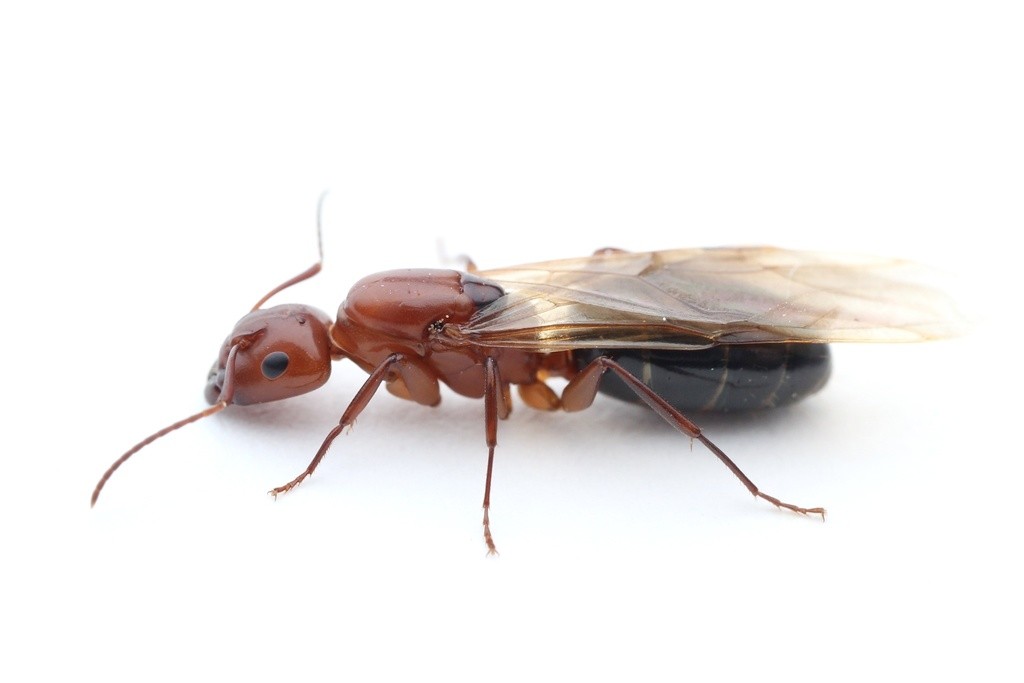
Bright red-orange with a jet black, shining gaster. A clean, high-contrast queen smaller than floridanus
A cavity nester through and through. Dead twigs, hollow stems, old cynipid galls, fence posts. They move into what's already there rather than excavating. Flights come in spring.
C. discolor is the near-twin: same habits, same look, slightly smaller on average. Separating the two from a queen alone is difficult, so treat a lone queen as 'decipiens or discolor'. Queens can be seperated by their malar hairs, decipeins are mostly bald, whilst discolor have noticeable hairs covering their face.
TrapJaw Labs stocks this species as a live colony — see it in the shop.
The small end · 9 mm and under
Camponotus nearcticus — Emery, 1893
[Photo slot: C. nearcticus queen, lateral]
~9 mm · Native · Nearctic Carpenter Ant
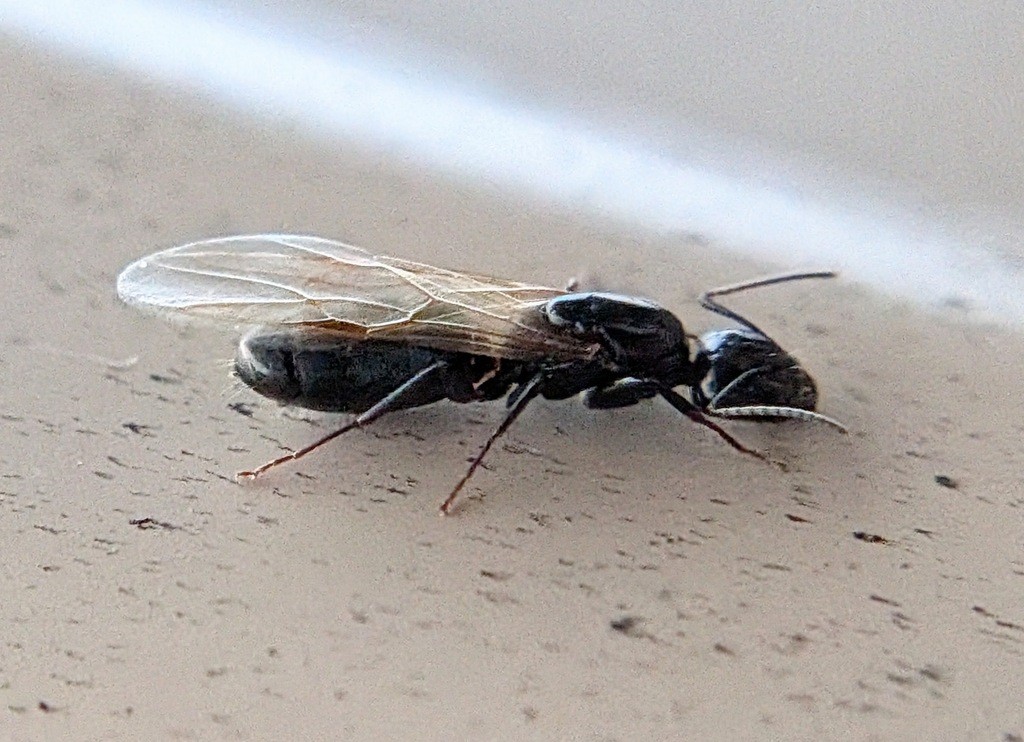
Uniformly dark brown to black with a shiny gaster. The plainest queen here, and the widest-ranging: southern Canada across essentially the whole country.
Arboreal. Dead branches, hollow twigs, old oak galls, under bark. Colonies stay small, a few hundred workers, and monogynous. Reproductives sit in the nest from March through October, so queens turn up across a long window.
Camponotus sexguttatus — Fabricius, 1793
[Photo slot: C. sexguttatus queen, lateral]
~9 mm · Introduced · Six-spotted Carpenter Ant
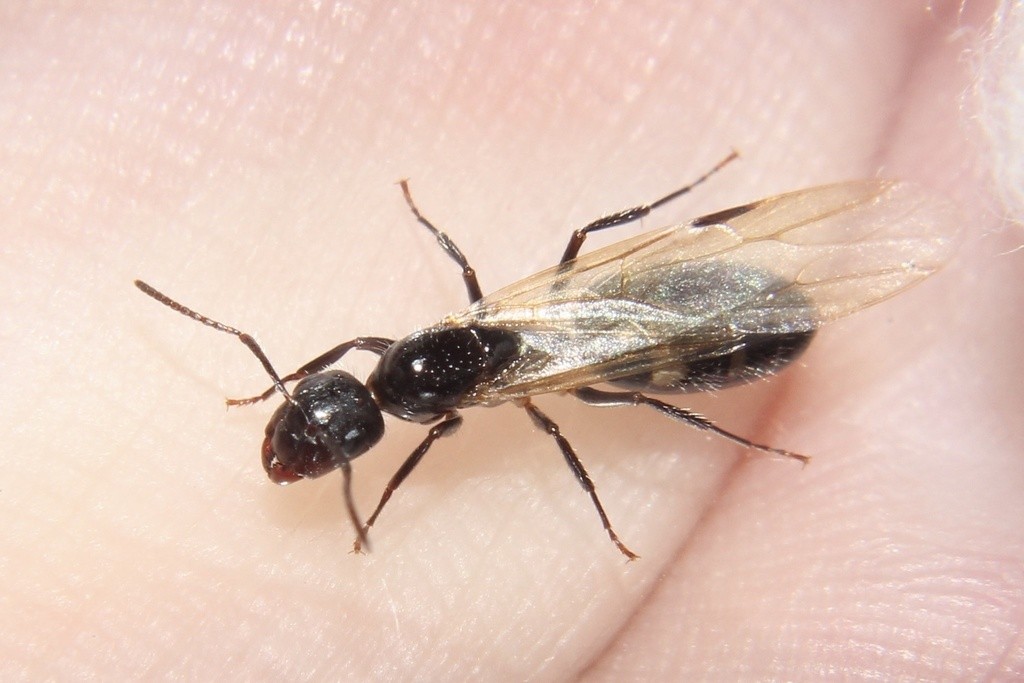
Named for the pale splotches down the sides of the gaster, when they show. The species runs from cleanly bicolored, red head and mesosoma with a black gaster, all the way to completely black.
South Florida only. Dade and Broward Counties, first recorded in 1993, in disturbed and edge habitats. Hollow twigs, bark cavities, grass stems at marshy edges. A queen from north of Lake Okeechobee is almost certainly something else.
Camponotus snellingi — Bolton, 1995
[Photo slot: C. snellingi queen, lateral]
~9 mm · Native · Snelling's Carpenter Ant
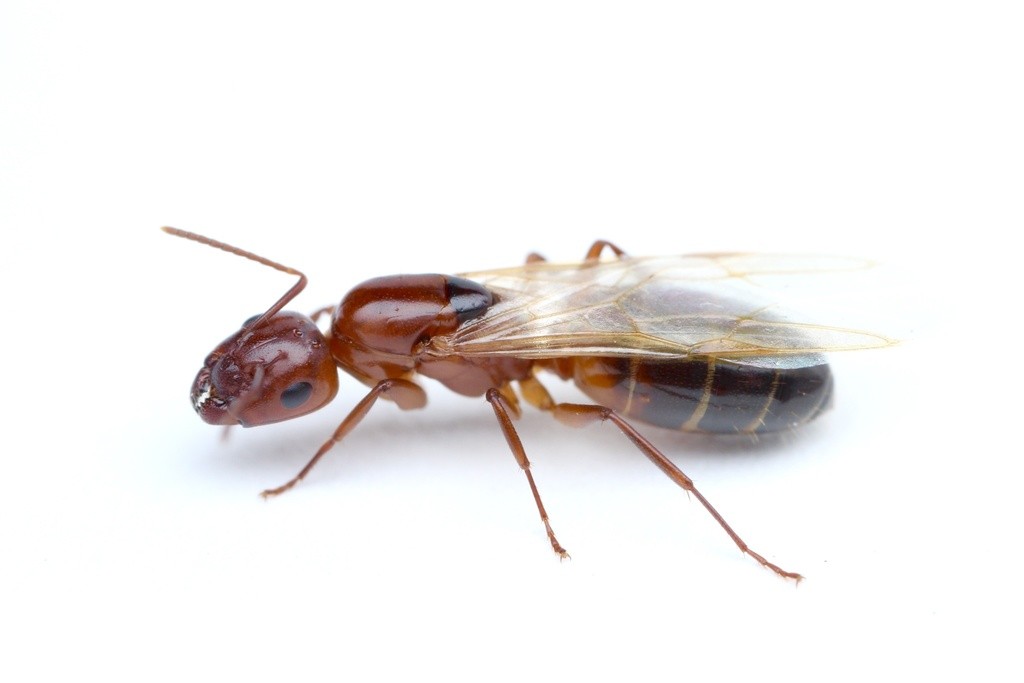
Orange-red head, mesosoma and legs, with the front of the gaster orange and the rest blackish. That half-and-half gaster is the working mark.
Under bark, in dead limbs, and in standing dead trees east of the Mississippi. Colonies run large for the small end of the genus. Alates have been collected late March through late May.
Some taxonomists read C. snellingi as a color variant of C. nearcticus. The bicolored gaster and the larger colonies are the practical separation, and we'd rather leave the deeper question to the taxonomists.
TrapJaw Labs stocks this species as a live colony — see it in the shop.
Camponotus planatus — Roger, 1863
[Photo slot: C. planatus queen, lateral]
~7 mm · Introduced · Compact Carpenter Ant
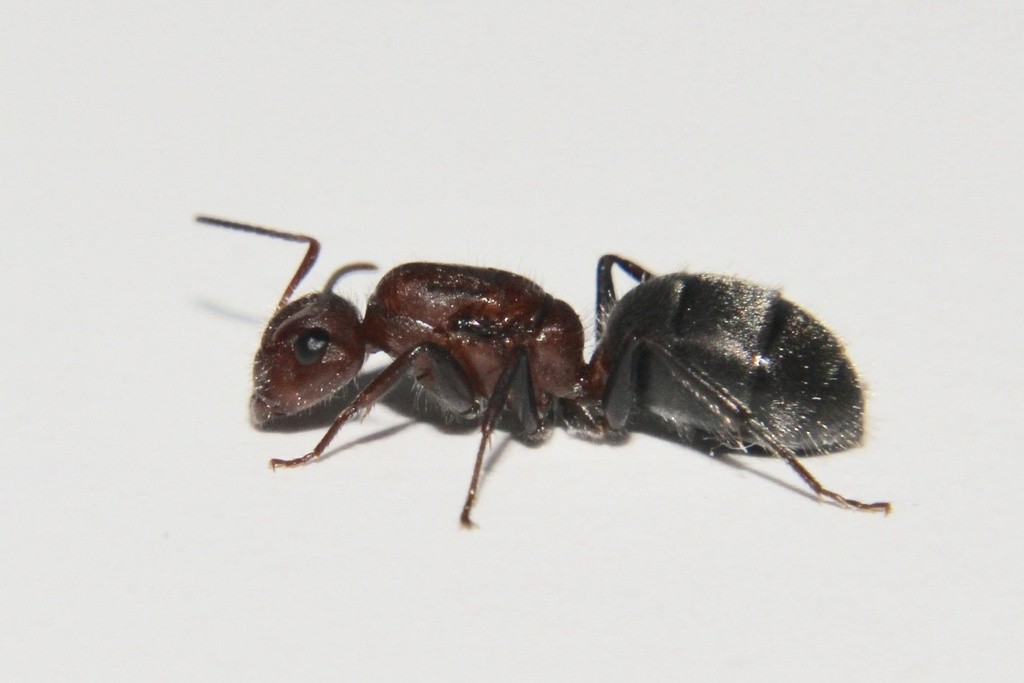
Matte where everything else here is glossy. Dark red with a gray-black gaster, the whole body finely punctate and covered in short erect white hairs.
The Keys and the Miami area, occasionally north to Palm Beach and Hillsborough Counties. Deyrup argued the Florida population moves with people rather than on its own. Thoroughly arboreal: hollow branches, abandoned termite galleries, loose bark, epiphytes. Is much smaller and more compact than all of her lookalikes.
Confirming An Identification
The queen gets you to a shortlist. Workers finish the job.
Every species here has a published worker description, and the majors carry most of the useful characters. Rear the colony to its first majors before committing to a name you're unsure of. For the small end, locality does a surprising amount of the work on its own: two of the four don't occur north of South Florida.
Photograph the queen from the side and straight on at the face, in daylight. Record the county, the habitat, and the date. That combination narrows the list faster than any single character, and it makes your record useful to somebody else later.
If you're stuck between two names, or you've caught a queen that doesn't fit anything here, reach out. Odds are decent we've collected both.